
Marcin Juszkiewicz spent nearly a year living with an 80-core Ampere Altra system as his daily driver. The Red Hat senior software engineer on the ARM team built the machine himself last summer. He chose server-grade hardware for what he hoped would become a productive AArch64 Linux desktop.
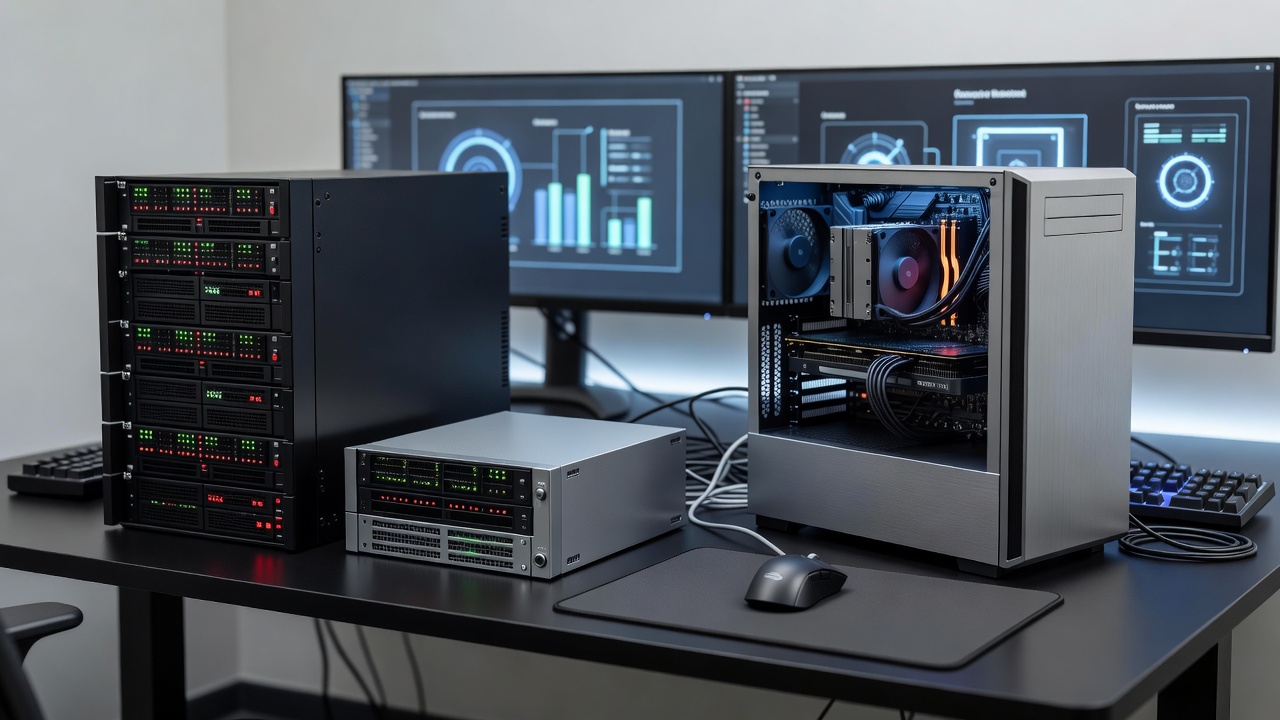
But in late June 2026 he powered up his old AMD Ryzen 5 3600 box instead. Cables were rerouted. Both systems now hum under his desk. The Altra box, nicknamed “wooster,” handles RISC-V package builds. His Ryzen machine, “puchatek,” runs the show for everything else.
Juszkiewicz laid out the experience in a candid blog post. “At that point, I gave up,” he wrote. “And booted my x86-64 system, which had been powered off all that time.” The admission carries weight. Few engineers possess his depth of experience shipping ARM64 support across Fedora, Red Hat Enterprise Linux and upstream kernel projects.
The hardware list told part of the story from the start. An ASRock Rack ALTRAD8UD-1L2T motherboard. Ampere Altra Q80-30 processor with 80 cores at 3.0 GHz. 128 GB of memory. An AMD Radeon RX 6700 XT graphics card. The setup mixed server components never fully validated for desktop use. Juszkiewicz noted the Qualified Vendor List offered little help for pairing the board with consumer GPUs.
From day one the PCI Express controller in the Altra required special handling. An erratum labeled 82288 caused invalid addresses on certain MMIO writes. AMD GPUs proved especially sensitive. Juszkiewicz rebuilt his kernel weekly with custom patches just to keep the system stable through Fedora 42 to 44. Each Monday or Tuesday he would rebase patches against the latest kernel sources. The versioning scheme even tracked his changes: “7.0.2-200.fc44.pcie65.6.”
Performance told another tale. Eighty cores delivered strong multi-threaded throughput. Single-threaded tasks felt sluggish by comparison. Desktop responsiveness suffered in ways that raw core counts could not mask. “So many cores, not enough speed,” he observed in an earlier post linked from the conclusion.
Graphics problems mounted as kernel versions advanced. Around Linux 7.0 the AMDGPU driver began throwing repeated fence timeout errors on the VCN decode ring. Video playback collapsed. YouTube dropped hundreds of frames. Gaming became unreliable. Bisecting the issue proved impossible on a kernel already tainted by the PCIe workaround.
Juszkiewicz swapped in an NVIDIA RTX 2060 and tried the Nouveau driver. The PCIe patches remained necessary. The proprietary NVIDIA driver worked better for video and some Wine titles. Yet application compatibility collapsed elsewhere. FreeCAD and OrcaSlicer both crashed on launch. The root cause? No matching org.freedesktop.Platform.GL.nvidia runtime existed in Flatpak repositories for AArch64. Two tools central to his 3D printing hobby simply stopped working.
So he gave up. The Ryzen 5 3600 system with six cores and 12 threads felt immediately more capable for daily work. “Moving from 80 cores to 6 cores (12 threads) was a weird experience,” he wrote. “A much smaller number, yet things work fine. I can load all threads and the music still plays. All games from my Steam library are playable.” FreeCAD launched without issue. OrcaSlicer sliced models. Prototypes printed without drama.
The Altra box found new purpose. It now runs continuously building RISC-V packages. Its multi-core strength shines there even if single-thread performance lags. Juszkiewicz has written before about the slow pace of RISC-V hardware. The Altra system helps close that gap through cross-compilation.
His final verdict came without hedging. “As for the Ampere Altra, I am not planning to repeat this experiment. Another AArch64 desktop attempt would require a completely new hardware platform. And I have no plans to spend over twenty thousand PLN to buy an Nvidia DGX Spark system.”
Phoronix first reported the switch on the same day Juszkiewicz published his post. The story quickly circulated among Linux developers and hardware enthusiasts. It lands at a moment when ARM-based client systems have gained fresh attention. Apple’s M-series chips demonstrated what tightly integrated ARM silicon can achieve on the desktop. Qualcomm’s Snapdragon X Elite efforts and Lenovo’s Yoga Slim 7x have pushed Linux support forward, as noted in recent Phoronix coverage of the Yoga Slim 7x Gen11.
Yet server-oriented Arm platforms like Ampere Altra expose different gaps. PCIe quirks, driver maturity, software packaging for alternative architectures and single-thread performance all surface when the same engineer who helps fix those problems tries to live with them full time.
Red Hat continues to invest heavily in ARM64. The company ships RHEL for the architecture and works closely with Arm, Ampere, NVIDIA and others. Juszkiewicz himself contributes to that effort daily. His personal experiment does not signal retreat from enterprise ARM support. It does illustrate how far client-side AArch64 Linux still sits from the plug-and-play experience x86_64 users take for granted.
AMD and Red Hat maintain a close partnership on x86 platforms. The two companies belong to the x86 Ecosystem Advisory Group formed in 2024 alongside Intel, Microsoft, Google and others. Red Hat President and CEO Matt Hicks said at the time that standardized architectures like x86 form the foundation for hybrid cloud, AI and intelligent workloads. That stance aligns with the practical outcome Juszkiewicz encountered.
Recent Red Hat and AMD collaboration announcements focus on AI acceleration, virtualization and data center efficiency. A May 2025 press release highlighted expanded customer choice across hybrid cloud. Those gains concentrate on servers where Arm and x86 each have clear roles. Desktop Linux remains a tougher nut.
Juszkiewicz’s Ryzen return highlights single-thread performance as a persistent Arm desktop hurdle. Server cores optimized for throughput often trade clock speed and instruction latency for core density. Modern Ryzen chips balance both better for mixed workloads that include compilation, browsing, creative tools and background services. The ability to run all threads hard without audio glitches or application instability mattered in daily use.
Graphics and application availability add further friction. AMDGPU issues on Arm, missing Flatpak runtimes for NVIDIA, and the broader software stack tuned first for x86 create a cascade of small annoyances. Each one manageable in isolation. Together they erode the case for daily driving an Arm desktop unless the user possesses both time and expertise to maintain patches.
The episode also underscores hardware platform maturity. Server motherboards pressed into desktop service lack the refined firmware, power management and peripheral support found on consumer boards. Ampere and partners sell these systems as development workstations, yet the ecosystem around them still feels closer to server than client.
None of this surprises close observers of Linux on Arm. Similar observations surfaced during earlier attempts with boards like the HoneyComb or early Ampere systems. Juszkiewicz documented those efforts too, linking back to posts from 2021 and 2016. Progress arrives. But it arrives unevenly.
His repurposing of the Altra system for RISC-V builds offers a neat coda. The hardware that struggled as a desktop excels at the kind of sustained parallel workloads that define much of open-source package infrastructure. That outcome may prove more representative of where high-core Arm platforms deliver value today.
For the broader industry the story serves as data point rather than verdict. Enterprise Linux on Arm continues to expand in cloud instances, edge devices and AI inference. Microsoft, Google and Amazon all run massive Arm fleets. Consumer laptops from Qualcomm and Apple show what is possible with custom silicon and vertical integration.
Yet the path to a competitive, out-of-the-box Arm Linux desktop on commodity server-derived hardware remains incomplete. Juszkiewicz, one of the people best equipped to close those gaps, chose to step back to x86 for his personal machine. That choice speaks volumes.
He left the door open for future attempts. A new hardware platform with better integration, mature drivers and full software parity could change the equation. Until then his dual-system desk setup stands as a practical compromise. One machine for the workloads Arm handles well. Another for everything a desktop user actually does every day.


 WebProNews is an iEntry Publication