
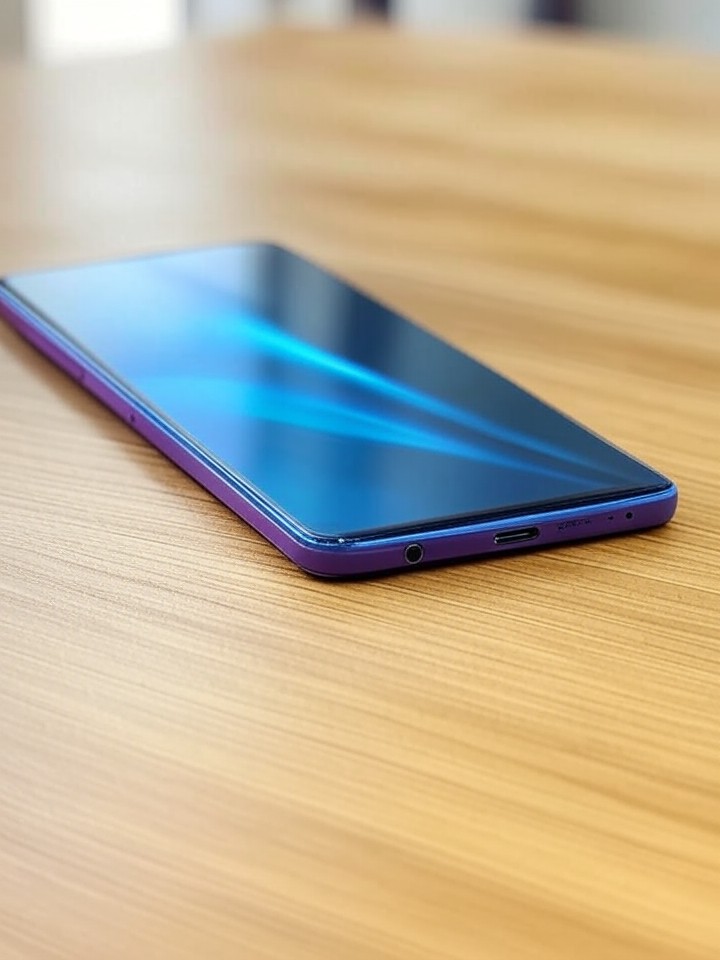
In the ever-evolving world of smartphones, where incremental upgrades often dominate headlines, Realme has made a bold move that could redefine user expectations for endurance. The company’s latest offering, the Realme P4 Power 5G, boasts a staggering 10,001mAh battery, promising up to a week of usage on a single charge. This isn’t just a spec bump; it’s a potential game-changer for consumers tired of daily charging rituals. Drawing from recent announcements, Realme claims this device can maintain 80% battery health after 1,650 charging cycles, offering durability that extends to eight years.
The technology powering this behemoth stems from advancements in silicon-carbon batteries, which allow for higher energy density without significantly increasing the phone’s size or weight. According to reports, the P4 Power 5G measures about 9.5mm thick and weighs around 208 grams—impressive for housing such capacity. Realme’s engineers have optimized the internal architecture, including a narrow mainboard, to fit this battery while keeping the design sleek. This echoes earlier concept phones from the brand, like a 2025 prototype that showcased similar tech with a 10,000mAh cell and rapid charging.
Industry observers note that this launch comes amid intensifying competition in battery innovation. Honor recently introduced devices with 10,000mAh batteries, setting the stage for Realme to one-up them by a single milliampere-hour—a cheeky marketing ploy, perhaps, but one that underscores the race for supremacy in power efficiency. Posts on X from tech enthusiasts highlight the excitement, with users speculating on real-world performance, such as multi-day usage without optimization tweaks.
Pushing Battery Boundaries
Realme’s journey to this point began with conceptual designs showcased in 2025. For instance, a prototype GT model featured a 10,000mAh silicon-anode battery with an energy density of 887Wh/L, paired with a quad-curved display and MediaTek Dimensity 7300 chipset. That device promised ultra-slim profiles under 8.5mm, demonstrating how silicon integration boosts capacity by 10% over traditional lithium-ion cells. Now, transitioning from concept to commercial product, the P4 Power 5G builds on this foundation, incorporating fast charging—rumored at 100W—and a transparent back design that reveals internal components, adding a aesthetic flair.
Sources indicate the phone will launch in India soon, possibly by January 29, 2026, with a 144Hz AMOLED display, robust camera setup, and competitive pricing. Zee News reports that Realme is targeting users who prioritize longevity over flagship-level processing power, positioning it as a mid-range powerhouse. This strategy aligns with broader market trends, where battery anxiety remains a top complaint among smartphone owners, especially in regions with unreliable power grids.
Comparisons to past innovations reveal how far the industry has come. A decade ago, 5,000mAh was the gold standard; now, Realme’s entry doubles that while maintaining usability. X posts from influencers like Techno Ruhez emphasize the potential for four days of standard usage, drawing parallels to power banks but integrated seamlessly into a phone form factor.
Industry Implications and Challenges
For manufacturers, this shift toward mega-batteries raises questions about trade-offs. Larger cells could impact heat management, charging speeds, and overall device balance. Realme addresses this with claims of advanced cooling and durable construction, but real-world testing will be key. Analysts predict this could pressure competitors like Samsung and Apple to accelerate their own battery R&D, potentially incorporating silicon-carbon tech in future models.
The environmental angle is noteworthy too. With promises of eight-year durability, Realme aims to reduce electronic waste by extending device lifespans. However, producing such high-density batteries involves rare materials, sparking debates on sustainability. India Today highlights the transparent design as a nod to modularity, allowing users to appreciate the engineering while possibly easing repairs.
On X, discussions from users like Arun Maini point to the excitement around concept phones evolving into reality, with some predicting a ripple effect across the Android ecosystem. Yet, skeptics question if week-long battery life is achievable without aggressive power-saving modes that dim displays or throttle performance.
Technological Deep Dive
At the heart of the P4 Power 5G is silicon-carbon anode technology, which replaces graphite with silicon to store more lithium ions, boosting capacity. This isn’t new—it’s been explored in electric vehicles—but adapting it for smartphones requires miniaturization. Realme’s implementation reportedly achieves higher silicon ratios, enabling the 10,001mAh rating without ballooning the device’s footprint. Paired with efficient chipsets, it could deliver on the week-long promise for light users, such as those relying on calls, messaging, and occasional browsing.
Charging infrastructure plays a crucial role. With 100W support, the phone could reach full capacity in under an hour, mitigating the downside of a massive battery. Gadgets 360 notes leaked specs including a 6.7-inch display and 5G connectivity, making it suitable for emerging markets where data usage is surging.
Critics on platforms like X argue that raw capacity isn’t everything; software optimization is vital. Realme’s history with battery management in devices like the Redmagic series suggests they have the chops, but integration with Android’s ecosystem will determine success.
Market Positioning and Consumer Response
Realme’s focus on India for the initial launch makes strategic sense. The subcontinent’s vast user base craves affordable, long-lasting devices amid frequent power outages. Priced potentially under $300, the P4 Power 5G could disrupt budget segments dominated by Xiaomi and Samsung. Mathrubhumi tips a January 29 debut, with features like a split transparent design appealing to tech-savvy youth.
Consumer sentiment, gleaned from X, shows enthusiasm mixed with caution. Posts praise the end of “battery anxiety,” with one user noting a prototype’s ability to last 31 days in standby. However, concerns about weight and bulk persist, though Realme’s specs counter this narrative.
Beyond specs, this phone represents a philosophical shift: prioritizing practicality over flashy features. In an era of AI-driven gimmicks, Realme bets on endurance as the ultimate selling point.
Competitive Dynamics
Looking at rivals, Honor’s 10,000mAh phones set a benchmark, but Realme’s extra 1mAh is more than symbolism—it’s a statement of intent. Android Headlines leaked images showing the device’s non-brick-like form factor, challenging assumptions that big batteries mean clunky designs.
Japanese manufacturers like Sharp and Sony have long excelled in optimization, achieving multi-day life with smaller cells. Realme’s approach combines size with smarts, potentially outpacing them. X commentary from Android Authority underscores the hype, claiming it could “last a whole week.”
For insiders, this signals a maturation in smartphone design, where hardware innovations address real pain points rather than chasing megapixel counts.
Future Horizons in Power Tech
As Realme pioneers this space, expect ripple effects. Battery tech could evolve to include solid-state options, promising even greater densities. StartupNews.fyi details how Realme’s launch moves from 5,000mAh norms to new heights, urging users to ditch power banks.
Challenges remain, including regulatory hurdles on battery safety and global supply chains for silicon materials. Yet, with promises of minimal degradation, Realme positions itself as a leader in sustainable tech.
X posts from Realme Global celebrate this as a “new era of power,” echoing industry-wide optimism. For developers and engineers, it opens doors to apps that leverage extended runtime, like always-on monitoring tools.
Strategic Insights for Stakeholders
Investors should watch Realme’s parent company, BBK Electronics, as this could boost market share in Asia. Moneycontrol confirms the five-digit capacity, hinting at aggressive marketing.
For carriers, longer battery life means less strain on networks from frequent charging. Enterprise users might adopt it for field work, where reliability trumps speed.
Ultimately, Realme’s gambit challenges the status quo, proving that in the quest for better mobiles, sometimes more is indeed more.
Broader Industry Reflections
Reflecting on this development, it’s clear battery life is becoming a differentiator. NewsBytes anticipates the Indian rollout, building on last year’s teases.
X users like Indian Tech & Infra envision charging every five to seven days, a dream for travelers and remote workers.
As the dust settles, Realme’s P4 Power 5G might not revolutionize everything, but it certainly electrifies the conversation on what smartphones can endure.
In wrapping up this exploration, the implications extend to user behavior. With week-long life, habits like overnight charging could fade, fostering a more untethered mobile experience. Industry insiders will monitor sales data closely, as success here could cascade into premium segments, where battery tech has lagged behind displays and cameras. Realme’s bold step, backed by innovative engineering, sets a high bar for what’s next in portable power.


 WebProNews is an iEntry Publication