
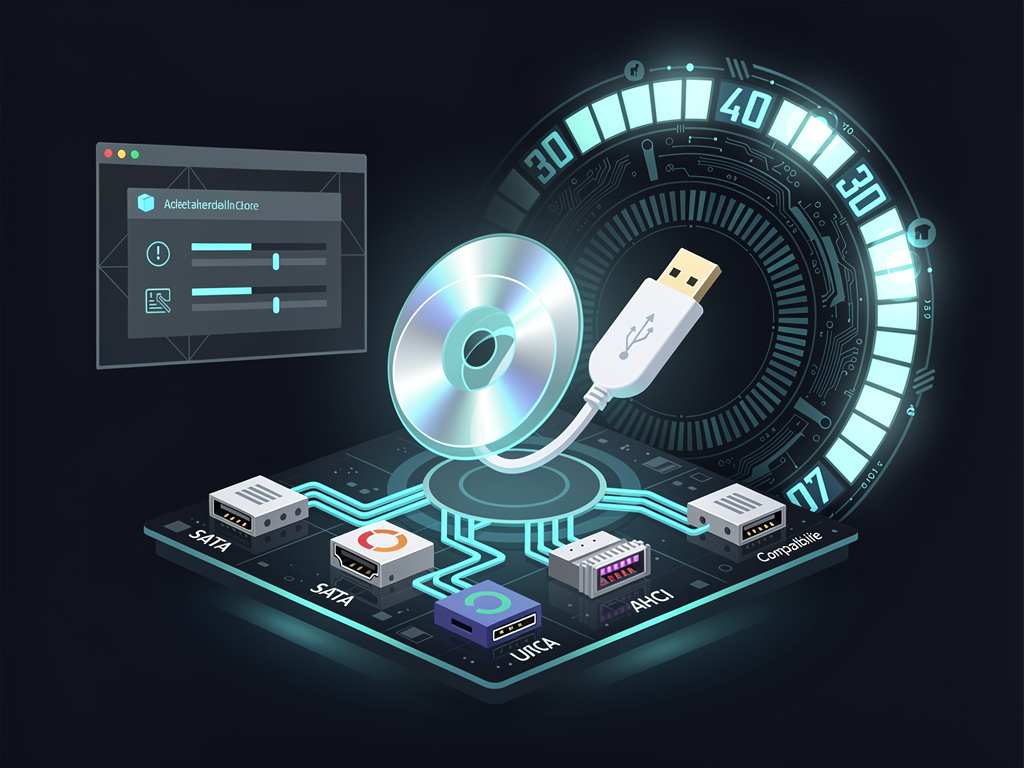
ReactOS just made a practical leap forward. The long-running project to build an open-source Windows-compatible operating system merged two major improvements this week. One download now delivers both a live environment and the tools to install the system. At the same time, developers replaced an aging storage driver with a modern plug-and-play aware stack.
The changes simplify how people first encounter the software. They also expand the range of physical hardware where ReactOS can boot and run. But don’t mistake these updates for a finished product. The project remains in alpha after more than 30 years of effort.
One Image Replaces Two
Until now, users faced a choice. Download the LiveCD to try the system without committing to disk. Or grab the separate boot media for the text-mode installer. That split created extra steps and confusion.
No longer. A single unified ISO combines both. The pull request that made it happen sat open since September 2024. It finally merged after months of refinement. Phoronix first reported the developers’ confirmation that the new BootCD supports the existing text-based setup while preparing the ground for something better.
A graphical installer sits on the horizon. The unified media already contains the necessary pieces. When it arrives, new users won’t confront the stark blue text screens that have defined the process for years. The shift mirrors how Linux distributions streamlined their own onboarding decades ago. One file. Multiple paths forward.
ReactOS 0.4.16 has now branched. Release candidates should appear soon. Nightly builds for the following version have already started. The timing feels deliberate. These installation improvements land just as the project marks three decades since its first commit.
And the benefits extend beyond convenience. Testers gain easier access to the live environment. Developers can iterate faster without juggling separate images. The old text installer may fade away once the GUI option matures. That day can’t come soon enough for broader adoption.
Storage Stack Overhaul Delivers Wider Hardware Reach
Installation means nothing if the system refuses to boot on your machine. Here the second change matters most. ReactOS ditched the old UniATA driver. In its place comes a new ATA storage stack built with plug-and-play awareness from the start.
Work on this component stretches back to early 2024. The associated pull request, detailed by Hackaday, targeted full support for SATA, PATA, ATAPI and AHCI devices. It adds compatibility with NT6-era interfaces, the kind found in Windows Vista and beyond.
Results look promising. The system now detects and works with a wider variety of real hardware. Previous limitations that blocked installation on certain controllers have eased. “Having the new ATA storage stack in place will translate into much better compatibility with real hardware, including the ability to use more hardware to install on and boot from compared to the old UniATA driver,” the Hackaday report notes.
Combined with the unified media, the effect feels cumulative. One ISO. Broader device support. A clearer path to a point-and-click setup. The project inches closer to the experience users expect from Windows or mainstream Linux distributions. XDA Developers highlighted how these steps lower the barrier for those curious about the Windows-like alternative.
Still, gaps remain. Full driver detection and automatic loading for arbitrary hardware continues to lag. Commenters on technical forums point out that while the storage foundation has improved, ReactOS can’t yet match Windows’ massive catalog of manufacturer-provided drivers. The new code removes one roadblock. Others persist.
Recent coverage also places these changes in a larger context. The project synced its C runtime library with Wine 10.0 earlier this year, cutting API test failures by 30 percent and advancing NT6 compatibility goals. Version 0.4.15 arrived in 2025 with Plug and Play fixes and better third-party driver handling. Progress accumulates. Slowly. Methodically.
ReactOS isn’t racing to replace Windows on desktops. Its value lies in the experiment itself. An operating system built from scratch that aims to run the same applications and drivers. Legal reviews, clean-room implementation and community scrutiny have defined its path. These latest updates don’t alter that fundamental character. They simply make the system more approachable.
So the pattern holds. Incremental gains in usability. Targeted fixes for long-standing pain points. A GUI installer that feels closer than ever. For developers who track alternative operating systems or maintain legacy Windows code, the news merits attention. For everyone else, it offers another data point in an unusual 30-year saga.
Downloads of the latest builds are available now through the official site. Try the unified image. Test it on physical hardware that once refused to cooperate. The results may surprise you. But remember the project’s own warnings. This remains alpha software. Expect bugs. Contribute where you can. The next set of improvements already sits in the nightly builds.


 WebProNews is an iEntry Publication