
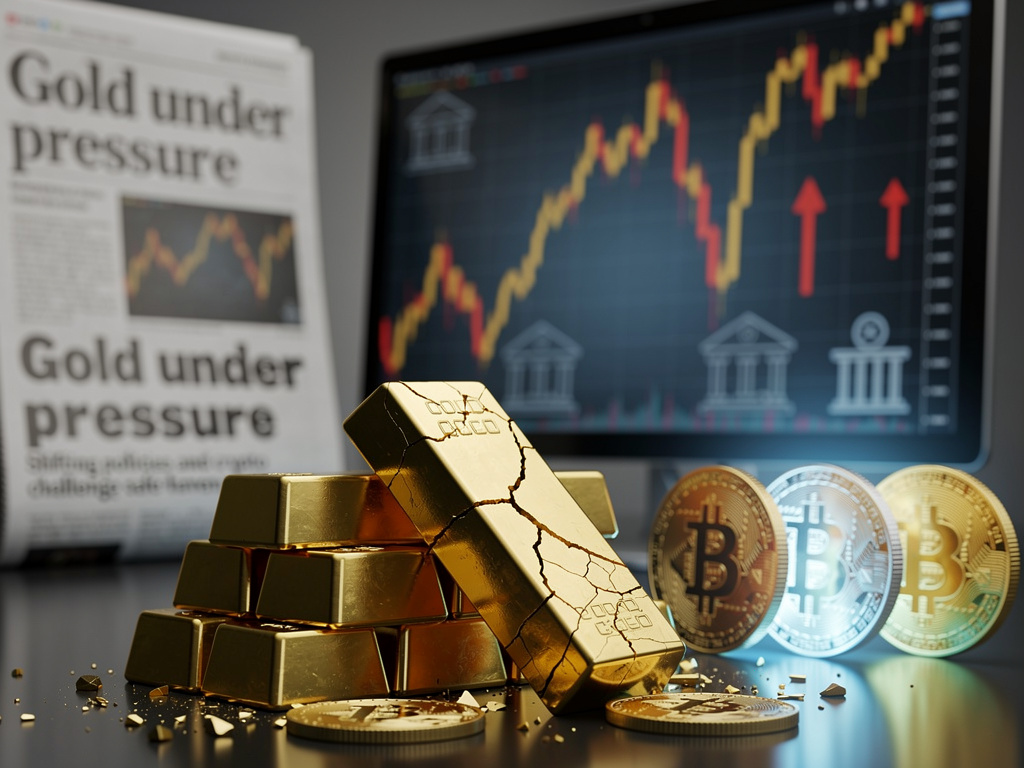
Ray Dalio, the legendary founder of Bridgewater Associates, has issued a stark warning that challenges conventional wisdom about one of investing’s oldest safe havens: gold. The billionaire investor, whose firm manages approximately $124 billion in assets, recently cautioned that gold prices could face significant downward pressure despite the metal’s traditional role as a store of value during economic uncertainty. This counterintuitive stance from one of the world’s most respected macro investors has sent ripples through financial markets and prompted a reassessment of portfolio strategies among institutional investors.
According to Business Insider, Dalio’s concerns center on the changing dynamics of global monetary policy and the potential for alternative assets to displace gold’s traditional role in diversified portfolios. The warning comes at a time when gold has experienced remarkable volatility, with prices fluctuating dramatically in response to shifting interest rate expectations and geopolitical tensions. Dalio’s perspective carries particular weight given his track record of correctly predicting major market shifts, including the 2008 financial crisis.
The timing of Dalio’s warning is particularly significant as it coincides with a period of unprecedented complexity in global financial markets. Central banks worldwide are navigating the delicate balance between controlling inflation and supporting economic growth, while investors grapple with questions about the sustainability of current asset valuations. Gold, which has historically served as an inflation hedge and crisis asset, now finds itself competing with newer alternatives such as Bitcoin and other digital assets that claim to offer similar protective characteristics.
The Shifting Paradigm of Safe-Haven Assets
Dalio’s analysis suggests that the fundamental drivers of gold prices are undergoing a transformation that many investors have yet to fully appreciate. Traditional models that predicted gold price movements based on real interest rates, inflation expectations, and currency debasement may no longer provide reliable guidance in an era of digital currencies and evolving monetary frameworks. The billionaire investor has consistently emphasized the importance of understanding paradigm shifts in markets, and his current stance on gold appears to reflect his belief that such a shift is underway.
The potential for a gold price crash, as Dalio warns, stems from several interconnected factors. First, the normalization of interest rates by major central banks could make yield-bearing assets more attractive relative to gold, which generates no income. Second, the emergence of central bank digital currencies (CBDCs) may alter the traditional relationship between fiat currency debasement and gold prices. Third, younger investors increasingly view cryptocurrencies rather than precious metals as the primary hedge against monetary instability, potentially reducing long-term demand for gold.
Bridgewater’s Portfolio Strategy and Gold Positioning
Bridgewater Associates has long been known for its “All Weather” portfolio strategy, which seeks to perform well across different economic environments by balancing exposure to various asset classes. Gold has traditionally played a crucial role in this framework, serving as a hedge against both inflation and deflation scenarios. However, Dalio’s recent comments suggest that the firm may be reconsidering the optimal allocation to precious metals within its diversified portfolios. This potential shift in strategy from one of the world’s largest hedge funds could have significant implications for gold markets, given Bridgewater’s influence on institutional investment trends.
The legendary investor has not suggested abandoning gold entirely but rather cautioned against overreliance on the metal as a protective asset. His nuanced view acknowledges gold’s historical importance while recognizing that its future performance may diverge from past patterns. This perspective aligns with Dalio’s broader investment philosophy, which emphasizes the importance of understanding how current conditions differ from historical precedents and adjusting strategies accordingly. For investors who have increased their gold holdings in recent years as a hedge against inflation and geopolitical uncertainty, Dalio’s warning serves as a reminder to reassess whether those positions remain appropriate given evolving market dynamics.
The Cryptocurrency Challenge to Gold’s Dominance
One of the most significant challenges to gold’s traditional role comes from the rapid growth of cryptocurrency markets. Bitcoin, often referred to as “digital gold,” has attracted substantial investment flows from individuals and institutions seeking alternatives to traditional safe-haven assets. While cryptocurrencies remain far more volatile than gold, their growing acceptance and the development of more sophisticated crypto financial products have created genuine competition for investment dollars that might otherwise flow into precious metals. Dalio himself has acknowledged the potential of Bitcoin and other digital assets, though he has also highlighted their risks and limitations.
The generational divide in attitudes toward gold versus cryptocurrencies cannot be overlooked. Younger investors, who have grown up in the digital age, often view Bitcoin and other cryptocurrencies as more relevant stores of value than physical gold. This demographic shift could have profound long-term implications for gold demand, particularly as wealth transfers from older to younger generations accelerate in coming decades. If Dalio’s warning proves prescient, it may reflect his recognition that this generational transition is occurring faster than many traditional investors realize.
Central Bank Policies and Their Impact on Precious Metals
Central bank policies remain a critical driver of gold prices, and Dalio’s concerns appear partly rooted in his assessment of how these policies may evolve. The unprecedented monetary expansion following the COVID-19 pandemic initially supported gold prices, as investors sought protection against potential currency debasement. However, the subsequent shift toward monetary tightening to combat inflation has created a more challenging environment for gold. If central banks maintain higher interest rates for an extended period or if their policy frameworks evolve in ways that reduce concerns about currency stability, gold could face sustained headwinds.
The development of central bank digital currencies represents another potential game-changer for gold markets. CBDCs could provide governments with new tools for monetary policy implementation and financial system control, potentially altering the dynamics that have historically driven investors toward gold during periods of monetary uncertainty. While CBDCs remain in relatively early stages of development in most major economies, their eventual widespread adoption could fundamentally change the relationship between fiat currencies and alternative stores of value like gold.
Geopolitical Tensions and Gold’s Traditional Role
Despite Dalio’s warnings about potential downside risks, gold continues to benefit from its traditional role as a hedge against geopolitical uncertainty. Ongoing tensions between major powers, regional conflicts, and concerns about the stability of the international monetary system have all supported gold prices in recent years. However, Dalio’s perspective suggests that even these traditional support factors may not be sufficient to prevent a significant price correction if other headwinds intensify. The key question for investors is whether geopolitical demand for gold can offset the potential negative impacts of higher interest rates, changing investor preferences, and evolving monetary frameworks.
The billionaire investor’s track record of identifying major market shifts before they become obvious to most market participants lends credibility to his current concerns about gold. Dalio’s success has been built on his ability to analyze complex systems, identify unsustainable trends, and position portfolios to benefit from or protect against major transitions. His warning about gold should therefore be viewed not as a prediction of imminent collapse but as a signal that the risk-reward profile for gold investments may be less favorable than many investors currently believe.
Portfolio Implications and Alternative Strategies
For investors who have relied on gold as a core component of their portfolio diversification strategy, Dalio’s warning raises important questions about how to maintain protection against various economic scenarios. The challenge is identifying assets that can provide similar diversification benefits without the potential downside risks that Dalio sees in gold. Some investors may look to other commodities, real assets, or alternative investment strategies that can perform well during periods of inflation or financial stress. Others may increase their allocation to strategies that can adapt dynamically to changing market conditions rather than relying on static asset allocations.
The broader lesson from Dalio’s gold warning extends beyond any single asset class. It serves as a reminder that even the most time-tested investment principles and relationships can break down when underlying conditions change sufficiently. The investment strategies that worked well in past decades may not be optimal for the challenges and opportunities of the coming years. Investors who rigidly adhere to historical patterns without considering how current conditions differ from the past may find themselves poorly positioned for the future. Dalio’s emphasis on understanding paradigm shifts and adapting strategies accordingly remains as relevant as ever in an era of rapid technological change, evolving monetary systems, and shifting geopolitical dynamics.
As markets continue to digest Dalio’s warning, the debate over gold’s future role in investment portfolios is likely to intensify. While some investors may view his concerns as overstated, particularly given gold’s millennia-long history as a store of value, others will take his warning as a signal to reassess their exposure to precious metals. Regardless of whether gold experiences the crash that Dalio warns about, his comments have succeeded in prompting a valuable discussion about the assumptions underlying traditional portfolio construction and the need for investors to remain flexible in their thinking about safe-haven assets. In an era of unprecedented change across financial markets, such reassessments are not merely prudent but essential for long-term investment success.


 WebProNews is an iEntry Publication