
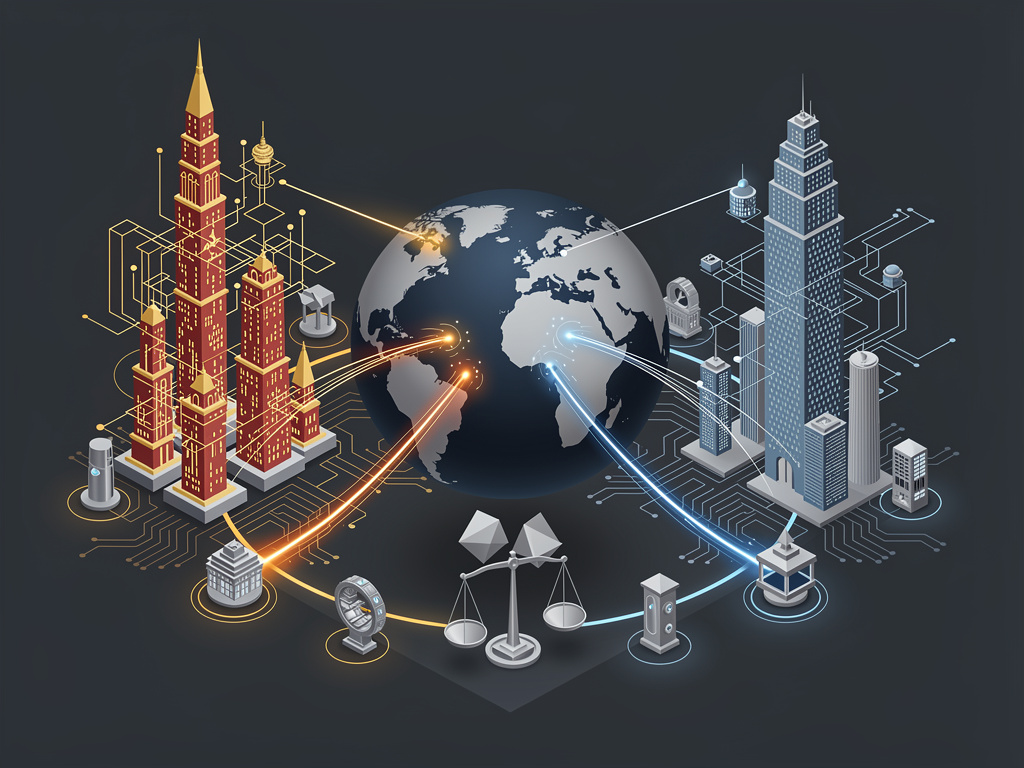
Ray Dalio has watched power shift for decades. The founder of Bridgewater Associates now sees something unmistakable. The United States appears less willing to back its words with force. China piles up wealth and clout. Leaders from across Asia and beyond stream toward Beijing. To Dalio, this marks the return of an old pattern.
“Right now, that perception is changing,” he said in a recent interview. The comment came during a conversation for Bloomberg Television’s Wall Street Week with David Westin. It landed in the same week President Donald Trump sat down with Chinese President Xi Jinping. That summit unfolded against a backdrop of stalemate in the U.S. conflict with Iran. Timing sharpened the message.
Dalio spent roughly a month traveling through Asia. Ten days in China brought conversations with a range of leaders. What he heard changed his sense of the moment. Countries that once counted on American protection no longer feel so sure. The U.S. maintains about 750 military sites across 80 countries. For years that footprint signaled reliability. Now doubts creep in. “The United States cannot be relied on to fight that war,” Dalio reported hearing.
But the story runs deeper than lost confidence. China’s economy has grown dramatically. It now stands at 60 to 70 percent the size of the American economy. That represents more than a threefold increase over the past 20 years. Beijing does not seek territorial conquest. It does prize recognition. Visits by presidents and prime ministers carry real weight in Chinese eyes. They affirm status. They signal a new balance.
“You’re seeing a number of leaders go up to China,” Dalio observed. “It’s like the tribute system that existed throughout history to come and recognize the differences in power.” He returned to the idea repeatedly. The concept feels familiar to students of East Asian history. Dynasties once received emissaries who presented gifts and acknowledged superiority. In exchange they gained trading rights and security assurances. Hierarchy, not equality, defined the ties.
“So this tribute system is a hierarchical system,” Dalio explained. “The important thing in dealing with other countries is how it affects you in your trade and your safety. And so we’re now entering, and I think, in their view, a period in which there will be a tribute system type of arrangement in which the relative powers are what matter.” The words carry the weight of someone who has operated inside China for years. Bridgewater’s presence there gives him access. It has also drawn criticism that he tilts too close to Beijing.
His perspective fits a larger pattern he has described before. In writings and talks Dalio has tracked cycles of rising and falling powers. He points to indebtedness, internal divisions, and external rivalry as forces that erode dominance. China’s faster growth, technological push, and financial expansion fit the profile of a challenger. The U.S. response mixes tariffs, export controls, and alliance building. Yet the perception gap widens.
Earlier this year Dalio struck a more hopeful note on diplomacy. In April he told CNBC that the Trump-Xi meeting, then upcoming, would focus on trade and capital flows. He expected the leaders to show “empathy” and find ways to cooperate. “Investors should be encouraged by these things,” he said at the time. The CNBC interview came from Shanghai after an event promoting bilateral exchanges. The original summit date had slipped because of the Iran war. When the meeting finally occurred in May, Dalio’s tone had grown more pointed about structural change.
Recent reporting reinforces the sense of realignment. A Chosun Biz article published May 17 notes that Pakistani leaders and Russia’s Vladimir Putin planned visits to China around the Trump-Xi talks. Such clustering suggests Beijing has become a necessary stop. It also hints at the practical calculations nations make when security and commerce hang in the balance.
Markets have taken notice. Dalio warned that the transition brings turbulence. Currency values face pressure. Uncertainty pushes demand for liquidity. Diversification becomes essential. Gold, he has long argued, deserves a place in portfolios during such disorder. Investors who ignore the power shift do so at their peril.
Critics question whether Dalio overstates China’s appeal or underplays its own weaknesses. Demographic pressures, property sector troubles, and tensions with neighbors remain real. Yet his core observation holds attention. Allies and partners watch American decisions closely. The war with Iran, even if stalled, exposed limits. When a superpower hesitates, others adjust.
The tribute framing strikes some as provocative. It evokes an ancient order that placed China at the center. Modern China frames its diplomacy as mutual benefit and non-interference. Still, the hierarchical element persists in how Beijing approaches smaller states in its neighborhood. Trade deals, infrastructure loans, and security pacts often reflect relative strength. Leaders who show up in Beijing signal acceptance of that reality. They hedge against over-reliance on Washington.
Dalio’s analysis draws on his study of history. Empires rise when they combine economic vitality, technological edge, and military reach. They falter when internal fractures combine with external challengers. The current cycle, in his telling, has entered a dangerous phase. Great-power competition plays out in technology, finance, supply chains, and narratives. Direct combat remains avoidable. The broader contest does not.
So what should decision makers do? Dalio has urged elites in both countries to rise above narrow interests. He believes constructive ties between Washington and Beijing remain the single most important variable for global stability. Poor relations risk catastrophe. Wise management could unlock progress on everything from climate to public health. Yet the trend lines point toward managed rivalry rather than partnership.
His latest comments arrive at a fluid moment. Trump returned from Beijing with claims of stability. Other accounts describe a wary truce. Taiwan asserts its status. Allies in Europe and Asia recalibrate defense spending and supply chains. No one expects sudden rupture. The slow erosion of old assumptions continues.
Bridgewater’s founder has built a career reading cycles others miss. His early bets on China reflected conviction that the country would integrate into global markets and grow rapidly. That bet paid off for many years. Now he sees the consequences of success. A richer, stronger China naturally reshapes expectations. The rest of the world responds. Some accommodate. Others resist. Most hedge.
The tribute system label may not become standard terminology. Its power lies in the image it conjures. A clear hierarchy based on measurable strength. Leaders paying respects. Benefits distributed according h to rank. Trade and safety as the coin of the realm. Dalio believes we have entered that world. Perception has shifted. Policy will follow. Markets already price it in.
And the implications stretch far. Portfolio managers must weigh geopolitical risk with fresh seriousness. Corporate strategists rethink where to build factories and source components. Diplomats calibrate messages to audiences that no longer default to American leadership. The age of uncontested primacy has passed. What replaces it remains under construction. Dalio has offered one provocative blueprint. History suggests the final shape will emerge from friction, negotiation, and raw calculations of interest. Relative power will matter. It always has.


 WebProNews is an iEntry Publication