
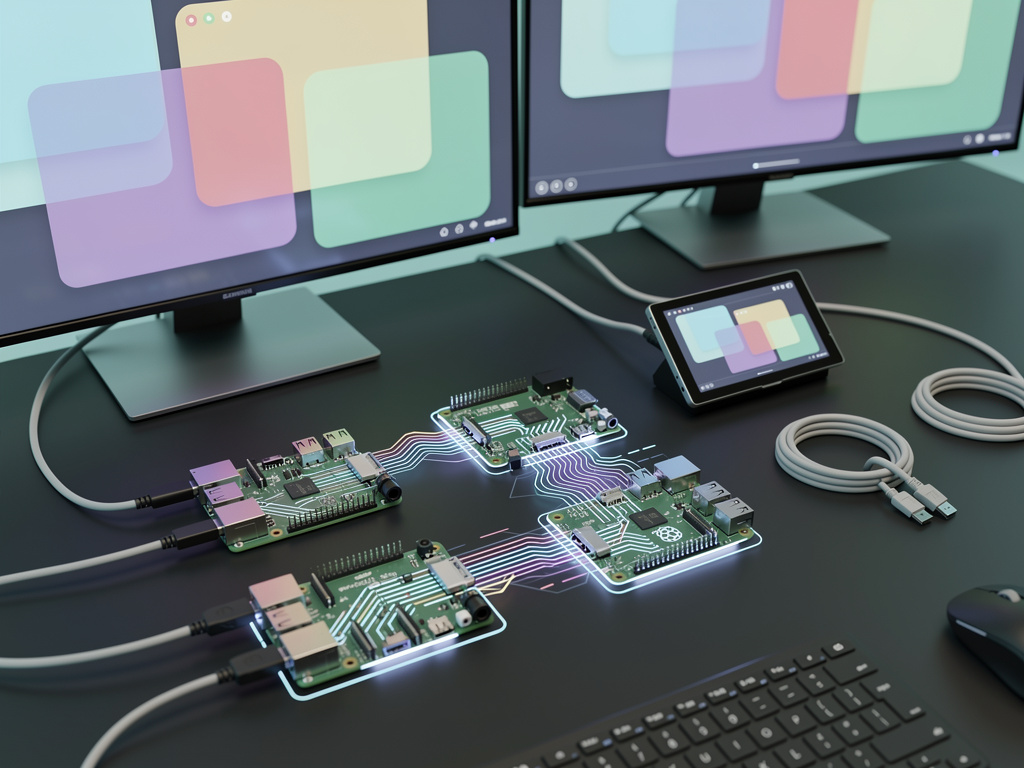
Raspberry Pi engineers pushed out their first OS refresh since April. The 2026-06-18 edition lands with a major kernel jump. Short. Direct. And loaded with practical gains for the millions who rely on these compact boards.
The distribution, long based on Debian, now ships Linux 6.18.34 LTS as its foundation. It replaces the 6.12 series that had served for roughly a year. Performance improves across ARM cores. New drivers arrive. Networking behaves with greater consistency. Features merged upstream over the past 12 months flow directly into everyday use on Pi 5, Pi 4, and even older models. Existing users received the kernel bump weeks earlier through normal updates. The fresh images simply lock it in from first boot.
But the kernel tells only part of the story. The desktop side evolved too. Raspberry Pi OS made the full switch to Wayland some time back. This release advances that commitment by updating to LabWC 0.9.7. The lightweight compositor gains refinements in window handling and efficiency. Users notice snappier response and fewer glitches during multitasking. LabWC never aimed for heavyweight effects. It delivers stability instead. That focus matches the hardware constraints many Pi projects face.
New default associations for touchscreens simplify setup on supported displays. No more manual tweaks in most cases. Icons received a refresh across toolbars and the Recommended Software application. Support for larger panel icons appeared, giving builders more flexibility when designing custom interfaces or deploying on high-resolution screens. Polish translations expanded. Small touches, yet they signal attention to a global audience that deploys these devices in factories, classrooms, and research labs worldwide.
Under the hood, engineers tightened several components. The system now leans on DBus to block duplicate application launches. Printers and Volume plugins received fixes and feature additions. Keyboard navigation for top-level menu items works correctly again. The python3-flask package disappeared from defaults. Code in Control Centre plugins underwent cleanup. PiClone gained a missing close handler. These changes reduce friction and cut technical debt. They don’t shout for attention. They simply make the platform more dependable.
Firmware for the latest Raspberry Pi silicon also made the cut. Compatibility stretches across the full lineup, including Compute Module 4, CM4S, and Zero 2W. Whether the project involves industrial control, media centers, or AI experimentation on the new HATs, the base stays current. Phoronix first highlighted the kernel and LabWC moves. Days later, 9to5Linux added deeper context on the DBus changes, plugin work, and icon updates. The official download page confirms the shift to Debian Trixie with kernel 6.18 for both 64-bit and 32-bit images.
Recent forum chatter and X posts reflect quick adoption. Makers report smoother operation on Pi 5 after the upgrade. Some note improved thermal behavior under load thanks to kernel scheduler tweaks. Others praise the compositor updates for better multi-monitor support in desktop configurations. One thread on the Raspberry Pi forums from April had already signaled the 6.18 testing phase, with AlmaLinux builders preparing their own images in parallel. The June release fulfills that roadmap.
Download options remain straightforward. Full desktop builds include recommended applications. Lite versions target headless or minimal deployments. Both 64-bit and legacy 32-bit flavors carry the June 18 date. Users already running the OS can reach the same state with a pair of apt commands. The foundation keeps the upgrade path gentle. That consistency helped Raspberry Pi OS maintain its position as the default choice even as alternatives like Ubuntu on Pi gained ground.
Look closer at the kernel itself. Version 6.18 brought aggressive ARM optimizations, better real-time capabilities, and expanded hardware support that benefits everything from camera modules to PCIe storage. On a Pi 5, those gains translate to higher IOPS for NVMe drives and lower latency for GPIO work. The Wayland transition, once bumpy for some applications, now feels mature. LabWC 0.9.7 solidifies that progress. Applications that once required XWayland run more cleanly. Screen sharing and remote desktop tools behave with less overhead.
Yet challenges remain. Not every peripheral enjoys instant driver coverage. Some older touch panels still need legacy kernels in niche cases, as one recent X user discovered while wrestling with outdated hardware. Security updates continue on a separate cadence. The foundation balances stability against the desire to ship fresh code. This release leans toward the latter without breaking established workflows. And that balance matters. Hobbyists, educators, and commercial integrators all count on predictable behavior.
Recent coverage on X showed developers linking to the 9to5Linux story within hours of its publication. Discussions touched on retro gaming setups that benefit from the kernel improvements and automation projects that gain from the touchscreen defaults. One post highlighted how the update pairs well with new AI-focused HAT releases from earlier this year. The Pi platform never stands still. Neither does its OS.
The 2026-06-18 images are available now from the official site. For teams managing fleets of devices, the changes reduce maintenance burden. For solo tinkerers, they open new experimentation paths without forcing a complete reinstall. Small steps. Measurable results. The sort of incremental progress that has defined Raspberry Pi OS since its earliest days.


 WebProNews is an iEntry Publication