
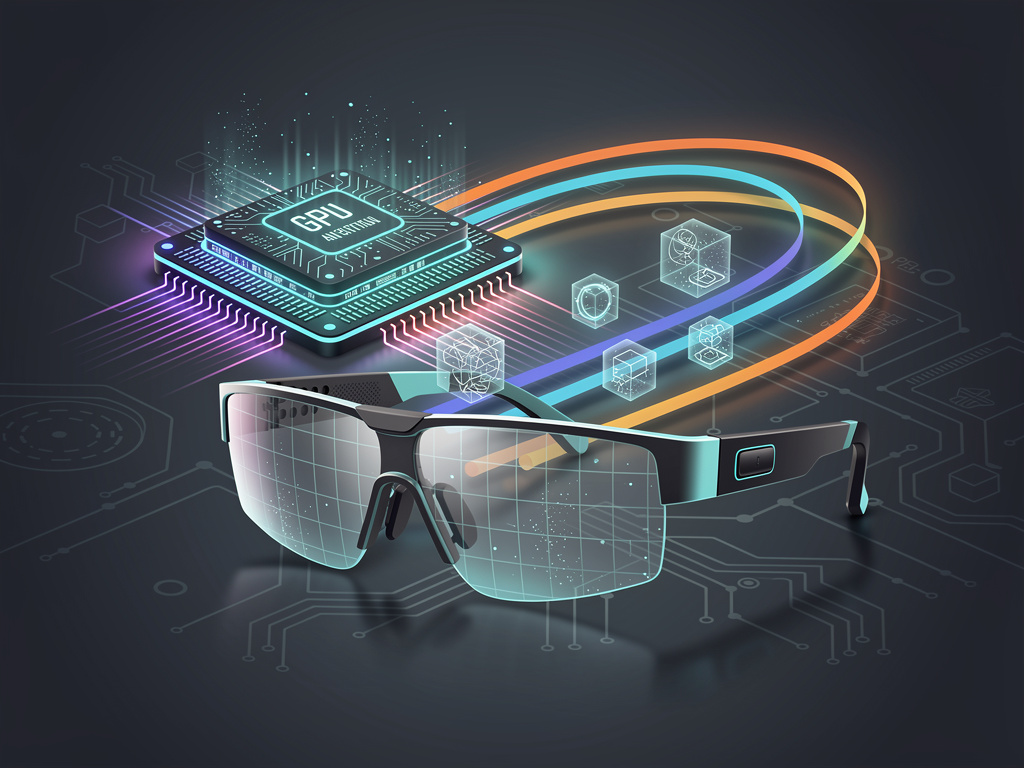
Qualcomm Technologies announced the Snapdragon Reality Elite platform on Tuesday at the Augmented World Expo. The new chip aims squarely at the next wave of mixed-reality glasses and headsets. It succeeds the Snapdragon XR2+ Gen 2. And it brings measurable gains in processing power, efficiency and on-device intelligence.
The numbers tell a clear story. Graphics performance rises as much as 60 percent. The central processor runs up to 30 percent faster. Neural network acceleration jumps by as much as 160 percent. Those figures come directly from Android Central. Battery life extends by up to 20 percent. The system runs as much as 12 degrees Celsius cooler during demanding tasks. Such efficiency matters when devices sit on a user’s face for hours.
Peak artificial-intelligence throughput reaches 48 tera operations per second. That level lets the platform run multimillion-parameter language models and vision models locally. Photorealistic avatars become feasible. Real-time language translation appears within reach. AI agents that understand spatial context move from concept to product. The hardware finally matches the ambitions developers have chased for years.
Display output climbs to 4.4K resolution per eye at 90 frames per second. Video passthrough latency drops. Image quality improves. Digital content blends more convincingly with the physical world. These advances address longstanding complaints about nausea, disconnection and visual artifacts that have slowed consumer adoption.
Xreal’s Project Aura stands among the first products scheduled to ship with the new platform this fall. The glasses will rely on a tethered compute puck powered by Reality Elite. Play for Dream also plans next-generation hardware based on the chip. Both companies target the Android XR operating environment backed by Google. The timing aligns with broader industry bets on lighter, smarter eyewear rather than bulky standalone headsets.
Industry observers have watched Qualcomm iterate through several XR generations. The original XR1 arrived in 2018. XR2 followed in 2019 and powered Meta’s Quest 2. The XR2+ Gen 2 reached the Samsung Galaxy XR headset. Each step delivered incremental gains. Reality Elite represents a sharper leap. It also carries the Elite branding Qualcomm now applies across phones, laptops, wearables and automotive systems. The name signals a consistent focus on premium AI performance.
Ziad Asghar, senior vice president at Qualcomm, emphasized the need for smaller, smarter and more efficient silicon. Devices must last all day without becoming uncomfortably warm. His comments, reported by SiliconANGLE on the same day as the announcement, frame Reality Elite as part of a larger edge-AI strategy that spans multiple product categories.
More than 60 million XR devices have already reached the market according to Qualcomm’s estimates. Most still rely on older chips. The installed base creates both opportunity and pressure. New hardware must deliver experiences compelling enough to justify upgrades. It must also remain affordable enough for mainstream buyers. Reality Elite attempts to thread that needle by improving performance while holding power consumption in check.
Qualcomm paired the chip announcement with Snapdragon START. The initiative supplies reference designs, software tools and hardware kits. Partners can accelerate development of AI-enabled glasses and wearables. Inspecs Group and other manufacturing specialists have joined the program. The goal is to shorten the path from concept to commercial product.
But challenges remain. Content libraries for spatial computing still lag. Battery technology has improved yet faces physical limits. Privacy questions swirl around always-on cameras and microphones. And competition has intensified. Apple continues work on its own vision platform. Meta pushes both high-end Quest headsets and lighter Ray-Ban style glasses. Chinese vendors flood the market with lower-cost alternatives.
Analysts question whether consumers will pay premium prices for glasses that still require a phone or puck for full capability. Xreal’s Aura design accepts that tether for now. The compute unit handles the heavy lifting. Users gain lighter frames and longer wear times. Trade-offs like these define the current generation of products.
Reality Elite does not solve every obstacle. It does, however, remove one of the largest: insufficient local intelligence. On-device AI reduces dependence on cloud servers. Latency drops. Privacy improves. Features work even without reliable connectivity. Those attributes matter for professional applications in manufacturing, training and remote assistance.
The platform supports both video see-through headsets and optical see-through glasses. Flexibility lets manufacturers target different price points and use cases. Standalone units can emphasize immersion. Lightweight glasses can prioritize all-day comfort and contextual information overlays.
Recent coverage underscores the announcement’s freshness. SiliconANGLE highlighted how the chip repositions Qualcomm’s XR efforts inside a broader AI narrative. X posts from analysts and news accounts on Tuesday afternoon showed rapid pickup. Early reactions praised the performance deltas and the concrete device pipeline.
Qualcomm has spent years refining its Oryon CPU architecture, Adreno graphics and Hexagon neural processor. Those cores appear across product lines. Shared engineering investment lets the company amortize costs while delivering competitive silicon at each tier. The strategy has worked well in smartphones. Its success in XR remains unproven but now has stronger technical foundations.
Developers will receive new software development kits and updated tools alongside the hardware. Unity and Unreal Engine integrations are expected to improve. The combination of raw performance and mature tooling could accelerate creation of compelling experiences. Whether those experiences drive mass adoption is the larger question the industry continues to test.
For now the Snapdragon Reality Elite gives hardware partners a credible path forward. It promises glasses that feel less like prototypes and more like daily companions. That shift in perception may prove as important as any benchmark number.


 WebProNews is an iEntry Publication