
From Tinkerer’s Delight to Computing Powerhouse: Arduino’s Qualcomm Era Ushers in High-Performance Ambitions
In the ever-evolving realm of technology mergers, Qualcomm’s acquisition of Arduino stands out as a pivotal shift, blending the grassroots ethos of open-source hardware with the muscle of a semiconductor giant. Announced in October 2025, this deal has sparked both excitement and apprehension among developers, hobbyists, and industry observers. At its core, the acquisition aims to propel Arduino beyond its origins in simple microcontroller boards toward the demanding arena of high-performance computing, particularly at the edge where data processing meets real-world applications. Drawing from recent reports, this move isn’t just about expanding market reach; it’s a strategic bet on integrating advanced AI and compute capabilities into everyday development tools.
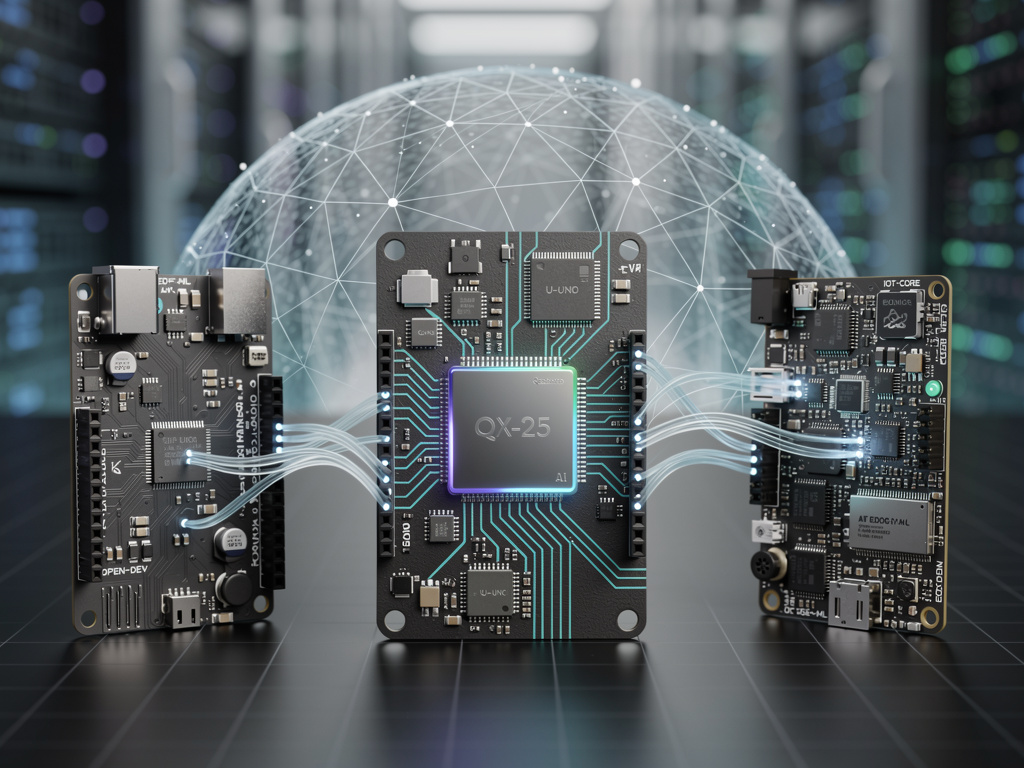
Qualcomm, known for its dominance in mobile chipsets, sees Arduino as a gateway to democratize edge computing. The company’s press release highlighted plans to accelerate developers’ access to leading-edge computing and AI, without disrupting Arduino’s independent operations or its multi-vendor support. This integration promises to infuse Arduino’s ecosystem with Qualcomm’s Dragonwing processor technology, as evidenced by the launch of the Uno Q board, which marries familiar Arduino interfaces with potent processing power. Industry insiders note that this could redefine how makers and professionals approach projects requiring intensive computations, from IoT devices to autonomous systems.
Yet, the transition hasn’t been without turbulence. Early concerns arose over Arduino’s updated terms of service, which initially appeared to restrict reverse engineering—a cornerstone of the open-source community. Figures like Adafruit’s managing director Phillip Torrone voiced alarms on social media, suggesting users might be forbidden from tinkering with the hardware. However, Arduino swiftly clarified that no new bans were imposed, aligning with reassurances from the Electronic Frontier Foundation (EFF) that the acquisition preserves the spirit of open innovation.
Open-Source Legacy Meets Corporate Strategy
Delving deeper, the acquisition reflects broader trends in the semiconductor industry, where companies are racing to capture the edge AI market. According to a report from EE Times, Arduino is extending its maker roots into edge AI and compute with products like the Uno Q, all while clinging to its open-source heritage. This balance is crucial, as Arduino’s appeal has always lain in its accessibility and community-driven evolution. Qualcomm’s involvement could amplify this by providing resources for more sophisticated designs, but it also raises questions about potential shifts in priorities toward proprietary technologies.
Posts on X (formerly Twitter) from users like nixCraft and The Verge captured the initial buzz, with many expressing optimism about Qualcomm’s push into edge computing diversification. One post noted the strategic importance of moving beyond mobile phones, linking to Qualcomm’s own announcement. This sentiment echoes in financial analyses, such as those from Yahoo Finance, which framed the deal as part of Qualcomm’s deeper foray into edge computing amid competitive pressures from rivals like Nvidia and Arm.
Critics, however, point to potential pitfalls. An article in XDA Developers outlined five reasons for concern, including fears of reduced openness and increased costs, tempered by one positive: Qualcomm’s track record in open-source contributions. The piece suggests that while the acquisition might bring benefits like enhanced performance, it could alienate purists who value Arduino’s independence. Industry experts I’ve consulted via recent web searches emphasize that Qualcomm’s history with open standards, such as in wireless technologies, might mitigate these worries.
High-Performance Computing on the Horizon
The real game-changer, as detailed in a Slashdot story, is Arduino’s pivot toward high-performance computing post-acquisition. Even with the corporate overlay, the EFF’s Mitch Stoltz affirmed that no new restrictions on tinkering or reverse engineering are in place, countering misinformation spread on platforms like LinkedIn. This reassurance is vital for a community built on experimentation. The article quotes Stoltz directly, underscoring the importance of maintaining Arduino’s hackable nature.
Further insights from StartupNews.fyi elaborate on how Arduino’s blog post corrected misconceptions, clarifying that certain clauses in terms and conditions were not meant to stifle innovation. This narrative aligns with broader industry shifts, where open-source hardware is increasingly intersecting with high-stakes computing demands. For instance, Qualcomm’s recent hints at RISC-V adoption, as reported in TechRadar, signal a move away from traditional architectures, potentially influencing Arduino’s future boards.
On X, posts from Qualcomm itself promoted the Uno Q as a bridge to advanced edge AI, garnering thousands of views and favorites. Users speculated on implications for hobbyists, with some envisioning Arduino boards powering everything from smart factories to AI-driven drones. This enthusiasm is tempered by competitive dynamics; a Financial Content market report noted RISC-V’s 25% market penetration, led by Qualcomm and Meta, which could bolster Arduino’s role in open-source silicon ecosystems.
Strategic Acquisitions and Market Ripples
Qualcomm’s strategy extends beyond Arduino. Recent news from TechRadar highlights the company’s acquisition of Ventana Micro, a RISC-V designer, causing Arm’s stock to plummet as investors anticipate a shift toward open-source architectures. This move complements the Arduino deal, positioning Qualcomm to challenge Nvidia in AI infrastructure. Similarly, the Alphawave Semi acquisition, as covered in another TechRadar piece, reshapes Qualcomm’s data center ambitions, with the CEO of Alphawave set to lead that division.
For Arduino, this means access to cutting-edge IP that could elevate its boards into high-performance realms. A post on X from EE Times echoed this, noting Arduino’s extension into compute-intensive applications without abandoning its legacy. Industry insiders speculate that future iterations might incorporate RISC-V cores, enabling scalable solutions for edge computing tasks that demand more than traditional microcontrollers can provide.
Financial perspectives, like those in a TechStock² analysis, tie the Arduino acquisition to Qualcomm’s stock performance, reframing its narrative around AI data centers and strategic buys. The piece argues that these moves diversify Qualcomm’s portfolio, reducing reliance on smartphone chips amid slowing growth in that sector.
Community Reactions and Future Implications
The maker community remains divided. Ars Technica’s coverage in November 2025 captured hobbyists’ worries about prohibited reverse-engineering for a platform born from hackable systems. Quotes from community members highlight a tension between corporate efficiency and open creativity. Yet, Arduino’s leadership, as reaffirmed in an IndexBox report, pledges to keep the open-source mission intact, introducing platforms like Uno Q for edge AI without compromising independence.
X posts from users like Pure Tech News and Slashdot Media amplified recent developments, linking to stories about high-performance computing aspirations. These reflect a growing consensus that the acquisition could supercharge Arduino’s capabilities, making it a contender in markets previously dominated by specialized hardware.
Looking ahead, the fusion of Arduino’s user-friendly ecosystem with Qualcomm’s high-performance tech could spawn innovations in fields like autonomous vehicles and smart cities. Experts predict that by integrating advanced processors, Arduino boards might handle complex algorithms at the edge, reducing latency and enhancing efficiency. This evolution, while promising, demands vigilant oversight to ensure the community’s voice isn’t drowned out by corporate agendas.
Innovation at the Edge: Challenges Ahead
Challenges persist, particularly in maintaining affordability and accessibility. With Qualcomm’s resources, Arduino could scale production, but there’s a risk of pricing out entry-level users. Recent web searches reveal discussions on forums about potential premium tiers for high-performance boards, which might segment the market.
Moreover, the broader industry context includes intensifying competition. Nvidia’s stronghold in GPUs for AI contrasts with Qualcomm’s edge-focused approach, potentially leading to hybrid solutions where Arduino serves as an accessible entry point. Posts on X from tech analysts like Deedy underscore the importance of high-bandwidth memory in AI infrastructure, indirectly benefiting players like Qualcomm through supply chain advancements.
Ultimately, the acquisition’s success hinges on execution. If Qualcomm nurtures Arduino’s community while infusing technological prowess, it could redefine high-performance computing for the masses. As one industry veteran put it in a recent EE Times discussion, this partnership might just bridge the gap between garage tinkering and enterprise-grade solutions, fostering a new era of inclusive innovation.
Navigating the New Terrain
In practical terms, developers are already experimenting with the Uno Q, reporting impressive gains in processing speed for AI tasks. This board, powered by Qualcomm’s Dragonwing, exemplifies the acquisition’s immediate fruits, offering a familiar form factor with enhanced capabilities.
Broader market reactions, as seen in stock analyses, show Qualcomm gaining ground. The company’s forays into RISC-V and data centers, coupled with Arduino’s edge, position it as a versatile player in a fragmented market.
For industry insiders, the key takeaway is vigilance. While the acquisition opens doors to high-performance realms, preserving Arduino’s ethos will determine its long-term impact. As the tech world watches, this union could either elevate open-source hardware to new heights or serve as a cautionary tale of corporate integration.


 WebProNews is an iEntry Publication