
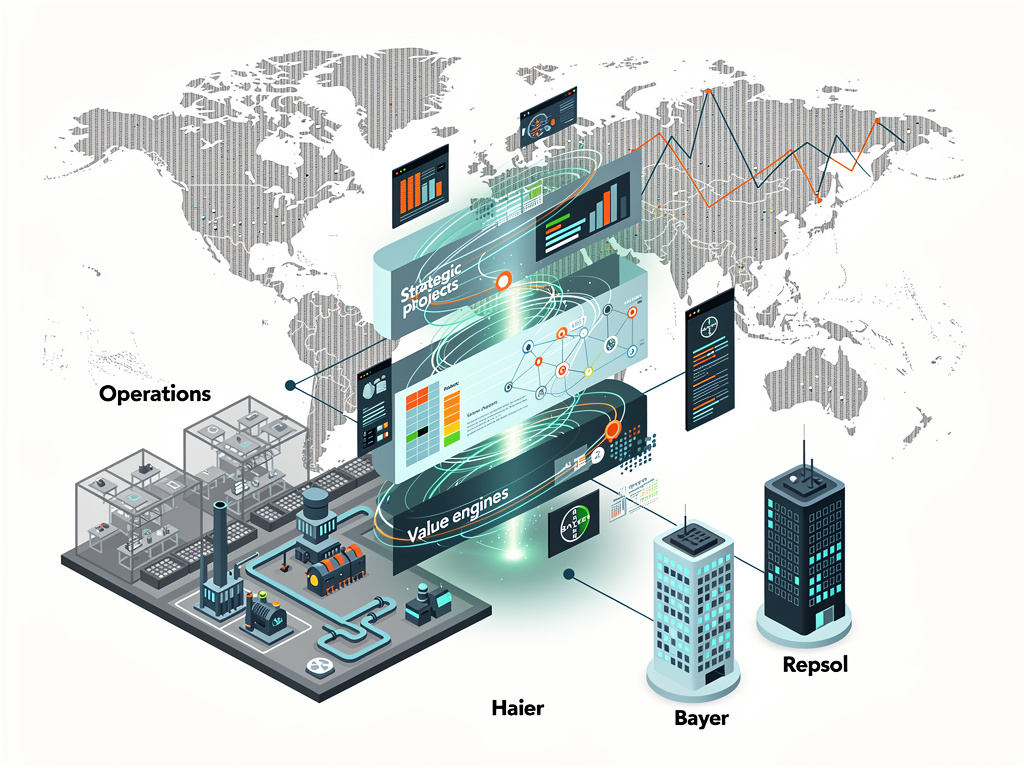
In an era of relentless disruption, companies are discovering that projects, not steady-state operations, fuel growth and adaptation. “In an environment of constant change, projects are how businesses evolve, adapt, and grow. They’re how strategies are executed. They’re how innovation is delivered,” writes Antonio Nieto-Rodriguez in Harvard Business Review. The Covid-19 crisis accelerated this shift, forcing firms to rapidly deploy digital tools, overhaul supply chains and launch services in weeks rather than years.
Traditional hierarchies, optimized for efficiency and control, falter amid volatility. Despite investments in project managers, centers of excellence and governance upgrades, failure rates hover high. Nieto-Rodriguez identifies pitfalls: overcommitting to too many initiatives, prioritizing outputs over outcomes, deploying part-time teams and hesitating to terminate flops. “We’ve already arrived at a moment when projects, not operations, are the primary engines of value,” he asserts, echoing his earlier work on the project economy.
Enter the project-driven organization, where projects form the core structural unit. This model surpasses agile methods, which excel in software but struggle at enterprise scale. Leaders sponsor few strategic efforts, empower cross-functional squads and dynamically allocate resources. Eight levers—spanning design, leadership and value creation—guide the transition: embracing change over risk aversion, dismantling silos, decentralizing governance, ruthless prioritization, fluid talent mobility, impact-focused performance, enabling operations and iterative execution.
Haier’s Microenterprise Revolution
Haier exemplifies this paradigm, dismantling bureaucracy for 4,000 self-managed microenterprises accountable for profit-and-loss and customer results. Employees earn based on user value, not internal processes, fostering bold risks and swift project shutdowns if unviable. Shared services like IT and HR compete as market providers, selected by teams for performance. During Covid, a Mask Supply Microenterprise swiftly scaled production using external partners and digital tools, as detailed in Org Topologies.
Haier’s RenDanHeYi model aligns employee value directly with users, enabling rapid evolution. “The only boss in our EMC approach is the user,” CEO Zhang Ruimin told McKinsey Quarterly. Microenterprises form ecosystem micro-communities for complex endeavors, drawing internal and external nodes. This structure propelled Haier’s GE Appliances unit to double-digit profit growth post-acquisition, transforming market share from 2% to 20%, per Frank Diana’s analysis.
The approach demands cultural fortitude: centralized pools allow failed microenterprise workers to redeploy without stigma, spurring experimentation. Haier’s 2025 goals include 60% revenue from ecosystem services via AI and partnerships, underscoring sustained transformation.
Bayer’s Dynamic Shared Ownership
Bayer slashed 95% of middle-management layers, unleashing over 5,000 autonomous teams on 90-day cycles. These squads control funding, scope and priorities, using live dashboards over cumbersome reviews. “Dynamic Shared Ownership puts 95% of decision-making in the hands of the people actually doing the work,” CEO Bill Anderson explained in Fortune. Plant breeding cycles plummeted from five years to four months via precision techniques.
In pharmaceuticals, Vividion teams—operating independently—achieved FDA approval to first patient dosing in six weeks, targeting one or two annual drug candidates. Consumer health accelerated Asia launches by nine months. Crop science launched 450 customer squads by late 2024, per Peter Fisk. Coaches replace micromanagers, aiding rapid learning.
This network supplants hierarchies, with a “brand marketplace” letting talent self-allocate quarterly. Retention among innovators has risen, signaling buy-in despite market skepticism.
Energy Giants Mobilize Projects
Repsol distilled 450 ideas to three priorities—hyperautomation, customer focus, sustainability—forming integrated teams for the Waylet app, which amassed over 9 million users swiftly. Now targeting 10 million by 2027, Waylet integrates payments, loyalty and multi-energy services across Repsol’s vast station network, as outlined in its 2021-2025 plan updates via Repsol press releases.
Saudi Arabia’s Public Investment Fund (PIF) backs Vision 2030’s hundreds of tourism, infrastructure, energy and tech initiatives through a dedicated project-management office with real-time reporting for agile reallocation. “PIF PMO is recognized as an enabler in achieving PIF targets under Saudi Vision 2030,” Head Areej Naqshbandi stated at the Global Project Management Forum, covered by Arab News. PIF committed $19.4 billion to green projects by mid-2024.
IBM automated 90% of routine HR tasks—promotions, assessments—slashing headcount from 700 to 50 via attrition and redeployment, saving 12,000 hours in 18 months, per Fortune. AI now drafts reviews and coaches managers, freeing talent for strategy.
Overcoming Persistent Hurdles
Shimizu Corporation dynamically assembles teams blending full-timers, part-timers and “volunteer champions” for expertise, bypassing bureaucracy to fuse perspectives. Though specifics are sparse, this mirrors project-driven fluidity.
Challenges persist: operational mindsets breed blame aversion, blocking quick kills; HR systems favor static roles over project fluidity. Nieto-Rodriguez urges AI tools like Octant for forecasting, digital twins and metaverse simulations to hasten value. McKinsey notes project-driven firms are 1.5 times likelier to outperform, with PMI projecting most workforce in project structures by 2025, via Projects & Co..
Leaders must sponsor actively, measure impact via customer metrics and real-time data, tying rewards to team wins. Internal capabilities trump outsourcing; short 3-6 month projects enable iteration, scaling hits rapidly.
Broader Industry Momentum
Recent discourse amplifies urgency. Harvard Business Review promoted Nieto-Rodriguez’s “Powered by Projects” on X, urging firms to make projects central. PM World Journal termed it “beyond agile,” noting the pandemic exposed operations-driven limits.
McKinsey, PMI and BrianHeger.com highlight rising adoption, with firms like those above proving viability. As 2026 unfolds, executives face a mandate: rewire for projects or risk obsolescence in transformation’s churn.


 WebProNews is an iEntry Publication