
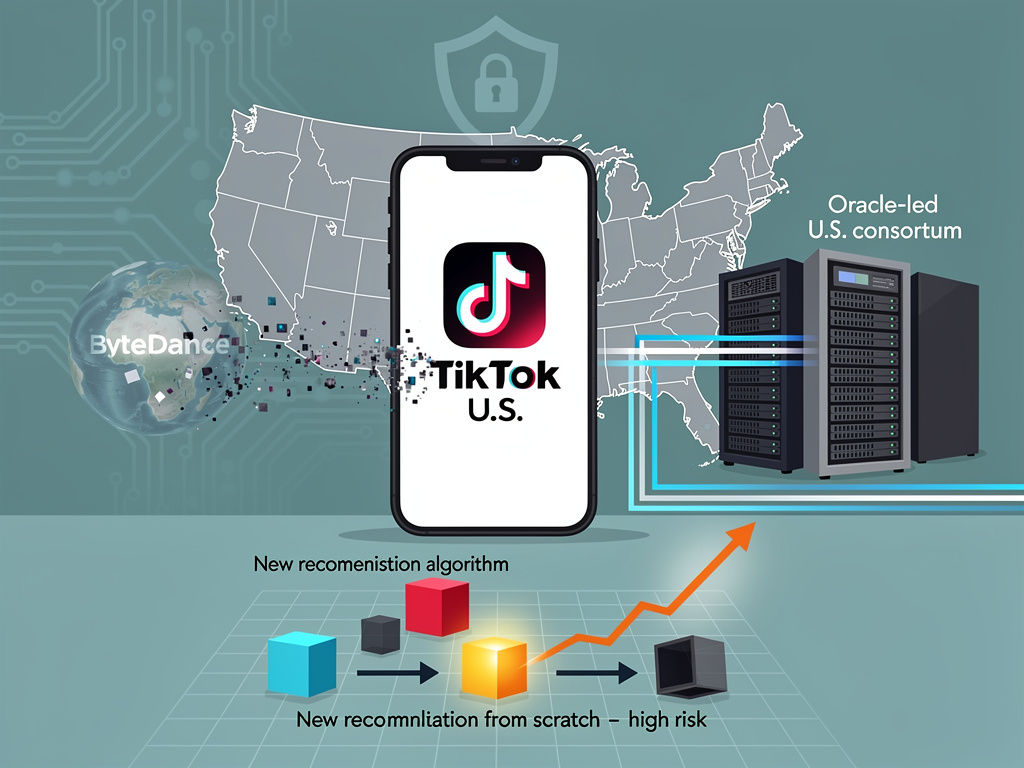
NEW YORK – After years of escalating geopolitical tensions, regulatory threats, and high-stakes negotiations that captivated Washington and Silicon Valley, the American iteration of TikTok is now officially under U.S. ownership. The complex transaction, finalized last week, transfers control of the social media giant’s U.S. operations to a newly formed consortium, American Digital Ventures (ADV), in a landmark deal aimed at severing the platform from its Chinese parent company, ByteDance, and addressing persistent national security concerns.
The move marks the culmination of a saga that began with the Trump administration’s executive orders and intensified with the passage of the Protecting Americans from Foreign Adversary Controlled Applications Act in 2024. The new entity, which will operate the app for its roughly 170 million American users, is led by software giant Oracle and backed by a coalition of U.S. investment firms. The deal effectively creates a separate, ring-fenced version of the world’s most culturally influential app, an unprecedented maneuver in the history of the global internet.
The Algorithm Conundrum: A Deal Without the Crown Jewels
At the heart of the protracted negotiations was the fate of TikTok’s legendary recommendation algorithm—the powerful engine that has been credited with its meteoric rise and addictive nature. In a significant concession that reflects Beijing’s tight grip on its technology exports, ByteDance did not sell its core intellectual property. Instead, American Digital Ventures has been forced to build its own recommendation engine from the ground up, a monumental and risky undertaking. This new system, internally codenamed “Project Triton,” is now live for all U.S. users.
The transition to a new algorithmic core represents the single greatest challenge for the platform’s new owners. While the user interface remains familiar, the underlying logic that surfaces content is entirely different. An initial report from 9to5Mac noted that the changes, which went into effect January 23, 2026, also include a newly established U.S.-based content moderation council to oversee platform safety and speech policies, independent of any foreign influence. The critical question now is whether ADV’s engineers can replicate the near-telepathic content discovery that made the original TikTok a global phenomenon, or if users will perceive a degradation in their “For You” page experience.
Fortress America: Re-architecting Data and Trust
A foundational component of the deal is the complete migration and isolation of U.S. user data. Building on the framework of the earlier “Project Texas” initiative, all sensitive American user information is now stored and processed exclusively within Oracle Cloud Infrastructure (OCI) in the United States. This data firewall is designed to be impenetrable from the outside, with all source code and algorithmic models subject to rigorous inspection by a new, independent U.S.-based board of directors stacked with figures from the national security and technology sectors.
This board, approved by the Committee on Foreign Investment in the United States (CFIUS), holds ultimate authority over data security protocols and all decisions related to the U.S. algorithm’s development. “This is not just a change in ownership; it is a fundamental re-architecting of a major social platform to operate as a secure U.S. domestic service,” said one person familiar with the CFIUS review process. The arrangement is being watched closely as a potential blueprint for how Western governments may handle other foreign-owned technology platforms that achieve mass adoption.
A New Playbook for Creators and Commerce
With the political overhang removed, TikTok’s new leadership is moving aggressively to shore up its relationships with American creators and expand its commercial footprint. ADV has announced a revamped and significantly larger creator fund, designed to offer more competitive monetization terms to fend off rivals like Meta’s Instagram Reels and Google’s YouTube Shorts. The company is betting that by providing more stable and lucrative income streams, it can ensure top talent remains on the platform, even as the new algorithm finds its footing.
Furthermore, the U.S. ownership structure unlocks deeper e-commerce integrations that were previously untenable due to data privacy concerns. Partnerships with major American retailers are expected to be announced in the coming months, aiming to transform the platform’s massive cultural influence into a direct driver of commerce. The goal is to build a robust, self-sustaining economic engine within the U.S. market, proving the platform’s value beyond its entertainment-driven roots and justifying the massive investment required for its acquisition and technological rebuild.
The Geopolitical Fallout in Beijing and Brussels
While the deal resolves a major political headache in Washington, it sends shockwaves through the global technology sector. In Beijing, state-affiliated media have characterized the deal as a “coerced sale” and a protectionist tactic designed to cripple a successful Chinese enterprise. The outcome serves as a stark warning to other Chinese tech firms with global ambitions, suggesting that success in the U.S. market could come at the cost of their most valuable assets. ByteDance, in a carefully worded statement, said it would continue to focus on its more than 150 other markets while complying with all relevant laws.
The move is also being closely scrutinized in Europe. Regulators in Brussels, who have been focused on content moderation and competition through their own Digital Services Act, now face a bifurcated TikTok. They must decide whether to accept the existing ByteDance-run version or push for a similar localized structure. The U.S. solution sets a powerful precedent for data nationalism, potentially accelerating the fracturing of the global internet into distinct, politically-aligned spheres of influence.
An Uncertain Future on a New Foundation
The official transfer of power to American Digital Ventures marks the end of one chapter for TikTok and the beginning of a precarious new one. The immediate challenge is technological: proving that a U.S.-built algorithm can be as engaging as its predecessor. Any noticeable decline in user satisfaction could create an opening for competitors to poach users and creators who have grown accustomed to the platform’s uncanny ability to surface relevant content.
Longer term, the success of this Americanized TikTok will be a bellwether for the future of cross-border technology. The deal has established a new, costly, and complex model for resolving national security concerns tied to foreign-owned apps. Whether this model fosters genuine security or simply erects new walls in an increasingly fragmented digital world remains to be seen. For now, 170 million Americans will continue to scroll, unaware of the immense geopolitical and technological plates that have shifted beneath their thumbs.


 WebProNews is an iEntry Publication