
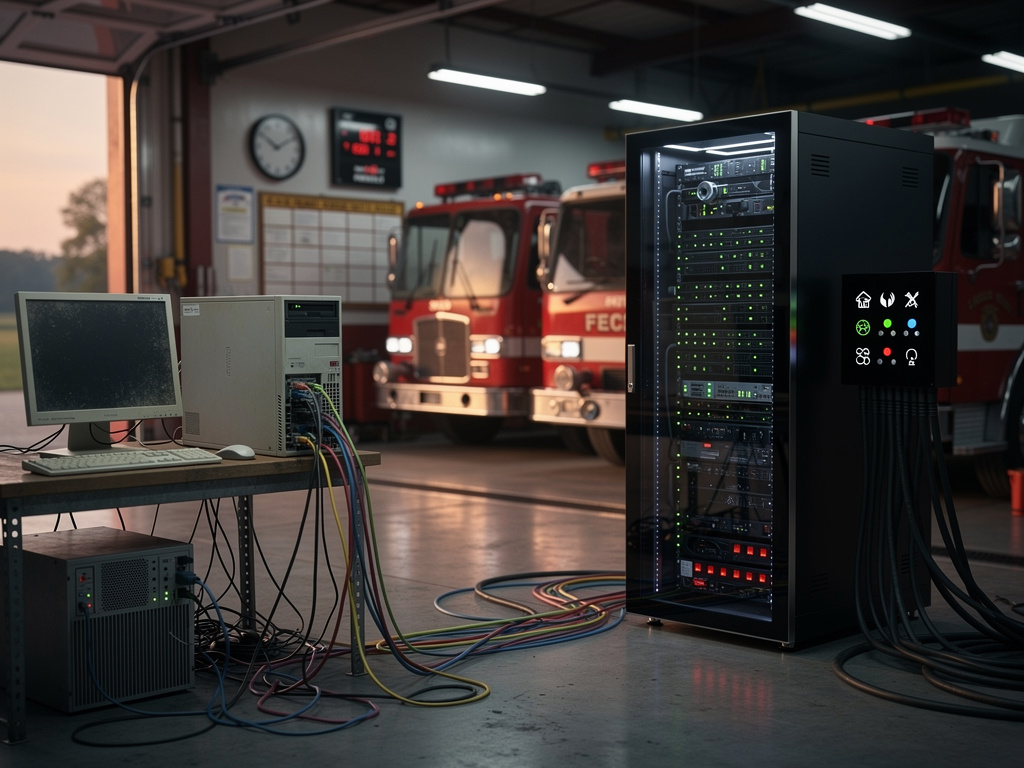
In the quiet towns of rural America, where volunteer fire departments operate on shoestring budgets and community goodwill, a new force is reshaping the tools that keep communities safe. Private equity firms, drawn by the promise of steady revenue from essential services, have quietly acquired the software companies that these departments rely on for everything from dispatching crews to managing inventories. What was once affordable technology is now seeing price hikes that strain already tight resources, forcing fire chiefs to make tough choices between upgrading systems and maintaining basic operations. This shift highlights a broader trend where investor-backed consolidations target niche markets in public safety, often at the expense of those on the front lines.
Take the Norfolk Volunteer Fire Department in Connecticut, which runs on an annual budget of just $132,000. For years, it depended on low-cost software to coordinate responses and track equipment. But as investors swooped in, the department faced subscription fees that ballooned, threatening its ability to afford necessary updates. Similar stories echo across the heartland, where fire stations—many staffed by unpaid volunteers—grapple with costs that have tripled or more in recent years. The influx of private capital into this sector isn’t just about profit; it’s transforming how emergency services function, with ripple effects on response times and community safety.
At the heart of this transformation are a handful of dominant players. Private equity firms now control the top three providers of fire department software, according to posts found on X, which detail how these entities retire legacy systems and push pricier alternatives. This consolidation allows for pricing power that’s hard to counter in a market with few alternatives, especially for small departments lacking the leverage of larger urban counterparts.
Investor Inroads into Essential Tech
The pattern began subtly but accelerated in the mid-2010s. Firms like Vista Equity Partners and others identified fire department software as a stable investment, given its reliance on government funding and the inelastic demand for reliable tools. By acquiring companies that offered dispatching, records management, and compliance software, these investors created roll-ups—consolidated entities that dominate the market. For instance, one major player phased out a popular affordable platform, replacing it with a “modernized” version that costs three to five times more, as reported in a recent investigation by The New York Times.
Rural fire chiefs, interviewed in that piece, described the shock of renewal notices that doubled or tripled fees overnight. In some cases, departments were told their old software would no longer be supported, leaving them no choice but to migrate to costlier options or risk operational failures. This isn’t isolated; similar dynamics are playing out in adjacent fields, such as drone technology for emergency services. A report from DroneXL draws parallels, noting how private equity’s entry into drone manufacturing is leading to price squeezes that mirror those in fire software, potentially limiting access for budget-constrained responders.
Beyond pricing, these acquisitions often promise innovation—AI-driven analytics, cloud-based integrations, and better data sharing across agencies. Yet, for many rural outfits, the benefits feel abstract compared to the immediate financial pain. One fire chief in the Midwest recounted how his department had to forgo new turnout gear to cover software subscriptions, a decision that could compromise firefighter safety during calls.
Ripple Effects on Rural Responders
The financial strain extends to volunteer retention, a critical issue in areas where professional firefighters are scarce. Volunteers, who make up about 70% of the nation’s firefighting force, often dip into personal funds or community donations to keep stations running. When software costs eat into those limited pools, it discourages participation and slows recruitment. Posts on X from industry observers highlight this sentiment, with users decrying how investor profits come at the expense of public safety, one tweeting about the “reliable stream of taxpayer funding” being funneled to private equity coffers.
Comparisons to other sectors underscore the pattern. In healthcare, private equity roll-ups have similarly driven up costs for essential services, leading to congressional scrutiny. Here, the stakes are just as high: delayed software updates could mean slower dispatch times, potentially costing lives in emergencies. A separate analysis from DNYUZ profiles departments like Norfolk’s, emphasizing how annual budgets barely cover vehicle maintenance, let alone inflated tech fees.
Moreover, the opacity of these deals adds to the frustration. Private equity firms rarely disclose pricing strategies or acquisition details, leaving departments in the dark about future costs. This lack of transparency fuels calls for regulation, with some advocates pushing for antitrust reviews of consolidations in public safety tech.
Broader Market Dynamics at Play
Zooming out, this trend reflects a larger shift in how private capital views public infrastructure. Investors see software for emergency services as a “sticky” product—once adopted, it’s hard to switch due to data migration complexities and training investments. This creates a moat around revenues, making the sector attractive despite its niche size. Recent commitments, such as the $73 million earmarked by the Iowa Municipal Fire & Police Retirement System for private equity funds, as detailed in Pensions & Investments, illustrate the growing appetite for such investments.
Critics argue this model prioritizes short-term gains over long-term societal benefits. In wildfire-prone areas, for example, advanced software could integrate with drone surveillance or AI early-detection systems, potentially saving lives and property. Yet, as noted in a RealClearPolicy article, exploding costs are putting firefighters at risk by diverting funds from critical equipment. The piece warns that unchecked capitalism in these arenas erodes the voluntary exchange that markets thrive on, especially when dealing with life-saving tools.
On X, discussions amplify these concerns, with posts linking private equity’s influence to broader failures, like the Los Angeles Fire Department’s truck shortages during recent wildfires. One user pointed to a roll-up by American Industrial Partners as a culprit, highlighting how investor strategies can sideline operational readiness.
Technological Promises Versus Realities
Proponents of private equity involvement counter that investments bring much-needed modernization. Legacy systems, often decades old, struggle with cybersecurity threats and interoperability. By injecting capital, firms can fund R&D for features like real-time GPS tracking and predictive analytics, which could optimize response routes and resource allocation. For instance, initiatives in places like Ahmedabad, India—shared on X—show how tech upgrades, including automated caller coordinates and vehicle GPS, enhance efficiency without investor overreach.
However, in the U.S. context, the execution often falls short for rural users. Departments report that “upgrades” come bundled with unnecessary features, inflating prices without proportional value. A Private Equity International newsletter discusses deployment delays in related defense tech, suggesting similar hurdles in fire services where bureaucratic approvals slow innovation.
Fire chiefs are adapting by seeking open-source alternatives or banding together for collective bargaining, but these efforts are nascent. In some states, lawmakers are eyeing subsidies or mandates to cap costs for essential software, recognizing the public good at stake.
Emerging Alternatives and Future Outlook
Amid the squeeze, innovation from outside the private equity sphere offers hope. Startups like Torch, mentioned in X posts, are deploying wildfire detection sensors that assist in monitoring re-ignition risks, providing affordable tech for high-need areas. Similarly, blockchain-based validation for emergency data, as teased in discussions involving companies like Constellation, could decentralize control and reduce dependency on consolidated providers.
Yet, the dominance of investor-backed firms persists. A The Hustle feature explores why fire trucks now cost $2 million, attributing part of the escalation to private equity’s influence on supply chains, a parallel to software woes. This interconnected web means that software price hikes compound other cost pressures, from equipment to training.
As 2026 approaches, industry insiders predict more scrutiny. Advocacy groups are lobbying for federal guidelines on public safety tech acquisitions, while some departments experiment with in-house solutions. The challenge lies in balancing profit motives with the imperative of equitable access—ensuring that the tech lifeline for rural heroes doesn’t become another casualty of unchecked investment.
Voices from the Field and Policy Paths
Firefighters themselves are vocal about the disconnect. In online forums and X threads, they share anecdotes of software blackouts during critical moments, blaming abrupt changes post-acquisition. One veteran responder lamented how a simple inventory app turned into an enterprise suite with fees rivaling a full-time salary.
Policy responses are gaining traction. Echoing historical cuts in the UK, as noted in older X posts about fire service reductions, U.S. advocates warn that funding shortfalls—exacerbated by tech costs—could lead to slower response times. Think tanks are proposing models where public-private partnerships include price controls, drawing lessons from regulated utilities.
Ultimately, the saga of private equity in fire department software underscores a tension in America’s public services: the allure of efficiency versus the risk of exploitation. As more investors eye similar niches, from police databases to ambulance dispatching, the need for vigilant oversight grows. Rural communities, often overlooked in national debates, stand as the canary in this coal mine, signaling whether essential tech will remain a public resource or a privatized profit center.


 WebProNews is an iEntry Publication