
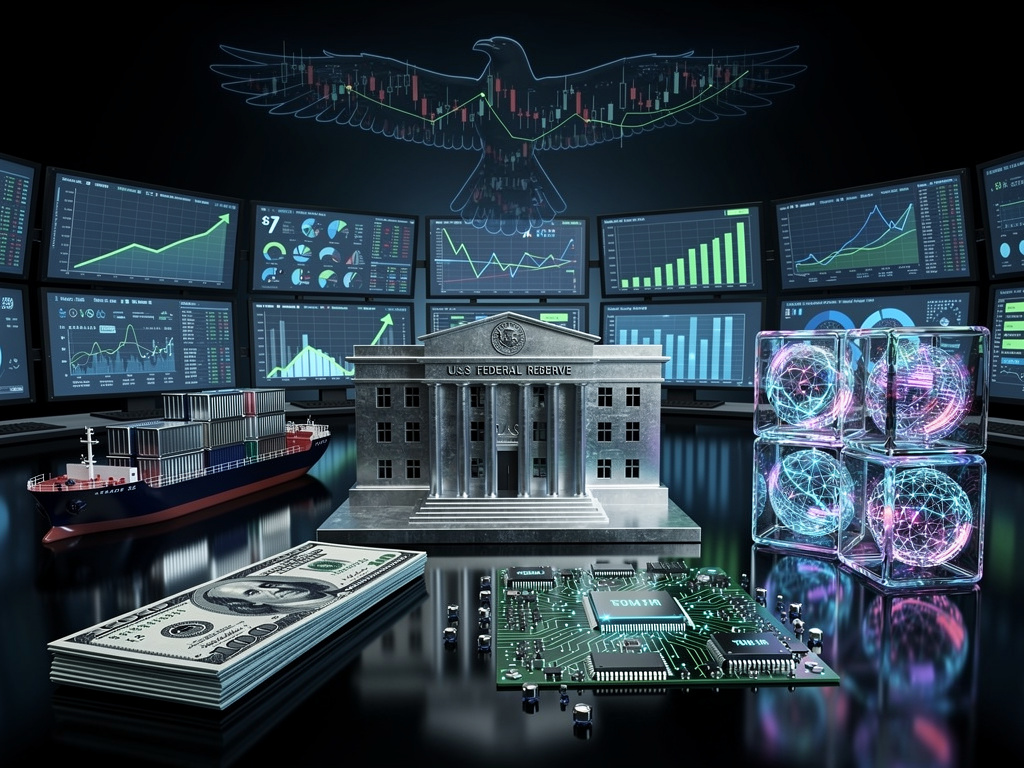
Wall Street’s Trump-era rally shows no signs of fatigue. The Dow Jones Industrial Average has climbed 14% in his second term through April 20, 2026. The S&P 500 sits 19% higher. Nasdaq Composite? Up 24%. These gains echo the first term’s powerhouse performance—57% for the Dow, 70% for the S&P, 142% for Nasdaq. Tariffs grab headlines. Investors fret over higher costs squeezing profits. But history tells a different story. A December 2024 New York Fed report detailed how 2018-2019 China tariffs slashed employment, productivity, sales, and profits in affected businesses. Input costs rose, eroding U.S. competitiveness. Yet markets powered through. The Motley Fool argues tariffs aren’t the real villain.
Something bigger brews at the Federal Reserve. Jerome Powell’s term ends May 15. President Trump nominated Kevin Warsh to replace him. Warsh, a former Fed governor, carries a hawkish reputation. During the financial crisis, he pushed for rate hikes when others hesitated. Now, with inflation ticking up—2.4% trailing twelve months in February to 3.3% in March, per Bureau of Labor Statistics data—Warsh’s views align with tightening, not easing. Cleveland Fed now forecasts 3.58% for April. Gasoline prices spiked amid U.S.-Iran tensions, fueling the surge. CNBC charts the climb.
Warsh eyes the Fed’s balance sheet too. Peaked at $9 trillion in March 2022. Now $6.7 trillion. He favors aggressive runoff—selling long-term Treasuries and mortgage-backed securities. Bond prices fall. Yields rise. Borrowing costs follow. AI data centers, stock market darlings, crave cheap capital. Higher rates crimp that. Joseph Brusuelas tweeted January 30: “Kevin Warsh Nomination: one reason why market players are interpreting it as a hawkish pick… his views on the need for a radical balance sheet reduction.” Anna Economist added: “If Trump wants someone easy on inflation, he got the wrong guy in Kevin Warsh.”
Confirmation fights intensify. Warsh testified before the Senate Banking Committee April 21. Democrats like Elizabeth Warren grilled him on independence. “Either Trump or his Fed nominee is lying,” she said afterward, per CNN. Warsh insisted: “Absolutely not” a Trump sock puppet, responding to Sen. John Kennedy. Sen. Thom Tillis blocked progress amid a Justice Department probe into Powell. All Democrats oppose. Narrow Republican margins leave the vote in doubt. PBS NewsHour covered the standoff.
Markets shrug so far. S&P 500 CAPE ratio hovers near 39, echoing dot-com peaks. History warns of poor returns ahead. But wartime resilience shines. Amid Iran ceasefire deadlines and oil at $98.48 a barrel, indexes hit records. Magnificent Seven added $2.5 trillion in eight days. Four of 2026’s top S&P daily gains came during conflict. Investors chase dips, betting Trump pivots—like last year’s tariff reversals. Alonso Munoz of Hamilton Capital: “This administration is willing to pivot when the market gets shaky.” Wall Street Journal details the defiance.
Debt piles higher. Total gross national debt nears $39 trillion, up $2.64 trillion year-over-year as of March, per Joint Economic Committee. Public debt: $31.3 trillion. Deficits hit $1.2 trillion through March. CBO sees $1.9 trillion for fiscal 2026. Tariffs and spending clash with Fed tightening. Goldman Sachs estimates tariffs add 1% to inflation by mid-2026. Warsh’s regime could amplify that. No rate cuts in sight.
And yet. Stocks climb. AI bets dominate. Buybacks prop valuations. But May 15 approaches. Warsh takes the helm—if confirmed. Balance sheet sales. Stubborn inflation. Rising yields. The Trump bull market faces its sternest test. Tariffs? A sideshow. This Fed pivot could break the momentum. Investors watch Powell’s final FOMC on April 29. Then the real drama.


 WebProNews is an iEntry Publication