
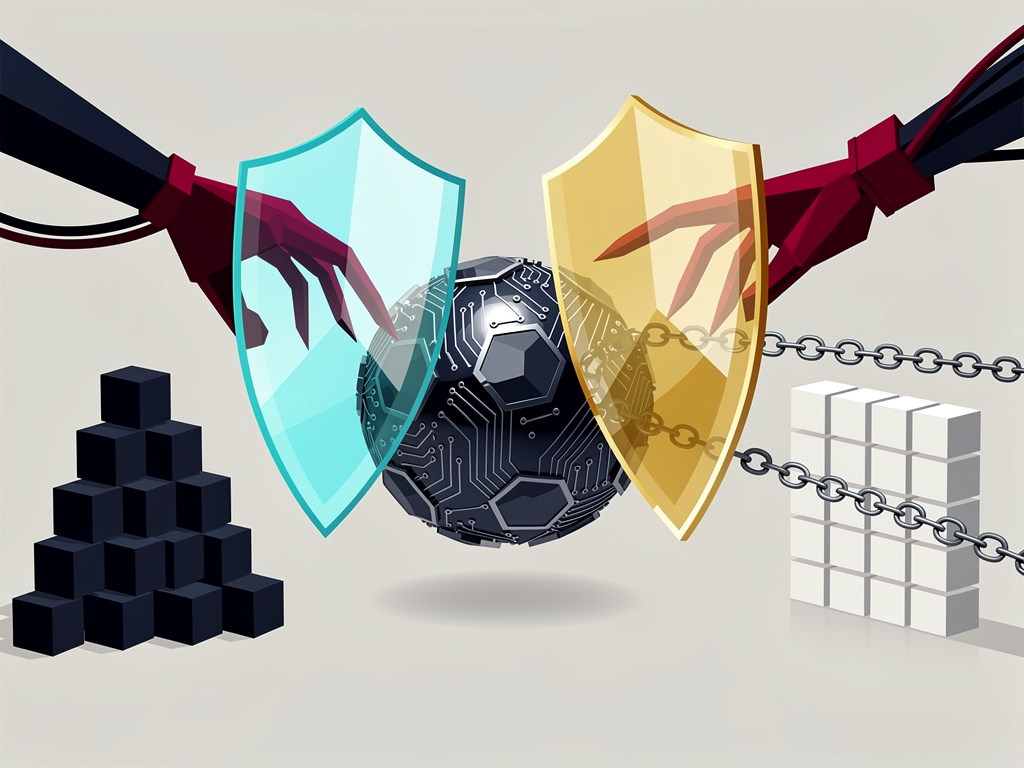
Pope Leo XIV spoke plainly in his first encyclical. Technology carries the imprint of its makers. It reflects their priorities, their blind spots, their ambitions. The document, released May 15 and titled Magnifica Humanitas, pulls no punches. “In the abstract, technology in and of itself is not a solution to humanity’s problems, just as it is not inherently evil,” the pope wrote. “In practice, however, technology is never neutral, because it takes on the characteristics of those who devise, finance, regulate and use it.”
That line echoes through the 130-plus-page text. It lands like a quiet admission long avoided in Silicon Valley boardrooms. Failures in artificial intelligence systems, from biased algorithms to runaway automation, trace back to human decisions. Not some abstract force. Not inevitable progress. Human choices. The TechRadar analysis by Lance Ulanoff captured it directly. The pope said the quiet part out loud. AI dangers stem from us.
Leo XIV built on decades of Vatican thinking. He referenced predecessors from Pius XII to Francis. Yet his tone feels urgent. Fresh. The American pontiff, only months into his role, frames AI as the latest test of human dignity in an age of concentrated power. When data, models and compute sit with a handful of companies, oversight fades. “When such power is concentrated in the hands of a few, it tends to become opaque and evade public oversight, increasing the risk of distorted forms of development that give rise to new dependencies, exclusions, manipulations and inequalities,” he warned.
Those words read like a direct challenge to the giants shaping today’s models. Executives at Anthropic, OpenAI and Google DeepMind have met with Vatican officials before. Christopher Olah of Anthropic even joined the encyclical’s presentation. Olah acknowledged commercial pressures. Competition. Pride. Ambition. Outside voices matter, he said. The Wall Street Journal reported the encounter and the broader context. This document emerges from years of quiet dialogue between the Church and tech leaders. It carries weight precisely because it avoids breathless hype or outright rejection.
Leo XIV calls for disarmament. Not of weapons alone. Of the logic that turns AI into a tool of domination. “To disarm does not mean rejecting technology, but preventing it from dominating humanity,” he explained. “It means freeing technology from monopolistic control and opening it to discussion and debate, therefore making it human-friendly.” Short phrase. Heavy implication. AI should serve the common good. Not optimize solely for profit or geopolitical edge.
The encyclical draws a biblical contrast. Will society build another Tower of Babel, marked by pride and homogenization? Or rebuild Jerusalem, focused on fraternity and coexistence? The pope leaves little doubt which path current trends favor. A technocratic mindset measures success by efficiency and control. It risks reducing people to data points. “If technology becomes the ultimate criterion, the human person risks being reduced to data, a cog in a machine or a commodity.”
Nowhere does this feel more stark than in warfare. AI lowers the threshold for violence. It turns defense into prediction. Victims become data. “No algorithm can make war morally acceptable,” Leo XIV stated flatly. The BBC coverage highlighted his condemnation of an AI arms race. Autonomous systems make conflict more impersonal. More likely. Less tethered to human judgment. Developers carry “particular ethical and spiritual responsibility,” because every design choice reflects a vision of what it means to be human.
Job displacement draws equal concern. Mass unemployment isn’t a side effect. It’s a social calamity. The pope compares it to the Industrial Revolution’s upheavals, which prompted Leo XIII’s landmark Rerum Novarum more than a century ago. This new text updates that tradition for the digital age. It demands adaptive policies. Retraining. Redistribution. Protection for workers in data centers and supply chains who face their own forms of servitude. “New digital slaveries” emerge when systems exploit without accountability.
Regulation must follow. Abstract ethics fall short. “Robust legal frameworks, independent oversight, informed users and a political system that does not abdicate its responsibility are required,” the encyclical insists. Transparency in algorithms. Accountability for platforms. Limits on military applications. The pope stops short of detailed legislation. He sets principles instead. Discernment. Solidarity. Subsidiarity. Values drawn from Catholic social teaching but offered to a wider audience.
Critics and supporters alike took notice. Glen Weyl, a technology governance thinker, told the Journal the pope may be “the single most important person in the world on AI at this moment.” His moral authority reaches beyond believers. It shapes cultural expectations. Vincent Miller, a theologian, saw the text as a choice about design and who gets to decide. Not everyone agrees. Some techno-optimists view the warnings as overly cautious. Others note the Church’s own history. The encyclical includes an apology for the Vatican’s past role in legitimizing slavery. Leo XIV links that delay in moral reckoning to today’s hesitation on AI risks.
Recent coverage reinforces the message. A NPR report from May 25 emphasized the direct aim at Big Tech power and the risk of weakened democracy. CNN detailed the call to prevent AI from fueling conflicts and creating dependencies. Bloomberg noted the “disarm” language as a contribution to heated global debates over regulation. These pieces appeared within 24 hours of the release. They show how quickly the document entered policy conversations.
Yet the pope’s argument runs deeper than regulation. It questions what kind of humanity we want. Algorithms classify people. They optimize. They ignore context. They lack conscience. “So-called artificial intelligences do not have a moral conscience, since they do not judge good and evil, grasp the ultimate meaning of situations, or bear responsibility for consequences,” the text states. Humans cannot outsource judgment. Or conscience. Or the messy work of relationships.
Children and young people face particular vulnerability. Manipulative systems shape preferences before critical thinking develops. The encyclical urges alliances among families, schools and lawmakers. Age limits. Provider accountability. Protections against exploitation. An “ecology of communication” that values serious journalism over reactive noise.
Industry insiders know the stakes. Training runs consume massive energy and water. Models amplify biases present in their data. Deployment decisions favor speed over safety. Concentration of capability in a few labs creates single points of failure. Or single points of control. The pope names these dynamics without naming companies. He doesn’t need to. The patterns are clear.
His solution isn’t to slow innovation. It’s to redirect it. Embed values early. Invite broader participation. Subject choices to public scrutiny. Treat digital infrastructure like a shared environment that must be stewarded, not exploited. “Like the natural environment, the digital world can be preserved or exploited, shared or monopolized.”
That analogy resonates. Environmental regulations took decades to build. AI moves faster. The window for meaningful governance narrows each quarter as capabilities advance. Leo XIV appeals to leaders to act before dependencies harden. Before exclusions become permanent. Before the technocratic paradigm feels inevitable.
Reactions on X reflected the divide. Some users praised the clarity on human responsibility. Others saw it as resistance to progress. One thread noted how the statement challenges both naive neutrality claims and unchecked acceleration. The conversation continues. The encyclical ensures it includes ethical depth often missing from technical debates.
Pope Leo XIV has given executives, regulators and engineers a mirror. The reflection shows not neutral code but human fingerprints. Ambition. Greed. Carelessness. Vision. The choice of which traits to amplify rests with us. Disarmament begins there. With acknowledgment. Then with deliberate redesign. For the common good. For human dignity. For a future that remains recognizably ours.


 WebProNews is an iEntry Publication