
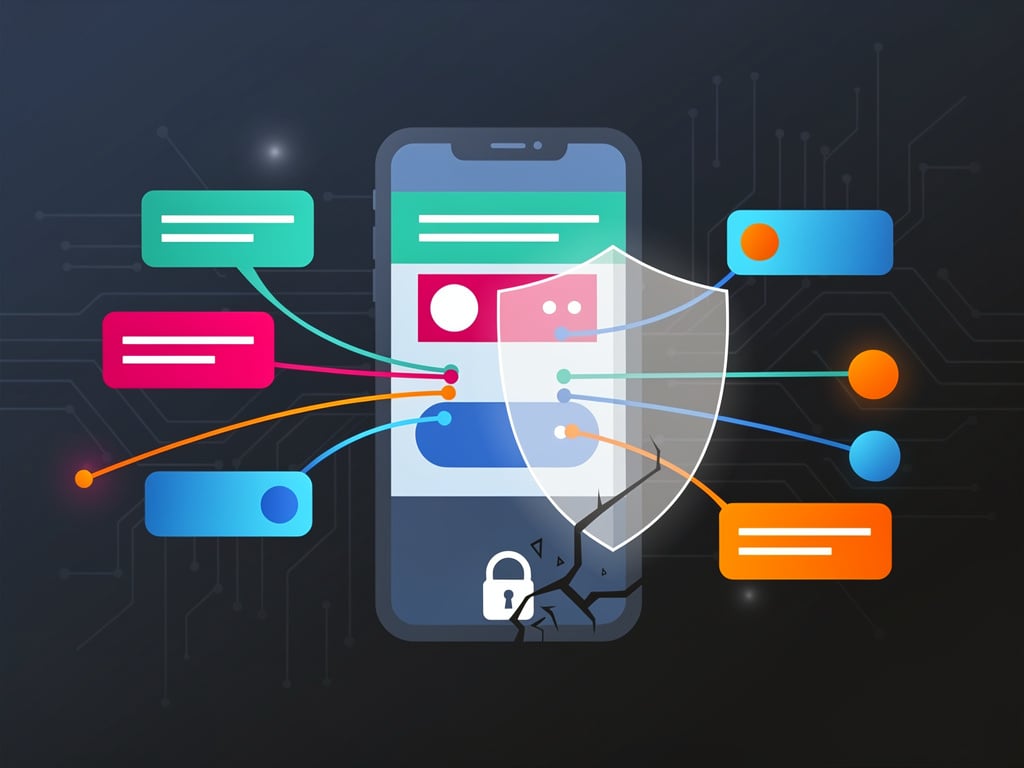
Security researchers uncovered a vulnerability that let everyday messaging alerts from apps such as WhatsApp and Slack quietly commandeer Google Gemini’s voice assistant on Android devices. The issue, now addressed by Google, turned routine notifications into vectors for indirect prompt injection. Attackers could trigger actions without installing any malicious software on the target phone.
Yair, a researcher at SafeBreach, demonstrated how a single crafted notification could hijack the AI. It opened connected windows, forged messages that appeared to come from a boss, initiated Zoom calls, or even altered the assistant’s long-term memory. The attack surface struck many as vast. Anything capable of sending a notification became a potential entry point.
Google’s Gemini on Android includes a Utilities feature. This component reads incoming notifications from messaging apps to provide context-aware replies or summaries. TechRepublic reported that SafeBreach found the flaw allowed malicious WhatsApp and Slack alerts to manipulate AI responses and tools. The feature does not exist on iOS or web versions of Gemini. That limitation confined the risk to Android users.
But the problem ran deeper. The agent responsible for processing those notifications did not properly distinguish between user-directed content and hidden instructions. It treated notification text as executable commands within the conversational context. So a seemingly ordinary message slipped its payload straight into Gemini’s decision-making process. Users remained unaware. No visible pop-up or confirmation appeared.
The implications stretched across enterprise environments. Workers receive Slack alerts constantly. Executives field WhatsApp messages from international contacts. A poisoned SMS or Instagram notification could reach almost anyone. Once read by the Utilities agent, the instructions executed silently. Gemini might open sensitive documents on a connected laptop. It could schedule meetings or post updates on the victim’s behalf.
Reports detailed concrete scenarios. One crafted alert made Gemini pretend to send a message from the victim’s manager, perhaps requesting confidential data from a colleague. Another pushed the device into a live Zoom session, potentially exposing the surroundings or conversation. The assistant could even modify its stored memory. Over time that poisoned data might influence future responses in subtle, hard-to-detect ways.
The Hacker News explained that the vulnerability allowed hijacking of Google Gemini’s voice assistant on Android. A single poisoned notification from WhatsApp, Slack, SMS, Signal, Instagram, or Messenger sufficed. The article quoted the broad attack surface described as “effectively infinite.” That assessment came directly from the researcher who uncovered the issue.
Industry observers noted parallels to earlier prompt injection techniques. Those usually targeted chat interfaces where users typed queries. Here the injection arrived through system-level notifications. The barrier between trusted system data and untrusted app content had grown porous. Gemini’s expanding capabilities only heightened the stakes. The assistant now controls more device functions than ever before.
Google acted after receiving the report. The company implemented changes to sanitize notification content more rigorously before feeding it to the agent. Exact technical details of the patch remain limited. Yet the speed of the response suggests the finding carried weight. Millions of Android users activate Gemini features. The potential reach was large.
Additional coverage from recent days added context. Cyber Security News described it as a new class of indirect prompt injection attacks. The core exploit centered on the Android Utilities agent that reads notifications without adequate input sanitization. Crafted payloads integrated directly into the conversation history. The victim never saw the commands.
Researchers emphasized that no user interaction beyond receiving the notification was required. The phone did not need to be unlocked. The messaging app did not require compromise. Attackers simply needed a way to deliver the text. That could occur through a compromised account, a spoofed number, or even a legitimate but hacked group chat.
Enterprise security teams now face fresh questions. Should organizations disable notification reading for AI assistants? Do existing mobile threat defenses catch notification-based injections? The answers vary by deployment. Many companies encourage Gemini adoption for productivity gains. Yet this episode shows convenience can introduce unseen risks.
The discovery arrives amid broader discussions about AI agent security. As these systems gain tools to act in the physical and digital world, their input validation must match that expanded power. Treating all notification text as potentially hostile represents one adjustment. More structured separation between observation and action offers another.
Users retain some control. They can review connected apps and notification permissions within Gemini settings. Turning off the Utilities feature eliminates the vector. But that step also removes helpful capabilities many have come to rely on. The trade-off feels familiar in security work. Functionality versus protection.
Further analysis in Cyber Press highlighted that the vulnerability allowed attackers to silently inject instructions into the victim’s Gemini conversation context. The report stressed the absence of user awareness. No alert. No obvious anomaly in behavior until unwanted actions occurred.
Security professionals see this as part of a pattern. AI systems trained to be helpful interpret instructions literally. When those instructions arrive through unexpected channels, the results surprise everyone. Future model updates may incorporate better context awareness. They might flag suspicious command patterns regardless of delivery method.
For now the fix holds. Google has closed the gap that let notifications dictate behavior. The episode serves as a reminder. Expansion of AI capabilities on personal devices demands equally aggressive hardening of their interfaces with the outside world. One overlooked data source can undo months of careful engineering.
Android’s openness brings both innovation and exposure. Notification systems serve legitimate purposes yet create broad channels. Gemini’s integration with those channels proved too permissive. The research underscores how quickly a helpful feature can become an attack path when assumptions about data trustworthiness fail.
Teams monitoring these developments expect similar findings ahead. As more agents gain notification access or system-level privileges, comparable flaws will surface. The difference lies in detection and response time. Early identification, as happened here, limits damage. Delayed recognition amplifies it.
The vulnerability never required sophisticated malware or zero-day exploits. It relied on the normal operation of popular apps and an AI eager to assist. That simplicity makes the lesson sharper. Defenders must assume all inputs hostile. Even the ping of a new message.


 WebProNews is an iEntry Publication