
A child sits on the living room floor, a tablet propped against a pillow in front of her. She taps, swipes, watches. Her face is still. Across town, another child holds a plastic doll by the arm, narrating an elaborate story about a veterinarian who rescues dragons on weekends. Her hands move constantly. Her voice shifts between characters. Her face is alive.
According to a growing body of research, that second child — the one talking to a hunk of molded plastic — is building cognitive and social skills that the first child, bathed in the glow of a high-resolution screen, simply is not. And the gap may be wider than most parents realize.
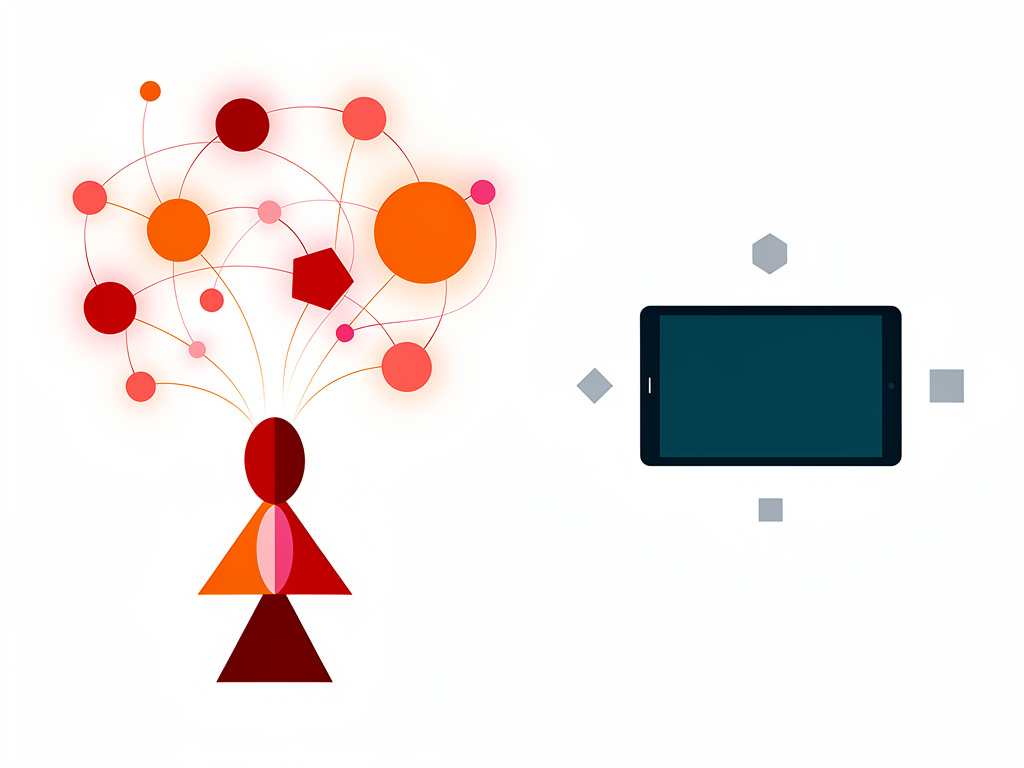
A study published in the journal Developmental Science by researchers at Cardiff University has provided some of the most compelling neuroimaging evidence to date that playing with dolls activates brain regions associated with social processing and empathy far more effectively than tablet-based play. The findings, reported by Digital Trends, showed that when children engaged in doll play — even when playing alone — a region of the brain called the posterior superior temporal sulcus (pSTS) lit up with activity. This is the same region that activates when humans process the thoughts, feelings, and intentions of other people. Tablet play, by contrast, produced significantly less activation in this area.
The implications are enormous. Not just for parents, but for educators, pediatricians, toy manufacturers, and the technology companies that have spent billions positioning screens as indispensable tools for childhood learning.
Let’s be clear about what the Cardiff research actually measured. The team, led by Dr. Sarah Gerson, used functional near-infrared spectroscopy (fNIRS) — a brain-imaging technique well-suited for use with young children because it doesn’t require them to lie motionless inside an MRI machine. Children between the ages of 4 and 8 were given dolls to play with and then tablets loaded with age-appropriate creative games. The fNIRS headbands captured real-time blood flow changes in the brain, mapping which regions were most active during each type of play.
The pSTS activation during doll play was striking. This wasn’t a marginal difference. The social-processing region showed substantially greater engagement when children played with dolls compared to tablets, regardless of whether the child was playing alone or with a partner. That last point matters. A common assumption is that solitary play is inherently less social. The Cardiff data challenges that assumption head-on: children playing alone with dolls were still rehearsing social scenarios internally, practicing empathy, perspective-taking, and emotional regulation in ways that tablet interaction did not replicate.
Mattel, which funded the Cardiff research, has obvious commercial interests in the results. The company makes Barbie. But the study was conducted independently by the university, peer-reviewed, and published in a respected journal. And the findings align with decades of developmental psychology research suggesting that open-ended, imaginative play is one of the primary mechanisms through which children learn to understand other minds.
The Tablet Problem Isn’t the Screen — It’s the Structure
The issue with tablets isn’t that they’re electronic. It’s that most tablet experiences for children are fundamentally directed. Even so-called creative apps tend to channel a child’s attention along predetermined pathways — tap here, drag there, watch this animation play out. The child responds to prompts rather than generating scenarios from scratch. There’s a ceiling on improvisation.
Doll play has no ceiling. A child can decide that Barbie is an astronaut who’s afraid of the dark, or a teacher whose classroom is on a pirate ship. The narrative possibilities are infinite, and the child is the sole author. This kind of unconstrained pretend play forces the brain to simulate social interactions — to imagine what another being might think, feel, want, or fear. That’s the definition of empathy rehearsal.
Dr. Gerson noted in the Cardiff findings that the results suggest dolls offer something that technology currently does not: an invitation for the child to create a social world from nothing. The tablet provides a world. The doll asks the child to build one.
This distinction has been echoed by other researchers in recent months. The American Academy of Pediatrics has continued to urge caution about screen time for young children, not because screens are inherently toxic, but because they tend to displace the kinds of activities — physical play, face-to-face interaction, imaginative storytelling — that are most beneficial during critical developmental windows. A 2024 report from the AAP reiterated that children under five benefit most from play that involves physical objects and human interaction, and that passive or semi-passive screen engagement offers diminishing developmental returns.
Meanwhile, researchers at the University of Cambridge have been investigating the broader relationship between imaginative play and theory of mind — the ability to attribute mental states to others. Their work has consistently shown that children who engage in more pretend play demonstrate stronger theory-of-mind skills by age five. Dolls, action figures, stuffed animals — these are the props of pretend play. Tablets, for the most part, are not.
None of this means tablets are villains. They aren’t. Video calls with grandparents, educational content watched alongside a parent, interactive storytelling apps that genuinely require creative input — these can be valuable. The problem arises when a tablet becomes the default mode of play, crowding out the messy, noisy, sometimes boring, profoundly important work of making things up.
And that’s exactly what’s been happening. Data from Common Sense Media shows that screen time among children aged 0 to 8 has increased substantially over the past decade, with the sharpest spike occurring during and after the COVID-19 pandemic. For many families, tablets became babysitters, classrooms, and playmates all at once. The convenience was undeniable. The developmental trade-offs are only now becoming clear.
I grew up in the Midwest, and I remember the sheer volume of imaginative play that filled the hours between school and dinner. Action figures, Legos, a cardboard box that was alternately a spaceship and a fort. No one was measuring my pSTS activation, but I can tell you that the stories I invented with those toys taught me something about how other people think. My dogs were frequent characters. So were imaginary friends with elaborate backstories. That kind of play felt instinctive, almost compulsory. Today, it has to compete with a device that offers instant gratification and infinite content — and that competition isn’t fair.
The Cardiff study doesn’t argue for banning tablets. What it argues, with hard neurological data, is that the type of play matters in measurable, brain-altering ways. Doll play activates the social brain. Tablet play, in most of its current forms, does not — at least not to the same degree.
Toy companies are paying attention. Mattel has used the research to bolster its marketing of Barbie and other doll lines, framing them not just as entertainment but as developmental tools. Other manufacturers have begun emphasizing the open-ended nature of their products, positioning physical toys as complements to — or antidotes for — screen-based play. It’s a message that resonates with parents who’ve watched their children zone out in front of a tablet and wondered whether something was being lost.
Something is.
The science is accumulating. The pSTS data from Cardiff. The theory-of-mind research from Cambridge. The AAP guidelines. The Common Sense Media usage statistics that show how dramatically the balance of play has shifted toward screens. Taken together, they paint a picture that’s hard to ignore: children’s brains are built for the kind of play that dolls and physical toys provide, and no amount of app design has yet replicated what a simple plastic figure and a child’s imagination can accomplish together.
So the next time a four-year-old is narrating an absurd adventure for a beat-up Barbie doll, don’t interrupt. Her brain is doing exactly what it’s supposed to do. And no tablet on the market can match it.


 WebProNews is an iEntry Publication