
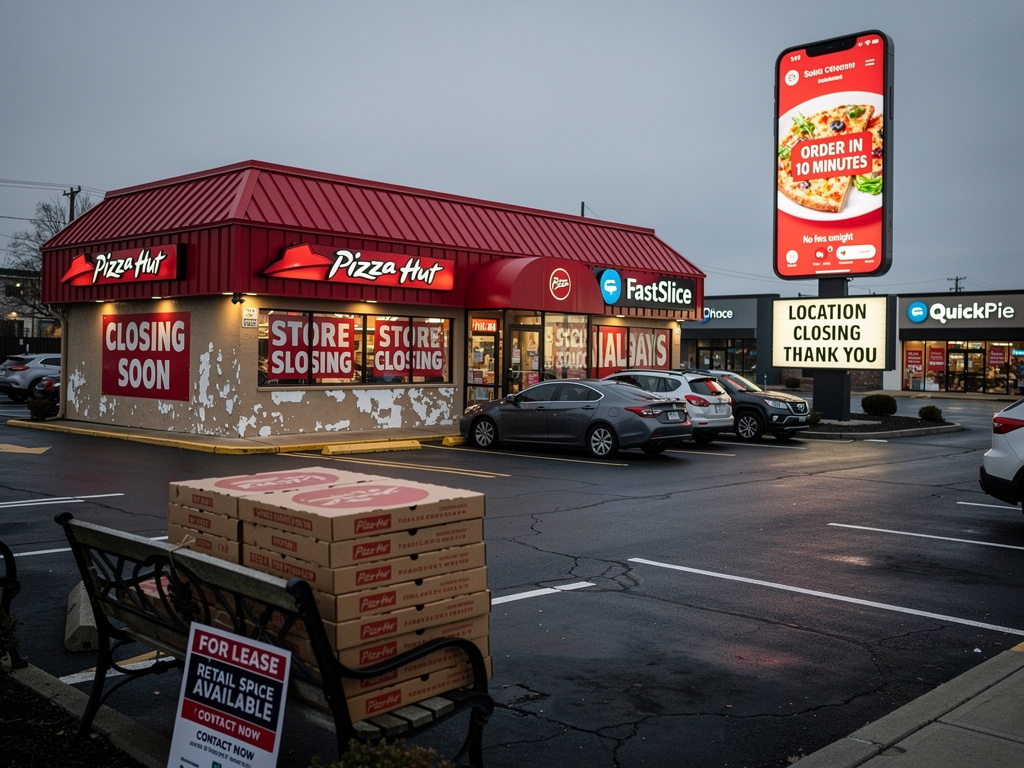
The once-dominant pizza chain Pizza Hut is confronting its most severe operational crisis in decades, as a wave of store closures threatens to fundamentally reshape the company’s footprint across the United States. According to CNN, the chain is preparing to shutter hundreds of locations in what industry analysts are describing as a reckoning for the legacy quick-service restaurant sector. The closures represent not merely a corporate restructuring, but a fundamental shift in how Americans consume pizza and interact with traditional dine-in establishments.
The immediate catalyst for these closures stems from financial distress among Pizza Hut’s largest franchisees, who operate the majority of the chain’s approximately 6,000 domestic locations. Unlike company-owned stores, franchised restaurants operate under licensing agreements that require operators to maintain specific standards while shouldering the burden of real estate costs, labor expenses, and capital improvements. When franchisees face insolvency, the ripple effects cascade quickly through the system, leaving parent company Yum! Brands with difficult decisions about which locations to support, restructure, or allow to close permanently.
The financial strain on Pizza Hut franchisees has been building for years, exacerbated by rising labor costs, increased competition from fast-casual concepts, and shifting consumer preferences toward delivery and takeout rather than dine-in experiences. The COVID-19 pandemic accelerated these trends dramatically, forcing many operators to maintain expensive dining rooms that generate minimal revenue while competing against digital-native competitors like Domino’s, which invested heavily in technology infrastructure years before the crisis struck.
The Franchisee Model Under Pressure
Pizza Hut’s franchise structure, once considered the gold standard for rapid expansion in the quick-service industry, has become a liability in an era demanding technological sophistication and operational flexibility. Traditional franchisees typically signed long-term leases for standalone buildings with distinctive red roofs and spacious dining areas designed for the family dining experience that dominated American culture in the 1980s and 1990s. These physical assets, once valuable, now represent fixed costs that cannot easily be shed as consumer behavior shifts decisively toward off-premise consumption.
The economics of operating a legacy Pizza Hut location have deteriorated significantly over the past five years. Real estate costs remain constant or increase, while the revenue generated from dine-in customers has plummeted. Meanwhile, delivery and carryout orders, which now constitute the overwhelming majority of sales, generate lower margins due to third-party delivery fees and promotional discounting necessary to compete in crowded digital marketplaces. Franchisees find themselves trapped between maintaining aging physical infrastructure and investing in the digital capabilities necessary to compete effectively in modern food service.
Competitive Dynamics Reshape the Pizza Sector
The competitive environment facing Pizza Hut has intensified dramatically as Domino’s Pizza has emerged as the clear market leader through relentless focus on digital ordering, delivery efficiency, and operational consistency. Domino’s invested hundreds of millions of dollars in proprietary technology platforms, creating seamless ordering experiences across mobile apps, smart speakers, and even text messages. This technological advantage, combined with a simplified menu and standardized operations, allowed Domino’s to capture market share steadily while Pizza Hut struggled to modernize its more complex business model.
Beyond traditional pizza competitors, Pizza Hut faces pressure from an expanding array of fast-casual concepts, ghost kitchens, and even grocery store prepared food sections that have elevated their pizza offerings. Chains like Blaze Pizza and MOD Pizza introduced customizable, fast-fired pizzas that appeal to younger consumers seeking personalization and speed. Meanwhile, ghost kitchens operating from shared commercial spaces can experiment with innovative concepts without the overhead burden of maintaining customer-facing real estate, allowing them to undercut traditional chains on price while maintaining quality.
Parent Company Strategy and Brand Portfolio Management
Yum! Brands, which owns Pizza Hut alongside KFC and Taco Bell, has faced criticism from investors and analysts regarding its stewardship of the pizza chain. While Taco Bell has thrived through menu innovation and cultural relevance, and KFC maintains strong international performance, Pizza Hut has languished as the portfolio’s underperformer. The company has attempted various turnaround strategies, including menu simplification, marketing campaigns emphasizing quality ingredients, and partnerships with third-party delivery platforms, but none have reversed the fundamental trajectory of declining relevance among core demographics.
The strategic challenge for Yum! Brands involves determining how aggressively to support struggling franchisees versus allowing market forces to rationalize the Pizza Hut footprint naturally. The company could potentially buy back troubled franchise locations, invest capital to modernize them, and either operate them directly or sell them to stronger franchisees. However, this approach requires significant capital allocation to a struggling brand when those resources might generate better returns invested in Taco Bell expansion or KFC international growth. Alternatively, allowing widespread closures risks damaging brand perception and creating food deserts in communities where Pizza Hut represents one of few dining options.
Labor Market Dynamics and Operational Challenges
The restaurant industry’s labor crisis has hit Pizza Hut particularly hard, as the chain’s older operational model requires more employees per location than streamlined competitors. Traditional Pizza Hut restaurants need staff for dine-in service, kitchen operations, delivery driving, and phone order-taking, while competitors have automated many of these functions or eliminated them entirely. The tight labor market of recent years forced franchisees to increase wages substantially while struggling to maintain adequate staffing levels, creating a vicious cycle of rising costs and declining service quality.
Recruiting and retaining quality employees has become increasingly difficult for legacy quick-service brands that lack the cultural cachet of newer concepts or the compensation packages of corporate employers. Pizza Hut franchisees report chronic understaffing that forces remaining employees to work excessive hours, leading to burnout and turnover that perpetuates the problem. The inability to deliver consistent service quality damages customer satisfaction and drives business to competitors, further weakening the financial position of struggling locations and making them more vulnerable to closure.
Real Estate Implications and Community Impact
The closure of hundreds of Pizza Hut locations will leave visible scars across American communities, as the chain’s distinctive architecture has become part of the built environment in countless towns and suburbs. The iconic red-roofed buildings, many located on prominent corner lots with ample parking, will require repurposing or demolition. Some may find new life as other restaurant concepts, while others could sit vacant for extended periods, becoming eyesores that depress surrounding property values and signal economic decline.
From a community perspective, Pizza Hut closures disproportionately affect smaller cities and rural areas where the chain maintained presence even as it retreated from competitive urban markets. In many communities, Pizza Hut represents not just a dining option but a gathering place for youth sports teams, school fundraisers, and family celebrations. The loss of these locations eliminates employment opportunities in areas with limited job options and reduces food access in communities already underserved by retail and restaurant choices. Local governments face the challenge of attracting replacement businesses to fill vacant Pizza Hut buildings while dealing with reduced tax revenue from closures.
Technology Investment and Digital Transformation Imperatives
The fundamental lesson from Pizza Hut’s struggles involves the critical importance of technology investment in modern food service. Domino’s transformation from a struggling chain to market leader occurred primarily through digital innovation that made ordering effortless and tracking transparent. Pizza Hut attempted to follow this path but lacked the unified commitment and capital investment necessary to overcome its late start. The company’s franchise structure created additional complexity, as individual operators needed to adopt new systems while managing daily operations of struggling locations.
Looking forward, any viable path to Pizza Hut stabilization requires massive technology investment to achieve competitive parity in digital ordering, customer relationship management, and operational efficiency. This means not just consumer-facing apps but back-end systems that optimize inventory management, labor scheduling, and delivery routing. The challenge involves funding this investment while simultaneously supporting franchisees through the transition, a dual demand on capital that Yum! Brands must weigh against alternative uses of shareholder resources. The company’s willingness to make this commitment will determine whether Pizza Hut can stabilize its footprint or faces continued contraction.
Industry-Wide Implications and Future Outlook
Pizza Hut’s crisis serves as a cautionary tale for the broader quick-service restaurant industry, particularly legacy brands built around dine-in experiences now rendered obsolete by changing consumer preferences. Other chains watching Pizza Hut’s struggles must evaluate their own vulnerability to similar dynamics, assessing whether their franchise economics remain viable and their technology capabilities sufficient to compete in digital-first markets. The industry may witness additional consolidation as weaker brands exit or merge while stronger concepts expand market share.
The next several years will prove decisive for Pizza Hut’s long-term viability as a major pizza chain. The company must execute a delicate balancing act: supporting viable franchisees through difficult transitions while allowing unsustainable locations to close, investing in technology and marketing to rebuild brand relevance while managing costs prudently, and maintaining enough locations to preserve national presence while avoiding the drag of unprofitable stores. Success requires not just operational excellence but fundamental reimagining of what Pizza Hut represents to contemporary consumers and whether the brand can reclaim cultural relevance in a dramatically changed marketplace. The outcome will reverberate throughout the restaurant industry, offering lessons about adaptation, technology, and the challenges of reviving legacy brands in an era of relentless disruption.


 WebProNews is an iEntry Publication