
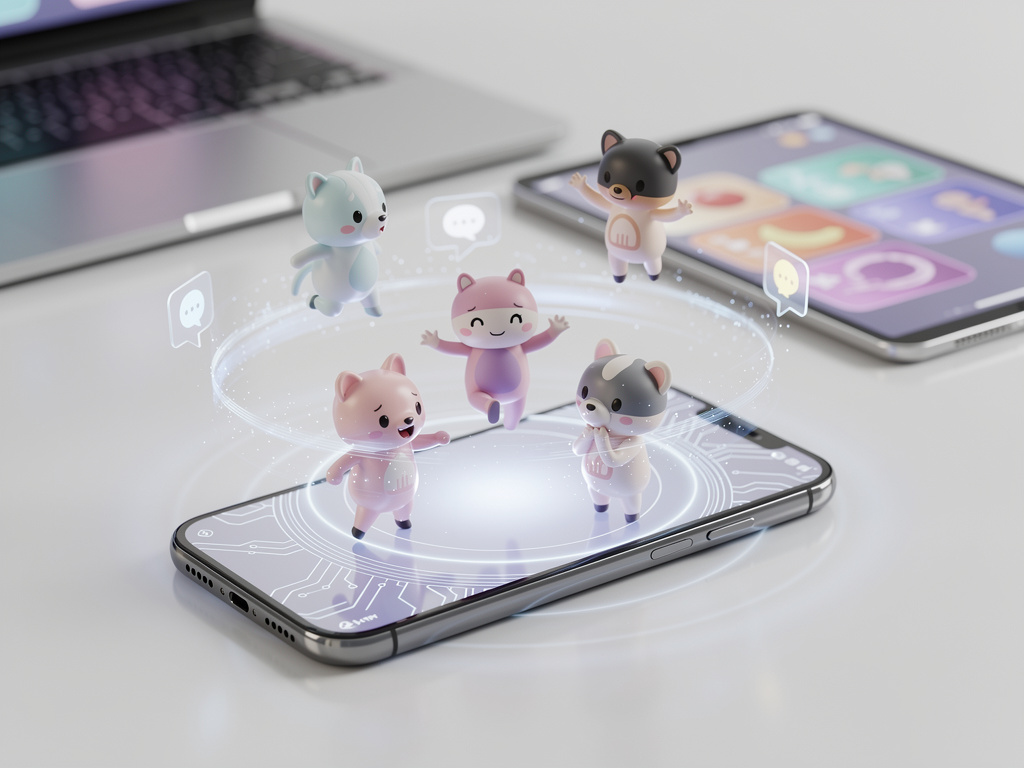
Pixi wants to transform ordinary text conversations into interactive experiences featuring animated characters that respond to user messages in real time. The startup has developed an augmented reality messaging platform that overlays expressive 3D figures onto smartphone screens during chats, creating a more engaging alternative to standard emoji or sticker reactions.
The concept emerged from observations about how people already communicate through digital means. According to reporting from Digital Trends, founder and CEO Liron Lerman identified a gap in mobile messaging where conversations often feel flat despite the abundance of visual tools available. Pixi addresses this by introducing characters that can dance, gesture, and react based on the content and tone of exchanged texts. These figures appear in the recipient’s camera view, positioned in the physical environment through AR technology, making messages feel more personal and lively.
At its core, Pixi functions as both a standalone messaging application and a potential integration tool for existing platforms. Users select from a growing library of characters, each with distinct personalities and animation sets. When someone sends a message through the app, the chosen character performs actions that match the sentiment or specific keywords in the text. A cheerful greeting might trigger a character to wave enthusiastically, while a complaint about traffic could prompt an animated display of frustration complete with appropriate body language.
The technology relies on sophisticated computer vision and natural language processing to interpret messages accurately. Pixi’s system analyzes incoming text for emotional cues, intent, and context before selecting the most fitting animation sequence. This process happens quickly enough to maintain natural conversation flow, with characters appearing almost immediately after a message arrives. The AR component uses a device’s camera to place these digital beings in real-world settings, allowing them to interact with physical objects or simply stand in the user’s space as they read their notifications.
Developers at Pixi have focused considerable attention on character design and movement quality. Each figure features detailed textures and fluid animations that avoid the stiff, robotic motions common in early AR experiments. The company has partnered with animators and character designers to create personalities ranging from cute animals to stylized human representations. Some characters specialize in humorous reactions, while others emphasize emotional support or professional communication styles suitable for workplace chats.
Privacy considerations play a central role in Pixi’s development approach. The application requires camera access to display AR elements, which raises understandable concerns about data collection and security. According to the Digital Trends coverage, the company has implemented strict protocols to ensure that camera feeds remain local to the device and are not transmitted to servers unless explicitly necessary for specific features. Message content analysis also occurs primarily on-device to minimize the amount of personal information shared with cloud services.
Early demonstrations of the platform show promising results in group conversations. Multiple characters can appear simultaneously, each representing different participants in a chat thread. This creates dynamic scenes where figures interact with one another based on the conversation flow, potentially leading to more entertaining group messaging experiences. Friends planning a weekend outing might see their respective characters high-fiving or dancing together as plans solidify through text exchanges.
The business model for Pixi involves both free and premium options. Basic character sets and reactions come at no cost, allowing users to test the concept without financial commitment. Premium subscriptions unlock exclusive characters, advanced animation options, and customization tools that let users modify how their personal avatar appears in others’ AR views. The company also explores partnerships with brands interested in creating sponsored characters or special reaction sequences for marketing purposes.
Technical requirements for running Pixi remain relatively accessible compared to other AR applications. Most modern smartphones with decent cameras and processors can handle the application without significant performance issues. The software optimizes for battery life by limiting active AR sessions to moments when users actually view messages rather than running continuously in the background. This thoughtful approach helps address one of the primary complaints about AR technology, which often drains device resources quickly.
User testing phases have revealed interesting patterns in how people adopt the technology. Some individuals immediately embrace the playful nature of AR characters and incorporate them into daily communications with close friends and family. Others prefer using the feature more selectively for special occasions or with specific contacts who share their enthusiasm for the format. This selective adoption mirrors patterns seen with other messaging innovations like voice messages or video calls, where users develop personal preferences for when and with whom they employ new tools.
Challenges remain in scaling the platform to compete with established messaging giants. Pixi must convince users to either switch their primary communication app or adopt yet another messaging service alongside their existing ones. The company addresses this partly through plans for interoperability features that would allow AR characters to appear in conversations happening on other platforms. Such integration would require cooperation from major tech companies, presenting both technical and business hurdles that the startup continues to work through.
Creative possibilities extend beyond simple reactions to messages. Pixi envisions scenarios where characters can act out entire scenes based on story-like text exchanges. Users might collaborate on animated narratives that unfold across multiple messages, with each participant controlling a different character in the shared AR space. Educational applications could emerge as well, with teachers using the platform to create interactive lessons that students access through their phones during remote learning sessions.
The visual nature of Pixi’s approach particularly appeals to younger demographics who have grown up with advanced visual communication tools. Teenagers and young adults often express frustration with the limitations of traditional text for conveying nuance and emotion. AR characters provide an outlet for more expressive communication that feels natural to a generation accustomed to filters, effects, and visual storytelling on social media platforms.
Development teams continue expanding the character library based on user feedback and cultural considerations. International versions of the app account for different communication styles and social norms across regions, ensuring that character reactions feel appropriate and respectful in various cultural contexts. This attention to global appeal could prove essential for the platform’s long-term success in diverse markets.
Technical innovation in Pixi’s backend systems deserves recognition for enabling smooth performance across varying network conditions. The application intelligently adjusts animation complexity based on available bandwidth and device capabilities, ensuring that users with older phones or slower connections still receive an enjoyable experience. This adaptive approach demonstrates thoughtful engineering that prioritizes accessibility over flashy features that might exclude portions of the potential user base.
As adoption grows, questions about digital etiquette in AR messaging environments will likely arise. Users will need to establish norms around when AR characters are appropriate and how to handle situations where someone might not want animated figures appearing in their physical space. Similar discussions occurred during the early days of video calling and persist today regarding appropriate use of camera features during professional meetings.
Pixi’s team includes professionals with backgrounds in animation, artificial intelligence, and mobile development, bringing together diverse expertise necessary for such an ambitious project. Their collaborative approach has resulted in a product that feels polished despite being in relatively early stages of public availability. Regular updates introduce new characters and improved reaction accuracy, showing the company’s commitment to continuous refinement based on real user experiences.
The potential impact on remote relationships presents an intriguing aspect of the technology. For people separated by distance, seeing a friend’s or family member’s chosen character react to their messages could create a stronger sense of connection than text alone provides. The physical placement of these characters in one’s environment through AR might help bridge emotional gaps that purely digital communication sometimes creates.
Looking toward future developments, Pixi explores integration with wearable devices and smart glasses that could make AR messaging even more immersive. Rather than holding up a phone to see characters, users might eventually view them through augmented reality headsets or glasses that blend digital elements more naturally with the physical world. Such advancements would require significant progress in hardware technology but represent the logical evolution of the core concept.
Competition in the messaging space remains fierce, with major platforms constantly introducing new features to retain user attention. Pixi differentiates itself through its exclusive focus on AR-enhanced communication rather than attempting to be a complete messaging solution with email integration, file sharing, and other standard features. This specialized approach allows the company to perfect its unique offering while potentially partnering with larger services for broader distribution.
User interface design in Pixi emphasizes simplicity to avoid overwhelming people with too many options during conversations. The application automatically suggests appropriate characters and reactions based on conversation context, though users retain full control to override suggestions or select different animations. This balance between intelligent assistance and user agency contributes to the platform’s approachable feel.
Community features within the app allow users to share custom character designs and reaction sequences with one another. This creative aspect encourages ongoing engagement as people experiment with new ways to express themselves through the medium. Popular creations can gain widespread adoption, creating a vibrant subculture around specific characters or animation styles.
The psychological effects of communicating through animated characters present an area of ongoing study. Early research suggests that seeing visual representations of emotions can enhance empathy and understanding in digital conversations. However, questions remain about whether such mediated communication might affect people’s ability to interpret subtle emotional cues in face-to-face interactions over time.
Pixi continues to iterate on its core technology while expanding its vision for how AR can enhance human connection. By focusing on genuine improvements to the messaging experience rather than novelty for its own sake, the company positions itself to potentially carve out a meaningful space in the competitive world of mobile communication applications. The coming months will reveal how users respond to this novel approach and whether AR characters become a regular part of how people stay in touch with one another.


 WebProNews is an iEntry Publication