
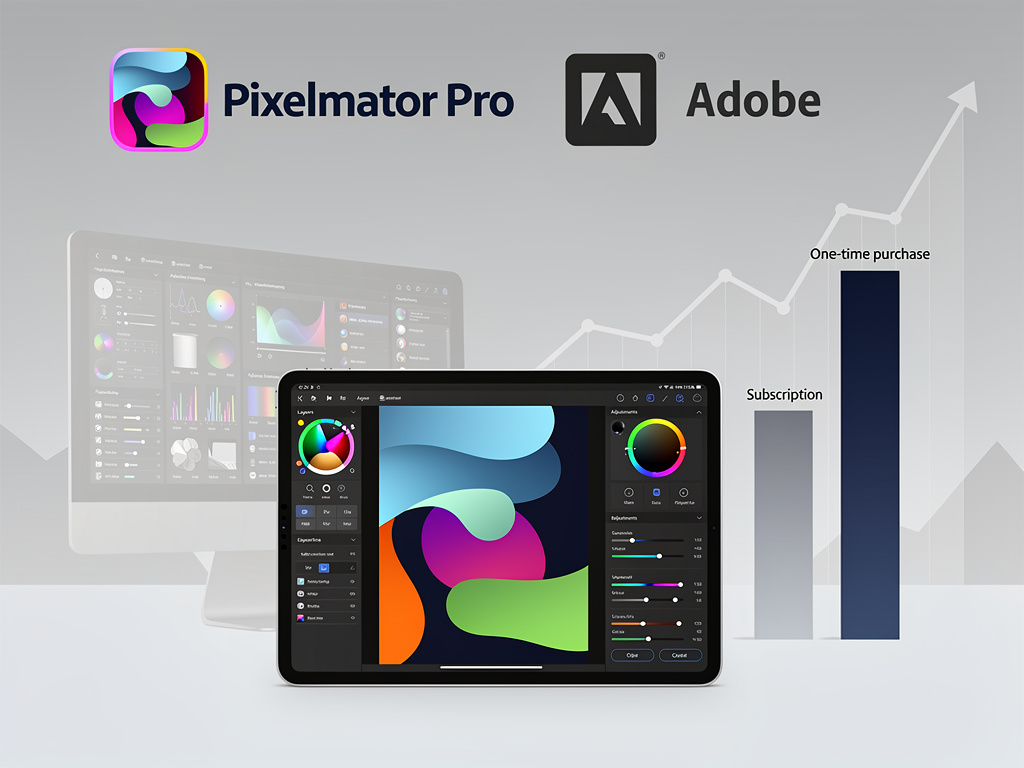
The professional creative software industry witnessed a significant development this week as Pixelmator Pro, the acclaimed macOS image editing application, officially launched on iPad. This expansion represents more than a simple platform extension—it signals a fundamental shift in how professional-grade creative tools are being reimagined for mobile computing environments, challenging Adobe’s long-standing dominance in the tablet-based creative software market.
According to MacRumors, the iPad version of Pixelmator Pro arrives with the full feature set that made its desktop counterpart a favorite among photographers, designers, and digital artists. The application leverages Apple’s M-series chip architecture to deliver desktop-class performance on iPad Pro models, representing a technical achievement that industry observers have long anticipated since Apple’s acquisition of the Lithuanian software company was announced in late 2024.
The timing of this launch proves particularly strategic. As the creative software market continues its migration toward subscription-based models and cloud-dependent workflows, Pixelmator’s one-time purchase model offers an increasingly rare alternative for professionals seeking to avoid recurring costs. This pricing strategy, combined with the application’s comprehensive toolset, positions it as a direct competitor to Adobe Photoshop for iPad, which has struggled to achieve feature parity with its desktop version since its 2019 launch.
Technical Architecture and Performance Optimization
The iPad implementation of Pixelmator Pro showcases sophisticated engineering decisions that distinguish it from typical mobile ports of desktop applications. The software utilizes Metal 3, Apple’s graphics API, to achieve real-time processing of complex layer compositions and non-destructive editing operations. Industry analysts note that this level of optimization was likely accelerated by Apple’s internal resources following the acquisition, providing Pixelmator’s development team with unprecedented access to hardware specifications and performance tuning capabilities.
The application supports ProRAW files, advanced color management with support for wide color gamuts, and machine learning-powered features that run entirely on-device through the Neural Engine. These technical capabilities address long-standing criticisms of mobile creative applications, which have historically required compromises in functionality or performance compared to their desktop equivalents. The seamless integration with iPadOS features, including Stage Manager for multi-window workflows and Apple Pencil Pro’s squeeze gesture for quick tool switching, demonstrates a level of platform integration that third-party developers rarely achieve.
Market Positioning and Competitive Dynamics
The professional creative software market has experienced considerable consolidation over the past decade, with Adobe maintaining dominant market share across multiple product categories. However, Pixelmator Pro’s iPad launch arrives at a moment when professional creatives are increasingly vocal about subscription fatigue and the desire for alternative workflows. Market research indicates that approximately 35% of creative professionals now use multiple applications across different platforms, suggesting an openness to diversifying their software toolkit beyond the traditional Adobe Creative Cloud ecosystem.
Pixelmator’s pricing strategy—offering the iPad version as a separate purchase or as part of a universal license with the Mac version—creates interesting competitive dynamics. While Adobe Photoshop requires a monthly subscription starting at $22.99 for the Photography plan, Pixelmator Pro’s one-time purchase model appeals to freelancers, students, and small creative businesses operating with constrained budgets. This pricing differential becomes particularly significant in international markets where subscription costs represent a larger percentage of disposable income.
The application’s feature set directly challenges assumptions about what constitutes professional-grade mobile software. Full support for adjustment layers, blend modes, selection refinement tools, and batch processing capabilities traditionally reserved for desktop applications are now available in a touch-optimized interface. Industry observers note that this comprehensive approach contrasts sharply with Adobe’s strategy of releasing simplified mobile versions that serve primarily as companion applications to desktop workflows rather than standalone professional tools.
Apple’s Strategic Calculus and Ecosystem Integration
Apple’s acquisition of Pixelmator, while still pending regulatory approval in some jurisdictions, provides important context for understanding the iPad launch’s broader strategic implications. The technology giant has historically struggled to cultivate a robust ecosystem of professional creative applications that match the depth and sophistication of Adobe’s offerings. By bringing Pixelmator’s development expertise in-house, Apple gains not only a competitive product but also valuable insights into professional creative workflows that can inform future hardware and software development.
The integration extends beyond mere application availability. Pixelmator Pro for iPad incorporates deep hooks into iPadOS’s file management system, supporting external storage devices, cloud service integration, and the Files app’s advanced features. The application also supports Shortcuts automation, enabling professional users to create custom workflows that integrate image editing tasks with other productivity applications. These integration points suggest that Apple views Pixelmator Pro as a showcase for the iPad’s professional capabilities, potentially influencing how other developers approach iOS and iPadOS application development.
User Interface Innovation and Touch-First Design Philosophy
The challenge of translating complex desktop software interfaces to touch-based interactions has proven formidable for many developers. Pixelmator Pro’s approach emphasizes context-sensitive toolbars, gesture-based controls, and adaptive interface elements that respond to available screen real estate. The application automatically adjusts its interface density when used with external displays, supporting resolutions up to 6K and providing workspace configurations that rival desktop environments.
Professional users have particularly praised the application’s approach to brush customization and pressure-sensitive input. The Apple Pencil integration includes support for tilt, pressure, and the new squeeze gesture introduced with Apple Pencil Pro, enabling quick access to frequently used tools without interrupting creative flow. These refinements address common pain points that have historically made mobile creative applications feel like compromises rather than genuine alternatives to desktop workflows.
Industry Implications and Future Development Trajectories
The successful launch of Pixelmator Pro on iPad carries implications that extend beyond a single application release. It demonstrates that professional-grade creative software can be successfully reimagined for mobile platforms without sacrificing essential functionality or performance. This proof point may encourage other professional software developers to invest more aggressively in iPad versions of their applications, potentially accelerating the platform’s evolution as a legitimate workstation replacement for certain creative workflows.
The competitive pressure on Adobe intensifies as well. While Adobe maintains significant advantages in terms of market share, ecosystem integration, and enterprise adoption, the existence of credible alternatives at different price points forces the company to justify its subscription model’s value proposition more rigorously. Industry analysts suggest that Adobe may need to accelerate feature development for its iPad applications or reconsider pricing strategies for individual users and small teams to maintain its market position.
Furthermore, the launch highlights the growing importance of Apple Silicon in enabling new categories of professional software on mobile devices. The performance characteristics of M-series chips have effectively eliminated the technical barriers that previously prevented full-featured professional applications from running efficiently on tablets. This hardware capability, combined with iPadOS’s evolving professional features, creates opportunities for developers to rethink fundamental assumptions about mobile computing’s role in professional workflows.
Professional Workflows and Real-World Applications
Early adopters from the photography and design communities have begun documenting their experiences with Pixelmator Pro on iPad, revealing both the application’s strengths and remaining limitations. Professional photographers report that the combination of ProRAW support, advanced color grading tools, and the portability of iPad Pro enables location-based editing workflows that were previously impractical. The ability to perform complex retouching work during photo shoots or while traveling eliminates the traditional delay between image capture and final editing.
However, some professional users note that certain workflows still benefit from desktop environments, particularly those involving extensive keyboard shortcuts, multiple external displays, or integration with specialized hardware like color calibration devices. These observations suggest that Pixelmator Pro for iPad functions best as part of a hybrid workflow strategy rather than a complete desktop replacement for all use cases. The application’s support for cloud storage services and seamless file compatibility with the Mac version facilitates this hybrid approach, allowing users to move projects between devices based on current needs and available resources.
Pricing Strategy and Market Accessibility
Pixelmator’s pricing approach deserves particular attention in an industry increasingly dominated by subscription models. The company offers the iPad version as a standalone purchase while also providing universal licensing options that include both Mac and iPad versions. This flexibility addresses different user segments—from iPad-only users to professionals maintaining multi-device workflows—without forcing all users into a single purchasing model.
The one-time purchase model also creates interesting dynamics for educational institutions and enterprise customers. Organizations can budget for software acquisitions as capital expenses rather than ongoing operational costs, simplifying procurement processes and providing more predictable long-term expenses. This advantage becomes particularly relevant as educational institutions face budget pressures and seek alternatives to expensive subscription-based software portfolios for their creative programs.
The Broader Evolution of Professional Mobile Computing
Pixelmator Pro’s iPad launch represents a data point in the larger evolution of professional mobile computing. The boundaries between mobile and desktop computing continue to blur as mobile processors achieve performance parity with traditional desktop chips and operating systems incorporate increasingly sophisticated multitasking and file management capabilities. Professional applications that can successfully navigate this transition position themselves advantageously for a future where device form factor becomes less determinative of software capabilities.
The creative software industry appears to be entering a period of renewed competition and innovation, driven partly by platform evolution and partly by changing user expectations. As professionals demand more flexibility in where and how they work, software developers face pressure to support multiple platforms while maintaining feature consistency and performance standards. Pixelmator Pro’s successful iPad implementation provides a template for how this challenge might be addressed, though the approach requires significant engineering investment and deep platform expertise that may prove difficult for smaller developers to replicate.
Looking forward, the success or failure of Pixelmator Pro on iPad will likely influence strategic decisions across the creative software industry. If the application achieves significant market adoption and demonstrates that professional users will embrace mobile-first workflows when given sufficiently capable tools, other developers may accelerate their own tablet development efforts. Conversely, if adoption remains limited to enthusiasts and early adopters, it may reinforce existing assumptions about the tablet’s role as a complementary rather than primary creative device. The coming months will provide crucial market feedback that shapes these strategic calculations across the industry.


 WebProNews is an iEntry Publication