
The Soul Computer Awakening: Pickle’s AR Glasses and the Dawn of Proactive AI Companions
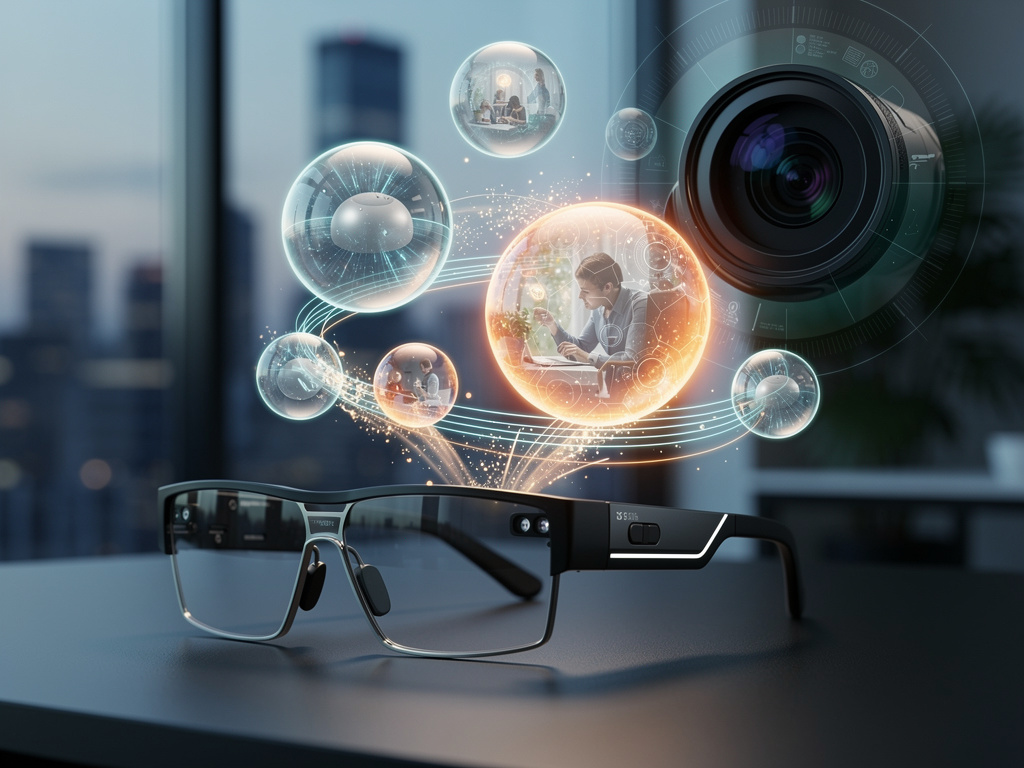
In the ever-evolving realm of wearable technology, a California startup named Pickle has thrust itself into the spotlight with the launch of its Pickle 1 AR glasses. Billed as a “soul computer,” this device promises to transcend traditional augmented reality by embedding an AI that observes, remembers, and anticipates users’ daily lives. Drawing from recent announcements, the glasses integrate cameras, sensors, and advanced AI to create what the company describes as “memory bubbles”—snapshots of personal experiences that fuel personalized assistance. This isn’t just about overlaying digital information on the real world; it’s an attempt to forge a symbiotic relationship between human and machine, where the AI acts as an ever-present companion.
The origins of Pickle trace back to a team of engineers and visionaries who saw gaps in current wearables like smartwatches and basic AR headsets. According to details shared in a recent piece by Mashable, the glasses are designed to “learn how you live” by continuously processing visual and contextual data. This proactive approach means the device doesn’t wait for voice commands; instead, it anticipates needs, such as suggesting a ride when it detects you’re running late or pulling up a recipe during meal prep. Industry insiders note that this level of integration could redefine personal computing, but it also raises thorny questions about privacy and data ethics.
Pre-orders for the Pickle 1 opened recently, with a price tag of $799 and a targeted launch in the second quarter of 2026. The hardware specs include an ultra-lightweight 89-gram aluminum frame, full-color AR displays powered by Snapdragon processors, spatial audio, and a 12-hour battery life. But the real innovation lies in Pickle OS, the custom operating system that powers the “soul computer” concept. As reported in Editorialge, this OS captures real-world context and personal moments, storing them in a way that allows the AI to deliver tailored help throughout the day.
Unpacking the Technology Behind the Hype
Skepticism abounds, however, as experts question whether the technology is mature enough to deliver on these promises. Posts on X highlight concerns over latency and feasibility, with one user noting that while the idea evokes a real-life Jarvis from Iron Man, practical implementation might fall short. The glasses rely on always-on cameras and sensors to build a user’s “memory profile,” which the AI uses to predict actions. This draws parallels to advancements in brain-computer interfaces mentioned in social media discussions, where thought-controlled AR is becoming viable, but Pickle’s approach focuses on environmental awareness rather than neural links.
Privacy is a flashpoint in these conversations. The device claims zero data retention beyond the user’s control, yet the very nature of constant recording invites backlash. As detailed in coverage from Digit, Pickle positions the glasses as a hands-free way to capture life, but critics worry about unintended surveillance. Industry analysts point out that unlike competitors such as Meta’s Project Orion, which emphasizes holographic displays, Pickle’s strength is its AI’s contextual learning, potentially setting a new standard for wearable companions.
Comparisons to existing products are inevitable. For instance, Even Realities’ G2 glasses, discussed in various X posts, automate meetings by processing surroundings in real time. Pickle takes this further by personalizing the experience based on long-term memory. A YouTube video from a tech channel exploring the launch juxtaposes Pickle’s features with Nvidia’s AI developments, underscoring how broader AI investments, like SoftBank’s $40 billion in OpenAI, are fueling such innovations.
Market Positioning and Competitive Edges
Pickle’s entry comes at a time when the augmented reality sector is heating up, with major players like Apple and Google investing heavily. The startup’s focus on a “proactive AI companion” differentiates it from passive devices. As explained in an article from DataGlobal Hub, the glasses integrate into daily life by seeing the world through the user’s eyes, remembering key moments, and offering suggestions via AR overlays or voice prompts. This could be a game-changer for professionals, from executives juggling schedules to creatives seeking inspiration.
User sentiment on X reflects a mix of excitement and caution. Posts praise the ultra-light design and potential for crypto-integrated automation, drawing from similar wearables like MadRims by PlayAI. However, there’s wariness about overpromising, with some likening it to past hype cycles in tech. The Indian Express, in its coverage available at their site, highlights how the glasses store visual context to anticipate needs, delivering personalized help that feels intuitive.
Beyond hardware, Pickle’s ecosystem includes app integrations for tasks like music recommendations during workouts or navigation aids. This holistic approach mirrors trends in AI wearables, where devices like translation glasses mentioned in X posts handle real-time language barriers. Yet, Pickle’s ambition to “remember your life” pushes boundaries, potentially enabling features like instant recall of forgotten names or contextual reminders for health routines.
Privacy Debates and Ethical Considerations
The privacy implications cannot be overstated. With cameras always active, the risk of data breaches or misuse looms large. Mashable’s analysis points out skeptics’ doubts about the tech’s readiness, emphasizing that while the AI might anticipate needs, ensuring user consent and data security is paramount. Pickle assures that all processing happens on-device or with user-approved cloud storage, but trust will be key to adoption.
Regulatory scrutiny is likely, especially as AI companions become more pervasive. Drawing from broader discussions on X about brain-computer interfaces and their accuracy in dynamic environments, Pickle’s glasses must navigate similar hurdles. The device’s IPX4 rating and lightweight build address comfort, but ethical AI use—avoiding biases in memory interpretation—remains a concern for insiders.
In terms of business strategy, Pickle’s pre-order model allows gauging interest before full production. Times Now, reporting on the launch at their platform, details color options and features, noting the startup’s California roots and emphasis on real-time understanding without constant commands.
Future Trajectories and Industry Impact
Looking ahead, Pickle’s success could influence how AI integrates into everyday accessories. If the glasses deliver on promises, they might inspire a wave of “soul-like” computers in other forms, from earbuds to smart rings. X posts about Meta’s Orion project, with its 70-degree field of view, suggest that display technology is advancing rapidly, and Pickle could leverage similar waveguides for enhanced AR experiences.
Challenges include battery life for always-on AI and managing computational demands. As per NewsBytes’ TL;DR at their article, the hands-free capture appeals to those seeking seamless integration, but scaling production while maintaining quality will test the startup.
Partnerships may be crucial. The YouTube overview mentions SoftBank’s AI investments, hinting at potential funding avenues for Pickle. Collaborations with chipmakers like Qualcomm could optimize the Snapdragon integration, ensuring low-latency performance essential for proactive assistance.
Innovators’ Perspectives and User Adoption
Industry voices on X, such as those from AI enthusiasts, express optimism about conversational AI in glasses, predicting it will change how we interact with the world. Pickle’s “memory bubbles” could evolve into shared experiences, like collaborative AR for teams, expanding beyond individual use.
For consumers, adoption hinges on demonstrating value over gimmickry. Digit’s report underscores the device’s positioning as a soul computer, capturing moments that inform AI decisions. Early adopters, likely tech-savvy professionals, will provide feedback shaping iterations.
Broader societal shifts are at play. As wearables become extensions of our cognition, questions arise about dependency on AI for memory and decision-making. Mashable’s skeptics remind us that while the tech sounds revolutionary, real-world testing will reveal limitations.
Pushing Boundaries in Wearable AI
Pickle’s launch timing aligns with a surge in AI funding, potentially accelerating development. X discussions on translation glasses illustrate how such devices ease cultural barriers, and Pickle could incorporate similar multilingual capabilities.
Competitively, standing out requires unique selling points. The Indian Express notes personalized help delivery, which could extend to health monitoring or productivity tools, areas where current smart glasses lag.
Ultimately, Pickle’s vision of a life-remembering companion challenges us to rethink human-AI symbiosis. As pre-orders roll in, the startup’s ability to address privacy fears and deliver seamless experiences will determine if this “soul computer” becomes a staple or a footnote in tech history.
In reflecting on these developments, it’s clear that Pickle is not just selling glasses but a paradigm shift. Industry insiders will watch closely as Q2 2026 approaches, eager to see if this proactive AI truly learns to live alongside us.


 WebProNews is an iEntry Publication