
A deal that closed with little fanfare in late June may signal the beginning of a structural shift in how independent restaurants source their food. Pepper, a Los Angeles–based technology company that builds ordering and payment infrastructure for food distributors, has acquired Alima, a Mexico City–founded startup that used artificial intelligence to connect small restaurants and shops with wholesale suppliers. The terms were not disclosed.
The acquisition, first reported by The Next Web, brings together two companies that have attacked the same problem from different angles. Pepper has focused on giving distributors digital tools to manage orders and payments from their existing customers. Alima built an AI-driven marketplace that helped small food businesses in Latin America find better prices and more reliable supply. Together, they’re assembling something more ambitious: a technology layer that sits between the fragmented world of food distribution and the millions of restaurants that depend on it.
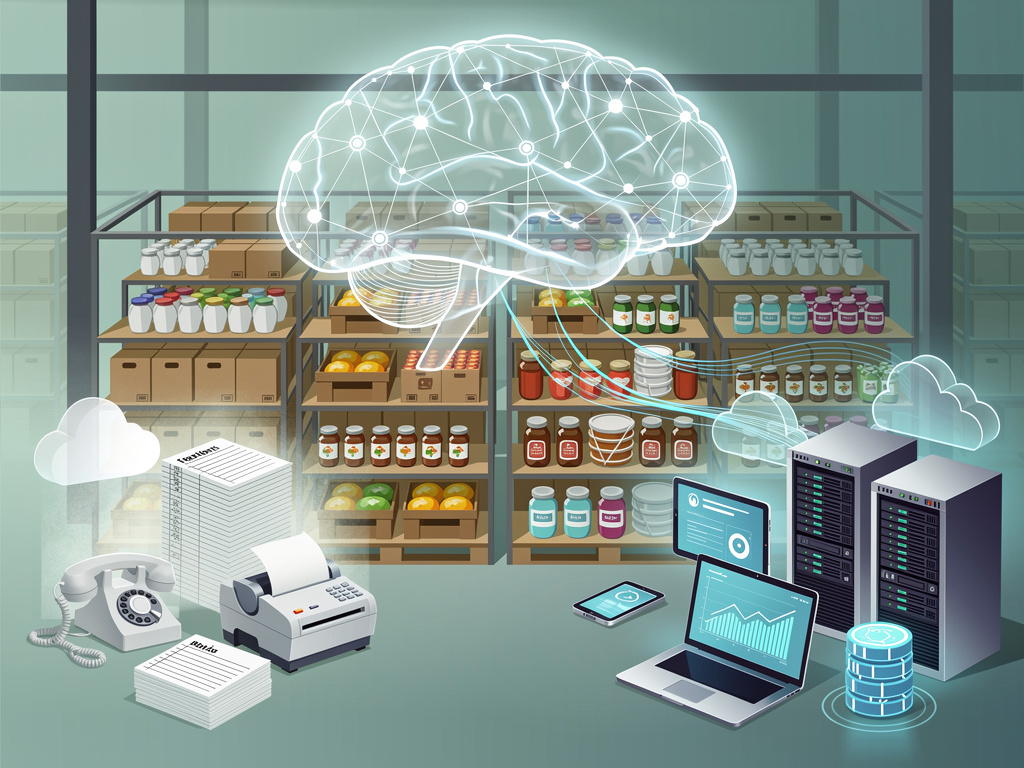
The food distribution industry is enormous and stubbornly analog. In the United States alone, foodservice distribution generates roughly $370 billion in annual revenue, according to industry estimates. Yet much of the business still runs on phone calls, fax machines, handwritten invoices, and personal relationships between sales reps and restaurant owners. The big national players — Sysco, US Foods, Performance Food Group — have invested in their own digital platforms. But the vast majority of distributors are regional or local operations with thin margins and limited technology budgets.
That’s where Pepper has carved out its niche. Founded in 2020 by Bowie Cheung and Jason Kuo, the company provides a white-label e-commerce platform that lets distributors offer their customers online ordering, digital invoicing, and integrated payments. Think of it as Shopify for food distribution. The platform doesn’t replace the distributor’s brand or customer relationships. It digitizes them.
Pepper has raised approximately $43 million in venture funding, including a $30 million Series B round in 2023. Its backers include BOND Capital, Craft Ventures, and Y Combinator. The company says it now processes billions of dollars in gross merchandise volume annually across its distributor network.
Alima’s story is different but complementary. The startup was founded in 2020 by Nima Garmroudi and Sergio Jimenez to address a specific pain point in Mexico and other Latin American markets: small restaurants and tiendas — neighborhood shops — were paying too much for ingredients because they lacked bargaining power and visibility into wholesale pricing. Alima’s platform used machine learning to aggregate demand, optimize logistics, and match buyers with suppliers offering competitive prices. The company had raised around $8.5 million and operated primarily in Mexico City.
But Alima struggled with the classic marketplace challenge. Building supply and demand simultaneously in a low-margin, high-frequency business is brutally capital-intensive. By acquiring Alima, Pepper gets the AI and data science talent without needing to sustain the marketplace model. And Alima’s team gets access to an established distribution network that already has paying customers.
The strategic logic is straightforward. Pepper wants to move beyond basic order management and payments into predictive analytics, dynamic pricing, and demand forecasting — capabilities that could make its distributor clients meaningfully more efficient. Alima’s engineers, many of whom have backgrounds in operations research and machine learning, bring exactly those skills.
“We see a massive opportunity to bring intelligence into the supply chain,” Bowie Cheung, Pepper’s CEO, said in a statement accompanying the deal. He described the acquisition as a way to accelerate Pepper’s product roadmap, particularly around AI-powered features that help distributors anticipate what their customers will need before they order it.
This isn’t just a technology play. It’s an economic one. Food distributors operate on margins that often hover between 2% and 5%. A wrong delivery, a spoiled pallet, an inaccurate forecast — any of these can wipe out a week’s profit on a single account. If Pepper can use Alima’s AI capabilities to reduce waste, optimize delivery routes, and improve order accuracy, the value proposition for distributors becomes compelling fast.
The timing matters too. The broader food industry has been under pressure from inflation, labor shortages, and supply chain disruptions that haven’t fully normalized since the pandemic. Independent restaurants, which make up the majority of Pepper’s end-user base, are especially vulnerable. They don’t have the purchasing scale of a Chipotle or a Darden Restaurants. Every percentage point of cost savings on ingredients flows directly to survival.
And the competitive environment is heating up. Several startups have targeted food distribution technology in recent years. Choco, a Berlin-based company, has built an ordering platform for restaurants and suppliers that operates across Europe and parts of the U.S. BlueCart, now part of MarketMan, offered similar capabilities before being absorbed into a broader restaurant management platform. Sysco’s own SHOP platform continues to improve. The question for Pepper is whether it can build enough differentiation — particularly through AI — to stay ahead of both startups and incumbents.
There’s a broader pattern here worth noting. Across B2B industries, we’re seeing a wave of acquisitions where platform companies buy AI-native startups not for their revenue but for their models, data pipelines, and engineering teams. It happened in logistics with Flexport’s acqui-hires. It’s happening in construction tech, in healthcare procurement, and now in food distribution. The playbook is consistent: acquire the intelligence layer, integrate it into an existing transactional platform, and create switching costs that are hard for competitors to replicate.
For Pepper, the Alima acquisition also opens a geographic door. Alima’s deep knowledge of Latin American food supply chains could help Pepper expand beyond the U.S. market. Mexico’s foodservice industry is large and growing, and the infrastructure gap — the distance between how business is done and how it could be done with modern technology — is arguably even wider than in the United States. Pepper hasn’t announced specific international expansion plans, but the capability is now in-house.
Not everything about this deal is guaranteed to work. Integrating teams across countries and cultures is hard. Alima was building a consumer-facing marketplace; Pepper sells B2B software to distributors. The product philosophies are different. And AI in food distribution is still early — the data infrastructure at most small distributors is rudimentary at best, which limits what even sophisticated models can do without significant onboarding effort.
Still, the direction is clear. The food supply chain that feeds restaurants is one of the last major industries to be digitized at scale. The companies that figure out how to do it — not by replacing existing relationships but by making them more efficient — stand to capture enormous value. Pepper is betting that AI is the key to unlocking that efficiency. With Alima’s team now on board, it has a stronger hand to play.
Whether that hand is strong enough to reshape a $370 billion industry remains to be seen. But in a sector where a fax machine is still considered standard equipment, the bar for transformation isn’t as high as you might think.


 WebProNews is an iEntry Publication