
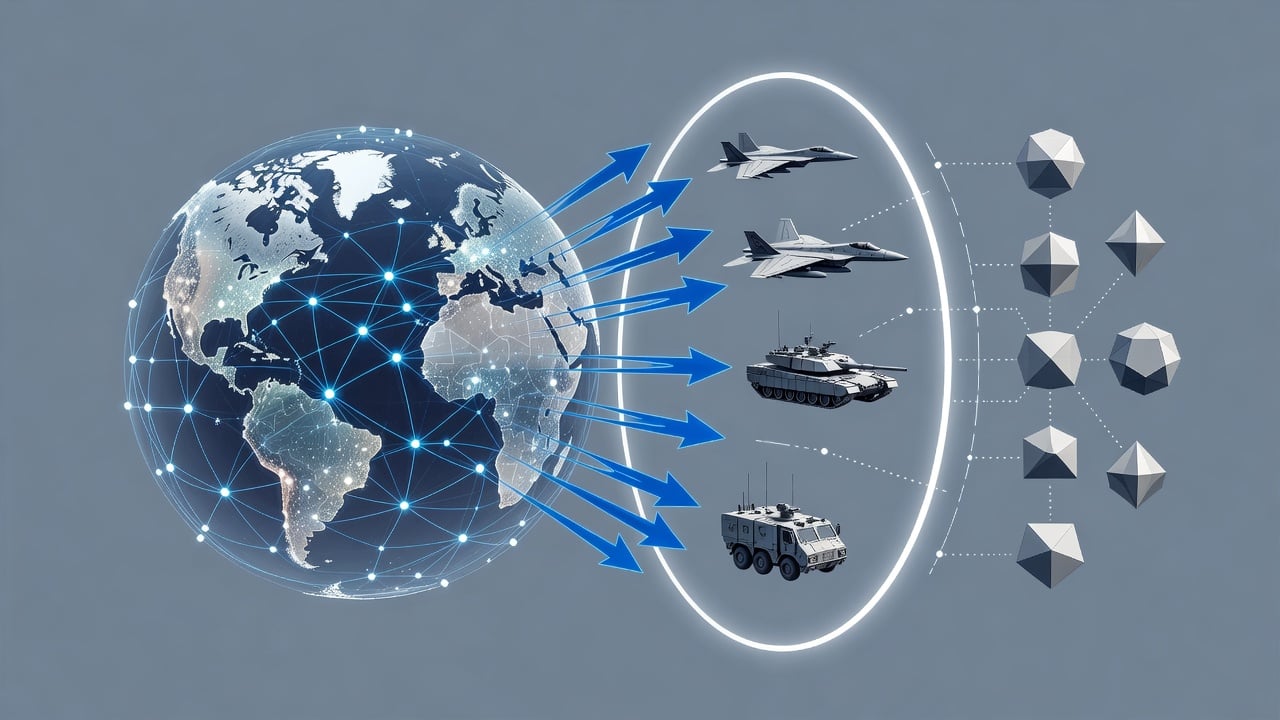
The Defense Department rolled out Agent Network last week. It marks the second major initiative in a broader push to speed artificial intelligence across military operations. Officials described the system as a network of AI agents designed to handle battle management and targeting tasks in real time.
The announcement came from the War Department site. It highlighted how the project fits into an existing AI acceleration effort. Early descriptions point to agents that can coordinate sensors, process data streams, and suggest courses of action faster than traditional command chains allow.
Industry watchers note the move builds on prior experiments with autonomous systems. Those earlier tests showed gains in speed but raised questions about oversight and rules of engagement. Agent Network appears aimed at closing those gaps through layered agent interactions.
Details remain limited. The release states the network will support commanders by filtering information and reducing decision timelines. It does not specify hardware platforms or exact integration points with existing platforms such as JADC2.
Pentagon statements emphasize human oversight at every stage. Commanders retain final authority. The agents function as decision-support tools rather than independent actors.
Recent reporting from Defense News adds context. The outlet described similar agent-based prototypes tested in joint exercises earlier this year. Those trials focused on multi-domain operations and showed measurable reductions in sensor-to-shooter times.
Analysts at the Center for Strategic and International Studies have tracked the same trend. Their work shows the department shifting from single-model AI toward distributed agent architectures. The change allows different specialized agents to handle distinct tasks while sharing context through a common framework.
One CSIS report from spring 2026 examined data from four service-level pilots. Results indicated a 40 percent drop in time from detection to engagement when agent networks handled initial correlation. Human review still occurred before any kinetic action.
The War Department release links the project to broader goals of AI acceleration. It positions Agent Network as complementary to other efforts already underway. Those include investments in edge computing and secure data fabrics.
Defense One covered related developments this month. Its coverage noted that several contractors are positioning software stacks to support agent orchestration. The firms include established defense primes and newer AI-focused startups.
Questions persist around data requirements. Agent networks need high volumes of labeled training data and continuous updates from operational feeds. Sources close to the program say testing will expand to live environments later this year.
Budget documents released alongside the announcement allocate additional funds for fiscal 2027. The line items cover both development and evaluation phases. Exact figures were not disclosed in the public release.
Industry reaction has been measured. Some observers see the announcement as validation of agent-based approaches already in commercial use. Others caution that military environments introduce unique constraints around latency, classification, and adversary countermeasures.
The department plans further updates. Future releases are expected to detail technical architectures and initial operational capability timelines. Until then, the core claim rests on the promise of faster, more informed decisions under human direction.
Additional context comes from a June 2026 article in Breaking Defense. It examined parallel efforts by allied nations to develop comparable agent networks. Those programs share technical challenges around interoperability and standards.
Together the pieces point to a deliberate, incremental rollout. The focus stays on measurable performance gains rather than sweeping claims. Program managers stress iterative testing and feedback loops with operators in the field.


 WebProNews is an iEntry Publication