
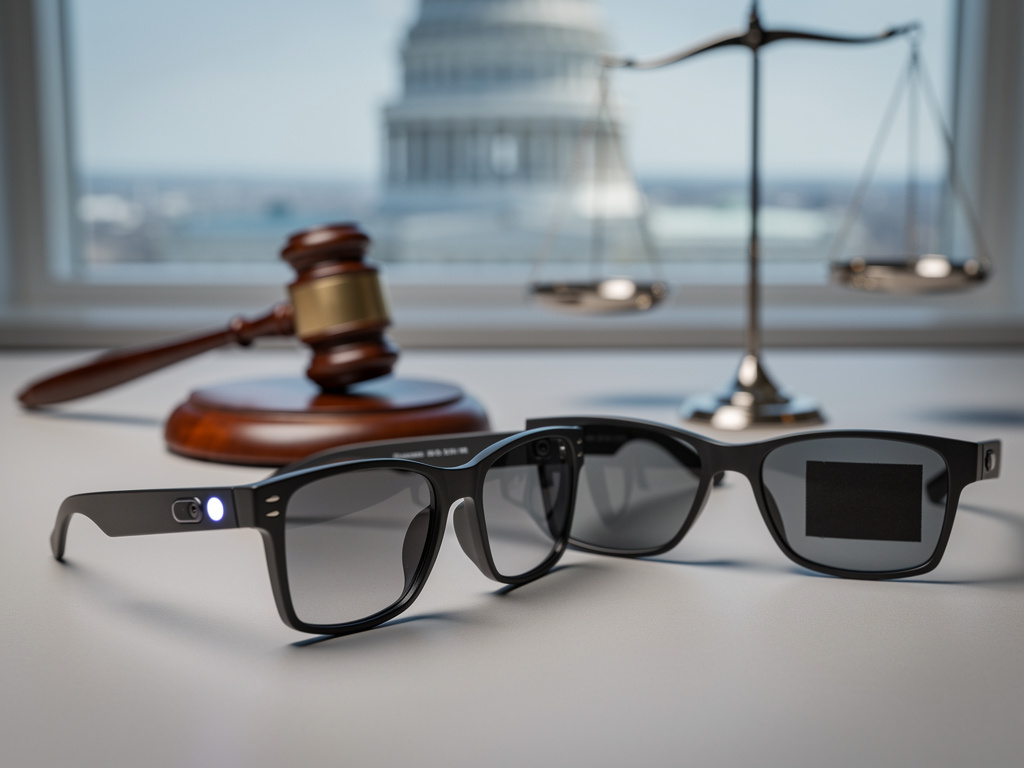
State lawmakers are moving to force makers of smart glasses to install unmistakable signals when those devices capture video or audio. The push comes as reports multiply of people disabling the existing tiny lights on popular models to record others without detection.
Rep. Joe Ciresi, a Pennsylvania Democrat, introduced H.B. 2603 on June 4, 2026. The measure would require all smart glasses manufactured, sold or used in the state to feature a visible indicator light that activates during recording. “My legislation would establish common-sense privacy safeguards for smart glasses to help protect Pennsylvanians from potential misuse of this emerging technology,” Ciresi said in a statement from the Pennsylvania House Democratic Caucus.
The bill arrives at a moment when devices from Meta, such as the Ray-Ban Meta smart glasses, sit on thousands of faces across the country. They look like ordinary eyewear. Yet they pack cameras, microphones and AI capabilities. A small LED does light up when recording starts. Many bystanders never notice it. Some owners pay technicians to drill out or disable that light entirely.
Investigative reporting revealed the scale of the workaround. Former Verge editor Joanna Stern discovered service listings in 30 states offering to remove the recording indicator LED on Meta smart glasses. One modifier charged around $60, drilling the light and filling the hole to allow covert capture. The story, published days ago by The Verge, showed how easily the safeguard can vanish.
But the Pennsylvania proposal goes further than voluntary design choices. It would make the visible indicator a legal requirement. Violators could face penalties, though the bill text stops short of spelling out fines in early descriptions. And the focus remains on hardware. Manufacturers would need to comply for any glasses entering the Pennsylvania market.
Privacy advocates have warned for years that wearable cameras shift the burden onto everyone else in the room. Phones make recording obvious. Hold one up and people see it. Glasses do not announce themselves so loudly. The indicator light was meant to bridge that gap. In practice it often fails.
The Electronic Frontier Foundation laid out the risks in March. Smart glasses resemble regular eyewear so completely that friends frequently miss the embedded cameras. The small light offers little protection when it can be covered or removed. “They’re designed to be invisible to those being recorded—outside of a small indicator light,” the group wrote in a post on its site at eff.org.
Incidents keep piling up. Border Patrol agents have worn the glasses during raids, sometimes with the light visible, despite agency rules against personal device recording. Philadelphia courts banned the devices from courthouses earlier this year after concerns about surreptitious capture in sensitive spaces. Influencers have used them to film women in public without consent, according to BBC reporting that highlighted dozens of such cases.
Meta maintains the glasses include privacy protections. The company tells users to keep the light visible and avoid recording in private areas. Its guidelines stress user control. Yet contractors reviewing captured footage for AI training have described seeing intimate moments, bank details and more, a Swedish investigation reported in March. Data flows to human reviewers despite blurring efforts.
State laws on recording already vary. Some require consent from all parties in a conversation. Others need only one. Smart glasses complicate enforcement because detection is so difficult. A light that no one sees does little to satisfy two-party consent rules. Illinois employers, for instance, face added risks when workers record meetings or interactions without clear notice.
California took its own step. Sen. Eloise Gómez Reyes introduced a bill in February targeting secret recordings with wearable devices in workplaces. It would criminalize the sale of technology that disables indicator lights. The Pennsylvania bill shares that spirit but casts a wider net over manufacturing and sales.
Industry has yet to mount public opposition to Ciresi’s proposal. Sales of the Ray-Ban Meta glasses continue to climb despite the controversies. New competitors plan releases throughout 2026 with varying approaches to cameras. Some avoid them altogether to sidestep the backlash.
Researchers explore detection tools for bystanders. Apps that scan for nearby recording devices have appeared. None solve the core problem of normalized wearable surveillance. People grow accustomed to the glasses. They stop asking questions. The light, when present, blends into the background.
Ciresi’s legislation signals a broader shift. Lawmakers no longer trust companies to self-regulate the visibility of recording. They want hardware mandates that cannot be easily bypassed. Pennsylvania could become the first state to write that requirement into law. Other legislatures may follow if the bill advances.
The original Gizmodo report that highlighted the need for such rules noted the gap between current voluntary lights and enforceable standards. Its coverage at gizmodo.com helped draw attention to the issue just as the Pennsylvania proposal surfaced.
Critics argue the bill does not address AI processing of footage or data storage. It targets only the act of signaling when capture occurs. Supporters counter that clear notice forms the foundation for any consent. Without it, the rest of privacy law crumbles.
Tech moves faster than statutes. Yet this time regulators aim to keep pace on one narrow but visible front. A bright, unmistakable light when glasses record. Nothing more. Nothing less. The question now is whether Pennsylvania lawmakers will pass the measure and whether manufacturers will comply nationwide rather than fragment their product lines.
One thing seems clear. The era of discreet face-worn cameras has triggered a reaction. Mandates for obvious indicators represent an early, concrete response. More will likely follow as the devices spread.


 WebProNews is an iEntry Publication