
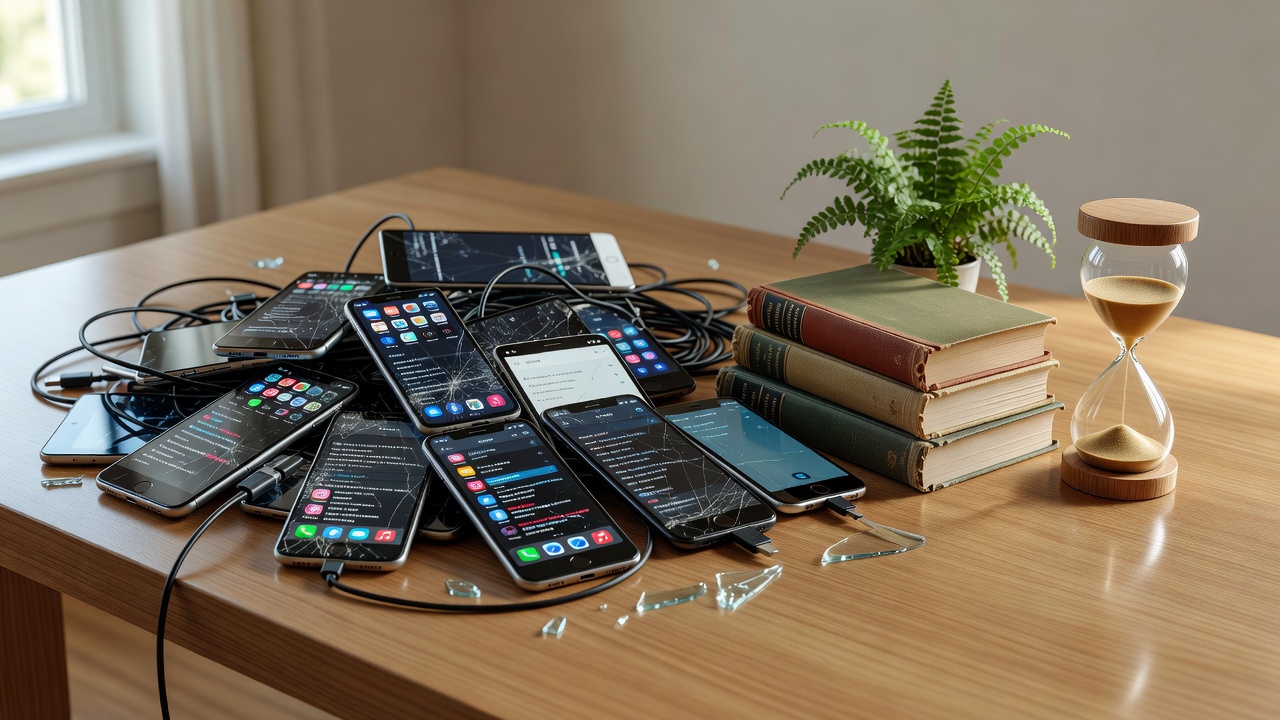
Penelope Cruz has never shied away from speaking her mind on the pressures facing young people. In a wide-ranging conversation with PORTER magazine just days ago, the Oscar winner laid bare her worries about today’s teenagers. She described social media as a force that distorts values and preys on developing minds. But she also offered a countermeasure. Parents must build something stronger at home.
Her words land with fresh urgency. Published on July 10, a Business Insider report captured the essence of that PORTER interview. Cruz, 52, mother to 15-year-old Leo and 12-year-old Luna with husband Javier Bardem, doesn’t mince terms. “It is so difficult to be a teenager right now. What the boys are being fed. What they are being tricked into thinking.” Short. Direct. And then the longer observation follows. She sees the platforms as “a type of manipulation that confuses even adults.” With teenagers or children, she adds, it becomes “a very dangerous weapon.”
Cruz draws from her own youth. Puberty tested her. She wonders aloud what might have happened had a smartphone delivered endless horrors during those years. “I remember puberty being a very challenging time for me. I don’t know what my life would have been if, in that time, I had been given a phone with all the horrors of social media.” The contrast feels stark. Her childhood lacked the constant digital judgment. Today’s teens swim in it.
She and Bardem respond with deliberate choices. They limit screen time. They keep phones and accounts away from their children for now. The couple prioritizes offline hours. Handwritten notes. Time outdoors. Real conversation. These habits form the backbone of their approach. Yet Cruz insists the real work runs deeper. Parents today “have to work much harder” to earn trust. They must shape a space where kids speak freely.
“To create a safe environment where they feel that they can ask all the questions and share whatever they need to. And I will listen without judgment.” She wants the openness she knew with her own parents. They had her young. That age gap shrank the distance. She aims to shrink it too. No lectures. No quick dismissals. Just presence. Listening. Acceptance of mistakes. This stance sets her apart in Hollywood circles where many peers chase relevance through their kids’ feeds.
Her views didn’t form overnight. Back in 2021, Cruz told CBS Sunday Morning she uses very little social media herself. She drew a firm line then. No accounts for the children until at least 16. “I really see that as like protecting mental health, but I seem to be part of a minority.” Four years later the conviction holds. A 2024 Elle interview called the entire system a “cruel experiment” on young brains still forming. “It’s so easy to be manipulated, especially if you have a brain that is still forming.” Those earlier remarks echo through the latest comments. Consistency marks her message.
And she isn’t alone in her caution. Chrissy Teigen expressed similar hesitation in a 2024 People interview. Her dream? Kids off social platforms until after high school. “Unless there are more rules and regulations in place, I would prefer for them not to be on social. I want them to be safe and happy and flourishing as kids.” Tech insiders voice parallel concerns. OpenAI CEO Sam Altman, now a father, shifted his perspective on algorithmic feeds and endless scrolling. He wants his son to “play in the dirt for now” instead of staring at an iPad. These admissions from industry leaders add weight to Cruz’s long-held position.
Policy makers have taken notice too. In January 2025, Senators Brian Schatz, Ted Cruz, Chris Murphy and Katie Britt introduced the Kids Off Social Media Act. The bill sets a minimum age of 13 for platform use. It bars companies from pushing algorithm-driven content to users under 17. Supporters argue the measure shields developing minds from addictive design and harmful material. Critics, including the Electronic Frontier Foundation, warn it hands too much control to regulators and platforms rather than parents. The debate continues. Yet the conversation itself shows growing recognition of the stakes.
Cruz’s July PORTER profile weaves these themes with other chapters of her life. She reflected on a recent health scare involving a suspected brain aneurysm. It proved a false alarm. Still the episode sharpened her focus. “I have had many scares like that. Fortunately, I’m fine, it was a false alarm, but I worry about staying healthy, taking care of myself. I don’t drink, I don’t smoke, I really don’t party. Without health, we have nothing.” She ties physical well-being to the emotional safety she seeks for her family. Health, in all its forms, underpins everything.
Her own upbringing supplies the model. Raised among strong women in Alcobendas, Spain, Cruz credits her mother, grandmothers and sister for shaping her resilience and taste in complex roles. That foundation informs how she parents. She avoids projecting futures onto Leo and Luna. Instead she nurtures curiosity and self-expression in the present. Family remains tightly knit. Her mother and sister live nearby. Shared meals and unhurried talks replace digital distraction.
The actress extends the same philosophy to her work. She chooses parts that explore hidden depths and human contradictions. Motherhood, she suggests, has sharpened that instinct. It demands patience. It rewards honesty. And in an industry that often celebrates curated perfection online, her resistance feels almost radical. She meets Bad Bunny and suddenly her teens think she’s cool. The moment brought a laugh. “Thank you, Benito.” Light relief amid heavier topics.
Yet the heavier topics dominate. Social media’s experiment, as she calls it, targets vulnerabilities with precision. Values once absorbed from family or community now arrive filtered through profit-driven algorithms. Boys receive one set of toxic ideals. Girls another. Adults struggle to disentangle the noise. Children stand even less chance. Cruz names the problem without apology. She refuses to outsource guidance to Silicon Valley.
Her solution stays refreshingly practical. Spend time together. Talk. Listen. Allow boredom. Let kids write by hand and feel grass underfoot. Create the conditions for trust so that when confusion strikes, they turn inward to family first. No judgment. No instant fixes. Simply space to process. “My parents had me so young that I grew up being able to talk to them about everything. I want the same thing in my relationship with my kids.”
That desire resonates beyond celebrity circles. Millions of parents wrestle with the same forces. They watch their children navigate worlds the adults never faced at those ages. Data on rising anxiety, body-image issues and social withdrawal among teens fills academic journals and news reports. Cruz gives voice to the unease many feel but few in the spotlight articulate so plainly.
Of course challenges remain. Rules bend as children age. Leo has reached 15, the same age Cruz was when a Pedro Almodóvar film ignited her acting dreams. Conversations grow more layered. Privacy matters. Yet the core commitment holds. A home that feels safe. A relationship built on openness rather than fear or surveillance. Bardem stands beside her in this effort, though he maintains his characteristic reserve in public comments.
Recent weeks brought more personal disclosures. The PORTER story also touched on loss, her father’s passing, and the balancing act of marriage and career. Those reflections circle back to family as anchor. Cruz knits her life tightly around loved ones. The same impulse drives her parenting. Protect. Guide. Listen. And above all, remain present when the digital current threatens to pull children under.
Her stance invites scrutiny. Some call it strict. Others see wisdom. In a culture that equates screen access with freedom, limiting exposure reads as control. Cruz flips the script. True freedom, she implies, begins with mental space uncolonized by outside agendas. It grows in homes where questions meet patience instead of eye rolls or quick searches for answers online.
As lawmakers tussle over legislation and executives tweak parental controls, Cruz offers a simpler prescription. Work harder at home. Earn the trust. Protect the childhood. The message feels both timeless and urgently contemporary. Social media evolves at breakneck speed. Human needs for connection and understanding do not. She bets on the latter.
Leo and Luna may one day choose public lives or private ones. Cruz leaves that decision to them. For now she shields the forming minds and spirits under her roof. She models restraint. She speaks candidly about difficulties. And she listens. Without judgment. The home becomes sanctuary. In an age of constant exposure, that sanctuary may prove the most radical gift a parent can give.


 WebProNews is an iEntry Publication