
In the ever-evolving world of Linux distributions, where security and usability often clash, Parrot OS has long stood out as a specialized tool for ethical hackers, penetration testers, and cybersecurity professionals. This Debian-based operating system, renowned for its suite of forensic and anonymity tools, has traditionally relied on the lightweight MATE desktop environment to keep things efficient and unobtrusive. But in a move that signals a significant pivot, Parrot OS is ditching MATE in favor of the more feature-rich KDE Plasma desktop starting with its version 7.0 beta release. This shift isn’t just a cosmetic upgrade; it’s part of a broader push toward modernization that could reshape how security experts interact with their tools.
The announcement came amid a flurry of updates in the open-source community, with Parrot OS developers citing the need to address accumulating technical debt and future-proof the system. According to reports from Tux Machines, the transition to KDE Plasma is already underway in the beta, built on Debian 13’s foundation. This isn’t merely about aesthetics—Plasma brings a host of customizable features, from advanced window management to integrated widgets, which could enhance productivity for users juggling complex security workflows. For a distro like Parrot, which bundles tools like Metasploit, Burp Suite, and Wireshark, the desktop environment plays a crucial role in ensuring seamless operation without overwhelming system resources.
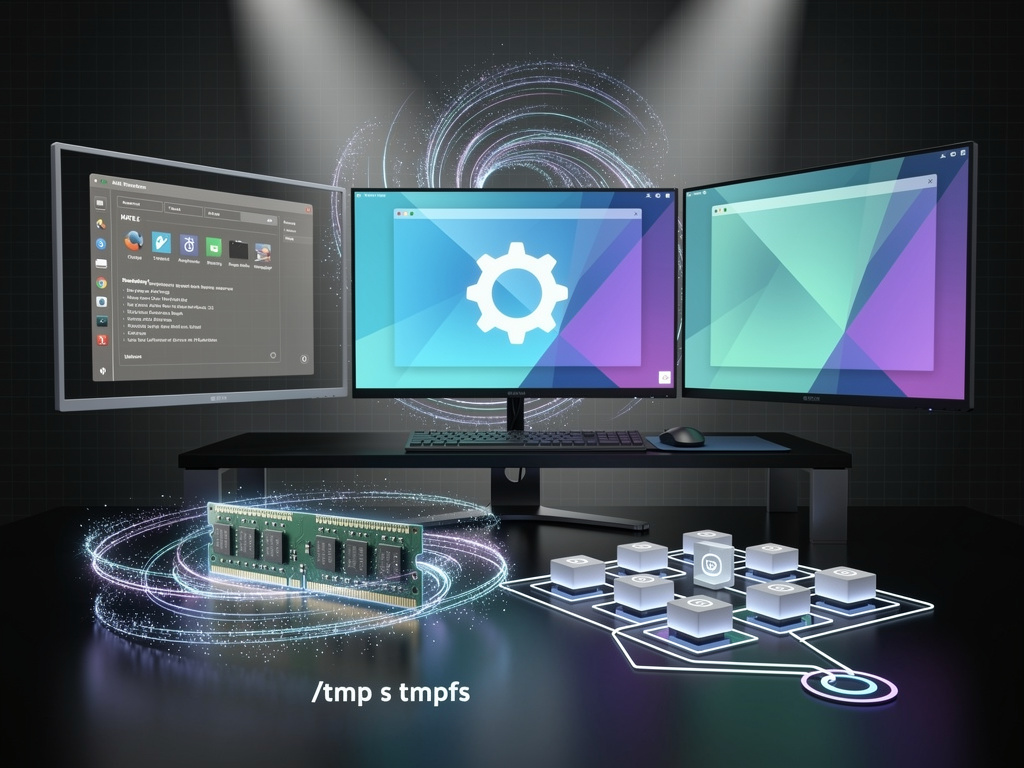
Beyond the desktop swap, Parrot OS 7.0 introduces several under-the-hood enhancements that underscore the team’s focus on performance and reliability. One notable change is the automatic mounting of the /tmp directory as tmpfs, storing temporary files in RAM rather than on physical drives. This adjustment, as detailed in the same Tux Machines coverage, promises faster I/O operations and reduced wear on solid-state drives, though it means data in /tmp vanishes upon reboot—a trade-off familiar to sysadmins but potentially disruptive for careless workflows. Additionally, the APT package manager now features a more user-friendly interface with color-coded outputs, aligned columns, and clearer dependency notifications, making system updates less of a chore.
Modernization Drive and Technical Overhauls
The rationale behind abandoning MATE, a fork of the older GNOME 2, appears rooted in Plasma’s superior adaptability to modern hardware and user demands. Developers have emphasized clearing technical debt, a term that in this context refers to outdated code and dependencies that hinder long-term scalability. As Slashdot noted in its coverage, this move aligns Parrot OS with a growing trend among Linux distros seeking more dynamic interfaces. Plasma’s modular design allows for extensive theming and extensions, which could prove invaluable for security pros who customize their environments for tasks like reverse engineering or network forensics.
User feedback on social platforms like X (formerly Twitter) reflects a mix of excitement and nostalgia. Posts from the community highlight how Plasma’s fluidity might streamline multitasking, with some users praising its integration with tools that require real-time monitoring. For instance, general sentiment on X suggests that while MATE’s simplicity was appreciated for low-resource machines, Plasma’s enhancements could attract a broader audience, including those transitioning from Windows or macOS. This echoes broader discussions in the Linux sphere, where desktop environments are increasingly seen as gateways to wider adoption.
On the technical front, the switch coincides with Parrot’s upgrade to Debian 13, ensuring access to the latest stable packages and security patches. This base upgrade, as reported by Linux Magazine, positions Parrot OS to leverage newer kernel features and improved hardware support. The /tmp tmpfs change, in particular, addresses performance bottlenecks in security operations, where temporary files from scans or exploits can balloon quickly. By offloading these to RAM, Parrot reduces disk I/O latency, potentially speeding up tools like Nmap or John the Ripper by fractions that add up in prolonged sessions.
User Impact and Community Reactions
For the core audience of ethical hackers, this desktop evolution could mean rethinking workflows optimized for MATE’s minimalism. Plasma’s default setup includes features like virtual desktops and activity switching, which might enhance organization during pentests involving multiple virtual machines or live captures. However, some insiders worry about bloat—Plasma is known for its higher resource footprint compared to MATE, though optimizations in recent KDE releases have mitigated this. As one X post humorously noted, the switch feels like trading a stealthy parrot for one that’s flashier but more capable in a crowd.
Broader community reactions, gleaned from recent X discussions, indicate optimism about Plasma’s customization potential. Users have shared how KDE’s widgets could integrate directly with security dashboards, displaying real-time alerts from tools like Fail2Ban or Snort without needing separate applications. This sentiment aligns with reports from How-To Geek, which highlighted the beta’s focus on efficient temporary file management alongside the desktop change. For penetration testers, who often operate in resource-constrained environments, these tweaks could mean the difference between a smooth operation and frustrating slowdowns.
The impact extends to Parrot’s role in education and professional training. Many cybersecurity courses recommend Parrot for its out-of-the-box toolkit, and a more modern desktop might lower the barrier for newcomers intimidated by MATE’s dated look. Industry insiders point out that this could broaden Parrot’s appeal beyond hardcore hackers to IT admins and even hobbyists interested in privacy tools like Tor or VPN integrations. Yet, as Yahoo Tech echoed in its article on the switch, the real test will be how well Plasma handles the distro’s security-centric customizations without introducing vulnerabilities.
Strategic Shifts in the Linux Ecosystem
Looking at the bigger picture, Parrot’s decision mirrors a wave of distros embracing KDE Plasma for its balance of power and simplicity. For example, recent news from Startup News FYI reinforces how this move fits into a pattern, with other projects like pearOS adopting Plasma on Arch Linux bases. KDE’s community-driven development, as described on the official KDE Plasma site, emphasizes user empowerment through features like ambient light sensor support and improved power management—additions that could benefit field operatives using laptops in varying conditions.
Challenges remain, particularly in ensuring compatibility with Parrot’s anonymization features. Plasma’s extensive scripting capabilities via KWin could open doors for custom security scripts, but they also demand rigorous testing to avoid exploits. X posts from developers and users alike stress the importance of community involvement in the beta phase, with some calling for feedback on how Plasma integrates with tools like AnonSurf. This collaborative approach is key, as Parrot has always thrived on user contributions to refine its security posture.
Delving deeper, the switch highlights KDE Plasma’s maturation as a desktop environment. Recent KDE blogs, such as those covering ambient light sensor support, show ongoing innovations that align with Parrot’s needs. For industry professionals, this means Parrot OS could evolve from a niche tool into a more versatile platform, potentially rivaling Kali Linux in usability while maintaining its forensic edge. The APT enhancements, for instance, make dependency management more intuitive, reducing errors in environments where installing custom packages is routine.
Future Prospects and Ecosystem Integration
As Parrot OS 7.0 moves toward a stable release, the focus will be on polishing these changes. Insiders speculate that Plasma’s adoption could pave the way for better integration with emerging technologies like Wayland, which KDE has championed for smoother graphics performance. This is especially relevant for security tasks involving high-resolution displays or GPU-accelerated analysis, where MATE’s limitations were increasingly apparent.
Community sentiment on X also touches on potential ripple effects, with users discussing how this might influence other security distros to modernize. Posts suggest a growing preference for feature-rich environments that don’t sacrifice security, pointing to Plasma’s track record in handling sensitive data without leaks. For enterprises using Parrot in red-team exercises, the switch could mean easier onboarding for teams accustomed to more polished interfaces.
Ultimately, this transition underscores Parrot OS’s commitment to staying relevant in a field where tools must evolve alongside threats. By embracing KDE Plasma, the distro not only addresses immediate technical needs but also positions itself for future growth, blending security prowess with a desktop that’s as innovative as the hackers it serves. As the beta matures, expect more refinements that could set new standards for specialized Linux distributions.


 WebProNews is an iEntry Publication