
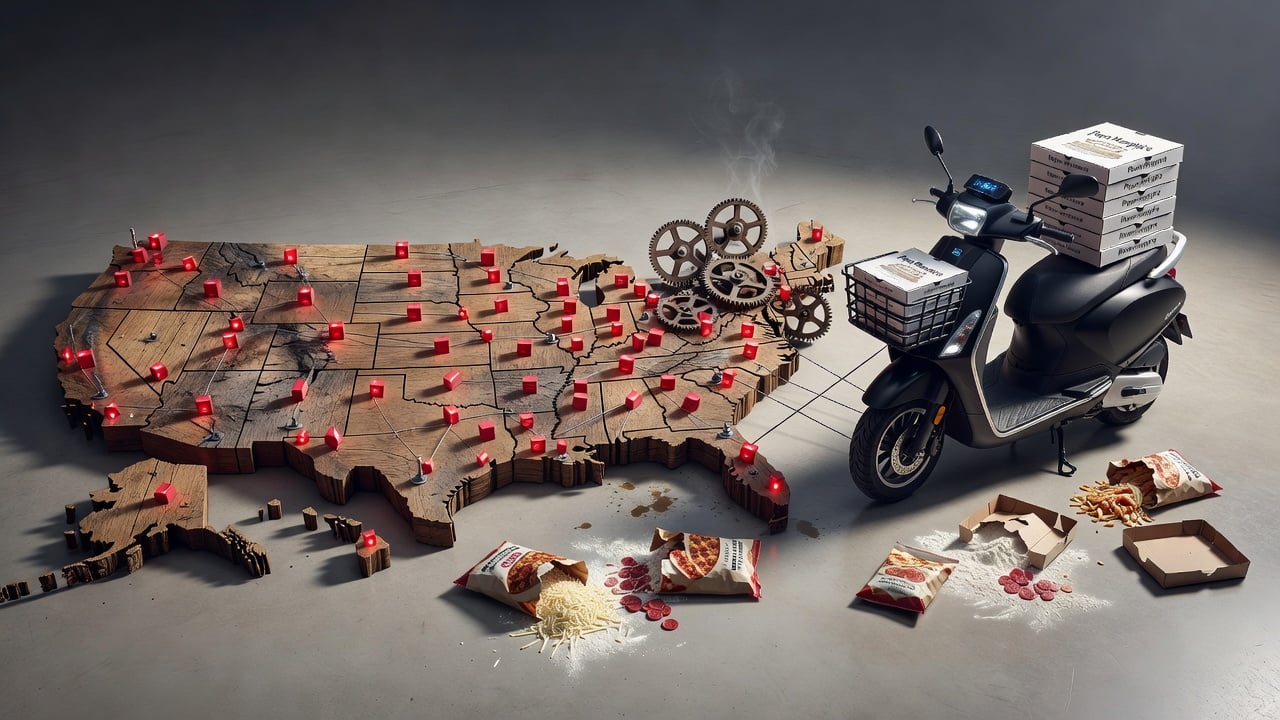
Papa Murphy’s, the take-and-bake pizza chain known for its fresh ingredient assembly model, has announced plans to shut down approximately 50 underperforming locations across the United States as part of a broader effort to stabilize its business operations. The decision, reported in detail by Yahoo Finance, reflects ongoing challenges in the casual dining sector where shifting consumer habits and rising operational costs continue to pressure many established brands.
The closures represent a significant contraction for the company, which once boasted more than 1,600 stores at its peak. According to the report, the affected sites include both company-owned and franchised outlets spread across multiple states, though specific locations have not been publicly listed in full. This move comes after years of declining same-store sales and follows previous rounds of restructuring that included leadership changes and attempts to refresh the brand’s menu and store design.
Industry observers point to several factors contributing to Papa Murphy’s difficulties. The take-and-bake concept, which allows customers to pick up uncooked pizzas to finish at home, offered convenience and perceived freshness when it gained popularity in the 1990s and early 2000s. Yet changing preferences have eroded some of that appeal. Many consumers now favor delivery options from competitors like Domino’s, Pizza Hut, and local pizzerias that provide hot food brought directly to their doors. The rise of third-party delivery services has further intensified competition, making the extra step of baking at home less attractive for time-strapped families.
Operational costs have also squeezed margins. Increasing prices for cheese, flour, and other core ingredients, combined with higher labor expenses and rent in many markets, have made it difficult for lower-volume stores to remain profitable. The Yahoo Finance article highlights how these pressures have been particularly acute for Papa Murphy’s, whose business model depends on customers visiting stores rather than relying on delivery fleets. Without a strong digital ordering infrastructure or widespread partnerships with delivery platforms in its earlier years, the chain found itself playing catch-up as the market evolved.
Franchisees have voiced concerns for some time about the viability of certain territories. Many operators invested substantial capital into building out locations based on growth projections that never fully materialized. In some suburban and rural markets where the chain once thrived, population shifts and the opening of rival restaurants have reduced foot traffic. The decision to close 50 sites aims to ease the burden on the overall system by eliminating locations that were dragging down collective performance. Remaining franchisees may benefit from improved support and marketing focus as the company concentrates resources on higher-performing areas.
Papa Murphy’s has attempted various strategies to reverse its fortunes in recent years. The company introduced new menu items including salads, sides, and dessert options to broaden its appeal beyond pizza. It also invested in store remodels designed to create a brighter, more modern atmosphere that emphasizes the freshness of ingredients visible in the assembly line. Digital ordering improvements and loyalty programs were rolled out to capture more customer data and encourage repeat business. Despite these initiatives, the financial results have remained mixed, prompting the current round of closures as a necessary corrective action.
The take-and-bake segment of the pizza industry has faced headwinds that extend beyond any single brand. Consumers today expect greater variety, faster service, and more customization options. National chains with large marketing budgets have dominated television and social media advertising, while smaller independent operators often win local loyalty through community involvement and unique recipes. Papa Murphy’s distinctive positioning, which markets the product as a fresher alternative to pre-made frozen pizzas, still resonates with a core group of customers who value control over the final baking process. However, that audience appears to be shrinking in many regions.
Leadership at Papa Murphy’s has framed the closures as a strategic realignment rather than a sign of retreat. By reducing the total store count, the company hopes to strengthen its financial position and create a more sustainable platform for future growth. This approach mirrors steps taken by other restaurant groups that have culled weaker locations to focus on markets with the strongest demand. Remaining stores are expected to receive enhanced operational support, updated training programs, and more targeted marketing campaigns designed to drive traffic and improve average ticket sizes.
The impact of these closures extends beyond the company itself. Employees at the affected locations will face job losses, though the company has indicated it will work to place staff in nearby open positions where possible. Franchise owners who operated the shuttered stores may experience financial setbacks after years of building their businesses. Local communities could lose convenient dining options, particularly in smaller towns where Papa Murphy’s sometimes served as one of the few casual meal solutions available.
Analysts following the restaurant industry suggest that Papa Murphy’s next steps will prove critical. The chain needs to accelerate its digital transformation to compete effectively with brands that have mastered online ordering and contactless pickup. Expanding partnerships with delivery services could help capture sales from customers unwilling to bake pizzas themselves. At the same time, maintaining the core take-and-bake appeal will require continued emphasis on ingredient quality and value messaging, especially as food prices remain elevated for many households.
Competition within the pizza category shows no signs of easing. Major players continue to invest heavily in technology, from artificial intelligence-driven ordering systems to improved tracking applications. Regional chains and independent pizzerias often differentiate themselves through specialized toppings, gluten-free crusts, or locally sourced ingredients. Papa Murphy’s must identify clear points of difference that justify its unique model while adapting to new realities of consumer behavior.
The company’s history demonstrates both resilience and vulnerability. Founded in 1981 in Hillsboro, Oregon, Papa Murphy’s grew rapidly through franchising by offering a lower-cost entry point compared to traditional pizzerias that required full kitchens and dining rooms. The assembly-line format reduced labor needs and allowed for quick service. This model helped the brand expand across the western United States before pushing into new territories. At one point, it seemed poised to challenge the largest national pizza brands. Publicly traded for a period after 2014, the company was later taken private again as performance faltered.
Current market conditions present both challenges and potential opportunities. Inflation has made dining out more expensive, which could theoretically benefit take-and-bake concepts that allow families to enjoy restaurant-quality pizza at home for less money. The key lies in communicating that value proposition effectively while addressing the inconvenience factor that has hurt the category. Creative marketing that showcases easy baking instructions, family involvement in meal preparation, and customization possibilities might help re-engage lapsed customers.
Supply chain stability will also influence Papa Murphy’s ability to execute its recovery plan. Reliable access to consistent ingredients at predictable prices remains essential for maintaining quality standards that differentiate the brand. Any further disruptions could complicate efforts to rebuild consumer trust and drive sales growth at the stores that remain open.
As the company implements these closures, transparency with franchisees and customers will matter greatly. Clear communication about which locations will close and when can reduce uncertainty and allow affected parties to plan accordingly. For continuing stores, the period ahead represents a chance to demonstrate improved performance through tighter operations and more focused customer outreach.
The pizza industry overall continues to adapt to new demands. Health-conscious options, plant-based alternatives, and sustainable packaging have become more prominent across many brands. Papa Murphy’s has introduced some of these elements but may need to expand its offerings further to attract younger demographics who prioritize such features. Building a stronger social media presence and engaging with food influencers could help spread awareness of the take-and-bake experience in fresh ways.
Ultimately, the decision to close 50 restaurants marks a sobering but perhaps necessary chapter for Papa Murphy’s. The brand retains recognition and a loyal base in certain markets where its concept still connects with shoppers seeking convenient, fresh meals. Success in the coming years will depend on how effectively the company applies lessons from recent struggles, invests in the right capabilities, and positions itself as a relevant choice amid intense competition. The Yahoo Finance coverage provides valuable context on the scale of the changes and the pressures that prompted them, underscoring the difficult choices many legacy food brands must make to survive in a transformed marketplace.
Observers will watch closely to see whether the streamlined operation can generate the momentum needed for renewed expansion or if additional adjustments become necessary. For now, the focus remains on stabilizing the core business, supporting remaining locations, and finding a path forward that honors the brand’s origins while meeting contemporary expectations. The coming months will reveal how successfully Papa Murphy’s translates this contraction into a foundation for potential recovery and long-term viability.


 WebProNews is an iEntry Publication