
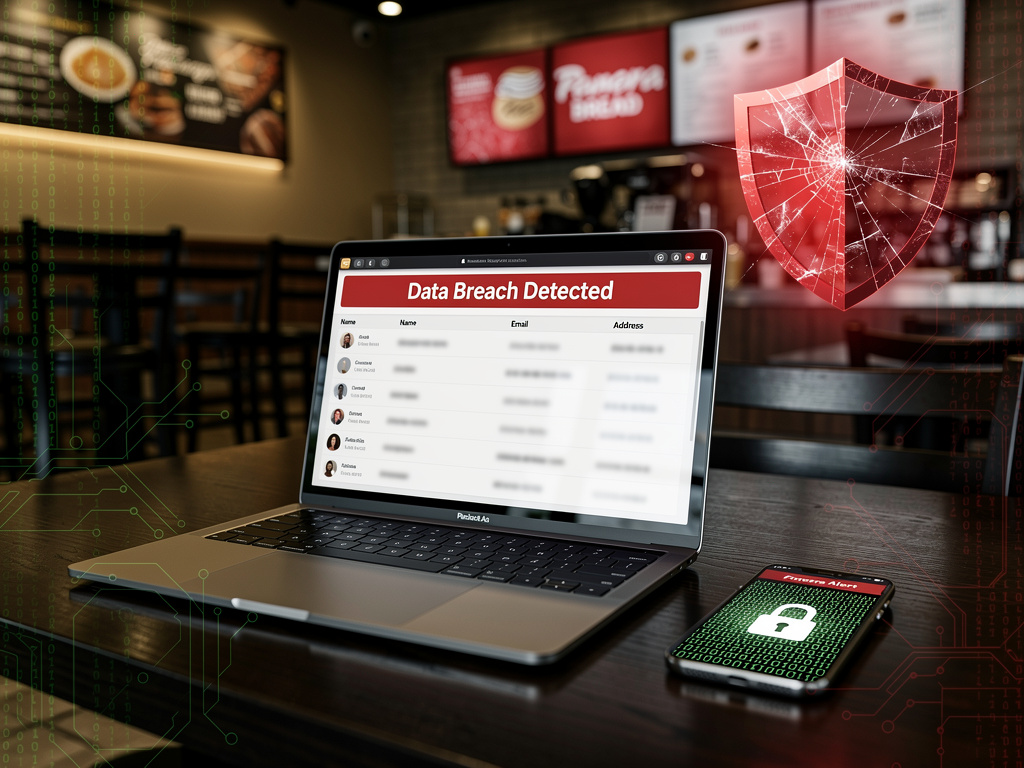
A significant data breach at Panera Bread has compromised approximately 1.4 million customer records, marking yet another cybersecurity failure in the restaurant industry and raising urgent questions about how major chains protect sensitive consumer information. The incident, which came to light through security researchers monitoring dark web activity, represents one of the largest restaurant-related data exposures in recent years and underscores the persistent vulnerabilities that plague the food service sector’s digital infrastructure.
According to TechRadar, the breach exposed a substantial trove of customer data including names, email addresses, physical addresses, and potentially payment information. The compromised records were discovered being traded on underground forums frequented by cybercriminals, suggesting the data has already entered the broader ecosystem of stolen information that fuels identity theft, phishing campaigns, and financial fraud. Security experts who analyzed the leaked data confirmed its authenticity by cross-referencing information with known Panera customer accounts, leaving little doubt about the breach’s legitimacy and scope.
The timing of this disclosure is particularly concerning for Panera Bread, which operates over 2,000 locations across North America and has invested heavily in digital ordering systems and customer loyalty programs in recent years. The company’s rapid expansion of its digital footprint, including mobile applications and online ordering platforms, has created multiple potential entry points for malicious actors. This breach follows a troubling pattern in the restaurant industry, where companies rushing to modernize their technology infrastructure often fail to implement adequate security measures to protect the customer data they collect.
The Anatomy of a Modern Restaurant Data Breach
Cybersecurity researchers familiar with the incident indicate that the breach likely resulted from vulnerabilities in Panera’s web application infrastructure, though the company has not publicly confirmed the specific attack vector. Modern restaurant chains maintain complex digital ecosystems that include point-of-sale systems, mobile applications, customer relationship management databases, and third-party vendor integrations—each representing a potential weakness that attackers can exploit. The interconnected nature of these systems means that a single vulnerability can provide access to vast repositories of customer information accumulated over years of transactions.
The exposed data reportedly includes information collected through Panera’s MyPanera loyalty program, which incentivizes customers to share personal details in exchange for rewards and personalized offers. This loyalty program data is particularly valuable to cybercriminals because it often contains not just contact information but also purchasing patterns, dietary preferences, and location data that can be used to craft convincing phishing attacks or sold to data brokers operating in legal gray areas. The breach highlights a fundamental tension in modern retail: companies collect ever-increasing amounts of customer data to drive personalization and marketing effectiveness, but this data accumulation creates increasingly attractive targets for cybercriminals.
Industry-Wide Implications and Regulatory Scrutiny
The Panera breach arrives at a moment of heightened regulatory attention to corporate data protection practices. With comprehensive privacy legislation advancing in multiple states and federal lawmakers considering national data protection standards, companies that fail to adequately secure customer information face not only reputational damage but potentially significant legal and financial consequences. California’s Consumer Privacy Act and similar state-level regulations impose strict notification requirements and give consumers new rights to sue companies over data breaches, fundamentally changing the risk calculus for businesses that collect personal information.
Restaurant industry analysts note that food service companies have historically underinvested in cybersecurity compared to financial services and healthcare organizations, despite collecting similarly sensitive customer information. A 2023 study by cybersecurity firm Trustwave found that the hospitality and food service sector experienced a 37% increase in data breaches compared to the previous year, yet many companies in this space still treat cybersecurity as an IT issue rather than a fundamental business risk. The Panera incident may serve as a catalyst for the industry to reassess its security priorities and allocate more resources to protecting customer data.
The Dark Web Data Economy and Consumer Risk
Once customer records reach dark web marketplaces, they enter a sophisticated criminal economy where information is bought, sold, and weaponized in various schemes. Security researchers monitoring these underground forums report that restaurant customer databases command premium prices because they often contain verified email addresses, physical addresses, and phone numbers that haven’t been compromised in previous breaches. This “fresh” data enables more effective social engineering attacks, as cybercriminals can reference recent transactions or loyalty program details to make their phishing attempts more convincing.
For affected Panera customers, the immediate risks include targeted phishing emails that appear to come from the company, potential identity theft if the exposed data is combined with information from other breaches, and unwanted marketing contacts. Security experts recommend that anyone who has used Panera’s digital services in recent years should assume their information may have been compromised and take proactive steps including monitoring financial accounts for suspicious activity, being skeptical of unsolicited communications claiming to be from Panera, and considering credit monitoring services. The company has not yet announced whether it will offer complimentary credit monitoring to affected customers, a standard practice following major data breaches.
Corporate Response and Transparency Concerns
Panera Bread’s response to the breach has been notably restrained, with the company declining to provide detailed information about the incident’s scope, timeline, or remediation efforts. This limited transparency is concerning to cybersecurity advocates who argue that companies have an obligation to quickly and fully inform customers when their data has been compromised. The delay between when a breach occurs and when customers are notified can provide cybercriminals with a critical window to exploit stolen information before victims can take protective measures.
The company’s reticence may reflect the complex legal considerations that surround data breach disclosures, as public statements can be used as evidence in class action lawsuits that typically follow major security incidents. However, this legal caution must be balanced against the ethical imperative to protect customers and the practical reality that information about breaches typically becomes public through security researchers and media coverage regardless of corporate communication strategies. Organizations that respond to breaches with transparency and concrete remediation plans generally suffer less long-term reputational damage than those perceived as evasive or dismissive of customer concerns.
Technology Infrastructure and Security Investment
The technical details emerging about the Panera breach suggest that the company may have been running outdated software or failed to implement basic security best practices such as regular vulnerability scanning and penetration testing. Many restaurant chains rely on legacy systems that were designed during an era when cybersecurity threats were less sophisticated, and retrofitting these systems with modern security controls can be technically challenging and expensive. However, the cost of upgrading security infrastructure pales in comparison to the financial and reputational damage caused by major data breaches.
Industry experts estimate that the total cost of this breach to Panera could reach tens of millions of dollars when accounting for incident response expenses, legal fees, regulatory fines, customer notification costs, and the long-term impact on brand reputation and customer trust. This financial impact calculation doesn’t include the harder-to-quantify damage to customer relationships and the competitive disadvantage that comes from being known as a company that failed to protect personal information. These economics are driving a gradual shift in how restaurant executives think about cybersecurity spending, moving it from a discretionary expense to a business-critical investment.
The Path Forward for Restaurant Cybersecurity
The Panera breach serves as a stark reminder that digital transformation in the restaurant industry must be accompanied by equally robust security transformation. As chains continue to invest in mobile ordering, delivery integration, artificial intelligence-driven personalization, and other technology initiatives, they must simultaneously build security into these systems from the ground up rather than treating it as an afterthought. This “security by design” approach requires involving cybersecurity professionals early in the development process and conducting thorough risk assessments before launching new digital services.
Looking ahead, the restaurant industry faces a critical choice: proactively invest in comprehensive cybersecurity programs or continue experiencing costly breaches that erode customer trust and invite regulatory intervention. Forward-thinking companies are already implementing zero-trust security architectures, conducting regular third-party security audits, and establishing dedicated cybersecurity teams with executive-level representation. These investments reflect a growing recognition that in an increasingly digital economy, a company’s security posture is inseparable from its overall business strategy and competitive position. For Panera and other restaurant chains navigating this transition, the question is no longer whether to prioritize cybersecurity, but whether they will do so before or after the next major breach.


 WebProNews is an iEntry Publication