
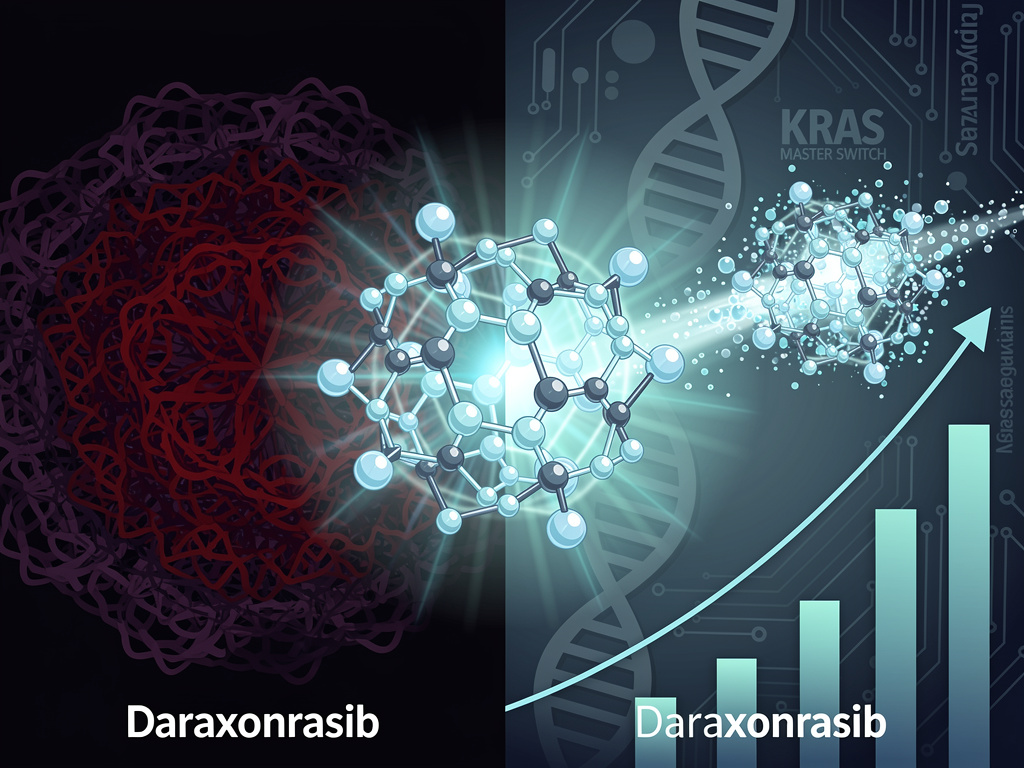
Scientists rarely erupt in applause during lectures. Yet at the end of May in Chicago, thousands of oncologists rose to their feet. They cheered. The trigger? Early results from a daily pill called daraxonrasib. It nearly doubled survival for patients with advanced pancreatic cancer.
Pancreatic tumors kill fast. Most patients live less than a year after diagnosis. Symptoms stay hidden until late. Standard chemotherapy offers limited relief. This new agent changes the math. Median survival jumped from 6.7 months on chemotherapy to 13.2 months on the drug. The phase 3 RASOLUTE 302 trial enrolled about 500 people with metastatic pancreatic ductal adenocarcinoma. All had received prior treatment. Fewer severe side effects appeared in the daraxonrasib arm. (The Economist).
But the real excitement runs deeper. Researchers believe the drug has exposed a central control point in many cancers. One that has resisted medicines for four decades.
KRAS mutations drive more than 90% of pancreatic cancers. They appear in roughly 50% of colorectal tumors and a significant share of lung cancers. The KRAS protein acts like a molecular switch. In healthy cells it flips on and off to regulate growth. Mutated versions stick in the “on” position. Cells divide without end. Tumors form and spread.
Drug hunters long called KRAS undruggable. Its smooth surface offered few pockets for small molecules to bind. Past attempts failed. Tumors quickly adapted. So the standing ovation carried extra weight. This success points beyond one disease.
Inside the New Approach
Daraxonrasib, developed by Revolution Medicines, doesn’t block KRAS the old way. It glues the mutant protein to another molecule called cyclophilin A. This partnership traps KRAS away from its usual signaling spots on the cell membrane. The switch stays off. Cancer growth slows.
The strategy creates an entirely new category of therapies. Other companies now chase similar molecular glues. Success here could open doors for dozens of previously intractable targets. But pancreatic cancer patients can’t wait for future compounds. They need options today.
Trial data presented at the American Society of Clinical Oncology meeting drew that rare spontaneous reaction. “KRAS used to be considered undruggable, like nothing could touch it,” said Dr. Sam Godfrey, science engagement lead at Cancer Research UK. “It was a bit like a light that’s stuck on, with no actual switch to turn it off.” Now researchers have found a way to access the wiring. (Cancer Research UK).
Patients in the study had already progressed after first-line therapy. Daraxonrasib cut the risk of death by about 60%. Quality of life held up better than with chemotherapy. These numbers matter in a disease where gains have come slowly.
And the implications stretch further. KRAS isn’t just a pancreatic story. It sits at the heart of many solid tumors. If this glue approach works broadly, treatment for lung, colon and other cancers could shift. Combination regimens become possible. Resistance mechanisms get mapped.
Yet challenges remain. Not every KRAS mutation responds the same. G12D variants dominate pancreatic cases. The drug hits multiple RAS forms, which helps. Still, some tumors carry other drivers. They may need paired therapies.
Resistance will emerge. Cancer cells find workarounds. Researchers already study how tumors adapt when KRAS signaling drops. Parallel pathways light up. New vulnerabilities appear. The field must stay ahead.
Earlier work hinted at related control points. One March study identified how KRAS-driven signals shut down GATA6, a gene that keeps tumors in a more organized, treatable state. Restore GATA6 activity and cells might respond better to existing drugs. The molecular switch here involves ERK and JUNB proteins. (ScienceDaily).
Separate research uncovered a transcription factor flip. In early pancreatic tumors, HNF4G dominates. As disease advances, FOXA1 takes over. This change pushes cells toward metastasis. Blocking the switch might halt spread. (Nature Genetics).
These discoveries don’t stand alone. They form pieces of a larger picture. KRAS sits at the top. But downstream regulators and cellular states determine how aggressively tumors behave. Targeting the master controller opens new lines of attack.
Physicians have called for routine molecular testing in pancreatic cancer. Biomarker status now guides therapy. Germline BRCA mutations already point to PARP inhibitors. KRAS profiling will matter more as targeted agents reach clinic.
Access remains an issue. Pancreatic cancer often strikes older adults. Many patients arrive frail. Oral pills help. They avoid infusion centers. Yet monitoring for unique side effects will require new protocols.
So what comes next? Larger trials in earlier treatment lines. Combinations with immunotherapy or chemotherapy. Studies in other KRAS-driven cancers. Regulators will review the data soon. Approval could arrive within a year.
The standing ovation signaled more than excitement over one trial. It marked a shift in thinking. A protein once dismissed as impossible to drug now yields to clever chemistry. The master switch has been found. Turning it reliably, safely and in many diseases defines the work ahead.
But optimism must stay measured. Pancreatic cancer retains its fearsome reputation. Five-year survival rates hover near 7% for most patients. This drug helps those with advanced disease after prior therapy. It does not cure.
Still, doubling survival counts as progress. In a field starved for wins, it feels significant. And the scientific door it opens could prove even larger. Other master regulators wait. New glues and degraders sit in pipelines. The next decade of oncology looks markedly different from the last.


 WebProNews is an iEntry Publication