
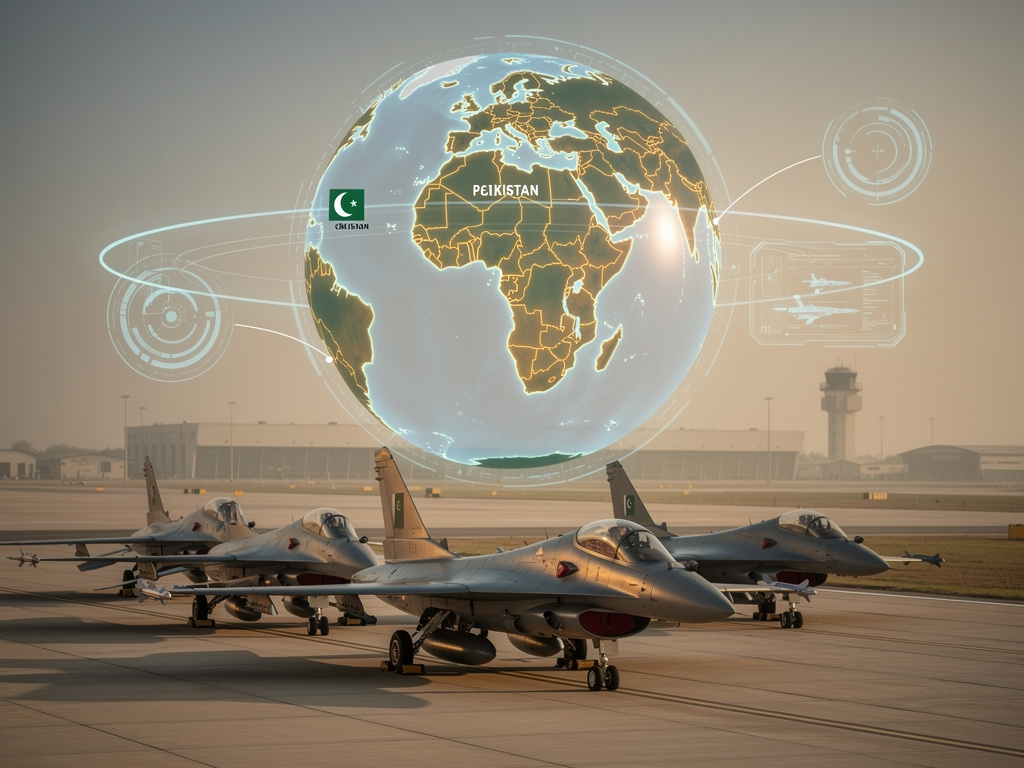
China’s Aerial Export Surge: Pakistan’s Bid to Globalize the JF-17 Fighter
In the high-stakes arena of international arms sales, China is steadily carving out a dominant position, particularly in the realm of advanced fighter jets. Recent developments highlight Pakistan’s aggressive push to market the JF-17 Thunder, a multirole combat aircraft co-developed with China, to new international buyers. This move comes amid broader shifts in global military procurement, where cost-effective alternatives to Western and Russian hardware are gaining traction. According to a report from Newsweek, Pakistan is actively seeking to expand the JF-17’s footprint beyond its traditional users, signaling a potential uptick in Chinese aerospace influence.
The JF-17, a lightweight fighter designed for air superiority, ground attack, and reconnaissance missions, has been a cornerstone of Pakistan’s air force since its induction in 2007. Jointly produced by the Pakistan Aeronautical Complex and China’s Chengdu Aircraft Industry Group, the jet boasts modern avionics, beyond-visual-range missiles, and a price tag that undercuts competitors like the American F-16 or Russia’s Su-35. This affordability has made it attractive to nations with constrained defense budgets, but until recently, its export success has been limited to a handful of countries, including Myanmar and Nigeria.
Pakistan’s latest efforts to promote the JF-17 internationally stem from a combination of strategic necessities and economic incentives. Facing regional tensions, particularly with India, Pakistan aims to bolster its defense industry through exports, generating revenue to fund further military modernization. Industry insiders note that this push aligns with China’s broader strategy to challenge U.S. dominance in arms exports, leveraging joint ventures to penetrate markets traditionally reliant on Western suppliers.
Expanding Horizons in Fighter Exports
A Pentagon report, as detailed in The War Zone, underscores how China’s trio of export-oriented fighters—the FC-31, J-10C, and JF-17—is positioning Beijing as a major player in the global market. The report predicts significant growth in Chinese jet sales, driven by technological advancements and competitive pricing. For the JF-17 specifically, upgrades like improved radar systems and integration with Chinese PL-15 missiles enhance its appeal, making it a viable option for air forces seeking fourth-generation capabilities without the political strings attached to U.S. or European deals.
Posts on X (formerly Twitter) reflect growing buzz around these developments, with defense analysts highlighting negotiations for Chinese jets in regions like Southeast Asia and Africa. For instance, discussions point to Indonesia’s interest in similar platforms, though no firm deals have been confirmed. This sentiment echoes broader trends where nations are diversifying suppliers to avoid sanctions or dependency on single sources.
The MSN article, republished from Newsweek and accessible via MSN, reveals that Pakistan is in talks with potential new buyers for the JF-17, though specifics remain under wraps. Sources suggest Middle Eastern and African nations as prime targets, where the jet’s low maintenance costs and adaptability to hot, dusty environments provide a edge over more complex Western models.
Strategic Alliances and Market Dynamics
China’s rise in fighter exports isn’t isolated; it’s part of a concerted effort to build military ties through affordable technology transfers. A piece from Simple Flying lists current operators of Chinese jets, noting limited but growing adoption. Pakistan, as the largest user with over 130 JF-17s in service, is leveraging its operational experience to pitch the aircraft as battle-tested, drawing from its use in counterterrorism operations.
Geopolitical factors play a crucial role. With Russia embroiled in conflicts that strain its export capabilities, China is filling the void. The Pentagon’s 2025 China Military Power Report, referenced in multiple outlets including AeroXplorer, warns of China’s accelerating sixth-generation fighter development, which could indirectly boost confidence in its current export models like the JF-17. This report also highlights Pakistan’s acquisition of 36 J-10C jets from China, equaling India’s Rafale fleet, as per The Print.
Industry experts point out that joint production models, like the JF-17’s assembly in Pakistan, offer buyers a path to indigenous manufacturing, reducing long-term reliance on foreign suppliers. This approach contrasts with U.S. export controls, which often include end-user restrictions and congressional oversight, making Chinese deals more straightforward for many governments.
Technological Edge and Challenges Ahead
Delving deeper into the JF-17’s capabilities, the aircraft features a digital fly-by-wire system, active electronically scanned array radar in its latest Block III variant, and compatibility with a range of munitions. Upgrades have addressed early criticisms regarding engine reliability, with the Russian RD-93 turbofan now supplemented by Chinese alternatives in development. As noted in Military Watch Magazine, the Pentagon anticipates these enhancements will drive unprecedented export success.
However, challenges persist. Western sanctions on Chinese technology could complicate integrations for buyers seeking interoperability with NATO-standard equipment. Moreover, quality perceptions linger, with some analysts questioning the JF-17’s performance against top-tier adversaries. Yet, real-world deployments, such as Myanmar’s use in internal conflicts, provide testimonials that counter these doubts.
On X, posts from defense accounts emphasize China’s readiness to export without the “strings” of Western permissions, as seen in discussions around new trainer jets and drones. This flexibility is particularly appealing to non-aligned nations, fostering a shift in global arms procurement patterns.
Regional Implications and Broader Impacts
The push for JF-17 sales has ripple effects across Asia. In South Asia, it intensifies the arms race between Pakistan and India, with the latter bolstering its fleet through French and indigenous programs. A report from India.com expresses alarm over China’s deliveries to Pakistan, including frigates alongside jets, viewing it as a strategic encirclement.
Globally, China’s export strategy aligns with its Belt and Road Initiative, using military sales to cement alliances. The Bloomberg coverage of recent Sino-Japanese tensions over Taiwan underscores the assertive posture accompanying these advancements, potentially deterring rivals while attracting partners.
For industry insiders, the metrics are telling: China’s status as the world’s fourth-largest arms exporter, with Pakistan as a top buyer, as detailed in another India.com piece, signals sustained growth. Sales figures from SIPRI, though not directly linked here, corroborate this trend, with Chinese exports rising 44% in recent years.
Future Trajectories in Aerospace Dominance
Looking ahead, China’s advancements in sixth-generation fighters, as reported in Army Recognition, could trickle down to export models, enhancing the JF-17’s lineage. Prototypes with tailless designs and advanced stealth promise to redefine air combat, pressuring U.S. programs like the Next Generation Air Dominance initiative.
Pakistan’s marketing efforts, including participation in international air shows, aim to secure deals in Latin America and the Middle East. X posts speculate on potential buyers like Iran, drawn to China’s willingness to supply amid sanctions, though official confirmations are pending.
Economically, these exports bolster China’s defense sector, funding R&D for next-gen tech. For buyers, the JF-17 offers a balance of performance and cost, with training packages and spare parts availability ensuring operational sustainability.
Navigating Geopolitical Headwinds
Amid these opportunities, risks abound. Escalating U.S.-China rivalry could lead to export controls or countermeasures, as seen in past restrictions on semiconductor tech vital for avionics. The CNN report on China’s electromagnetic catapult systems for carriers highlights parallel naval advancements, potentially bundling jet sales with broader maritime packages.
Industry observers note that while the JF-17 lacks the prestige of an F-35, its iterative improvements—such as helmet-mounted displays and electronic warfare suites—make it competitive in asymmetric conflicts. Pakistan’s role as a promoter adds credibility, drawing on its combat heritage.
In essence, this surge reflects a maturing Chinese aerospace industry, with Pakistan as a key enabler. As new buyers emerge, the dynamics of global air power could shift, challenging established players and reshaping alliances.
Innovations Driving Export Appeal
Beyond the JF-17, China’s portfolio includes the J-10C, which Pakistan has acquired in numbers matching India’s Rafales. This parity, as per The Print’s analysis, underscores the strategic depth of Sino-Pakistani ties. The jets’ PL-15 missiles, with ranges exceeding 200 kilometers, provide a deterrent edge.
X discussions also touch on drone exports, like the WJ-700 deal possibly with Algeria, indicating a holistic approach to unmanned and manned systems. Such integrations appeal to modern militaries seeking networked warfare capabilities.
For insiders, the key metric is market penetration: with Russia faltering, China’s share could double in the next decade, per Pentagon projections in The War Zone.
Sustaining Momentum Amid Uncertainties
Sustaining this momentum requires addressing engine indigenization, a historical weak point. Recent fits of domestic WS-13 engines in JF-17 variants signal progress, reducing dependency on Russian supplies.
Geopolitically, incidents like the radar-locking on Japanese planes, as covered by Bloomberg, heighten tensions but also showcase Chinese tech prowess, indirectly marketing its jets’ capabilities.
Ultimately, Pakistan’s push for JF-17 exports encapsulates China’s ascent, blending affordability, technology, and strategic partnerships to redefine global arms trade patterns. As deals materialize, the skies may see more Chinese wings, altering the balance of aerial power for years to come.


 WebProNews is an iEntry Publication