
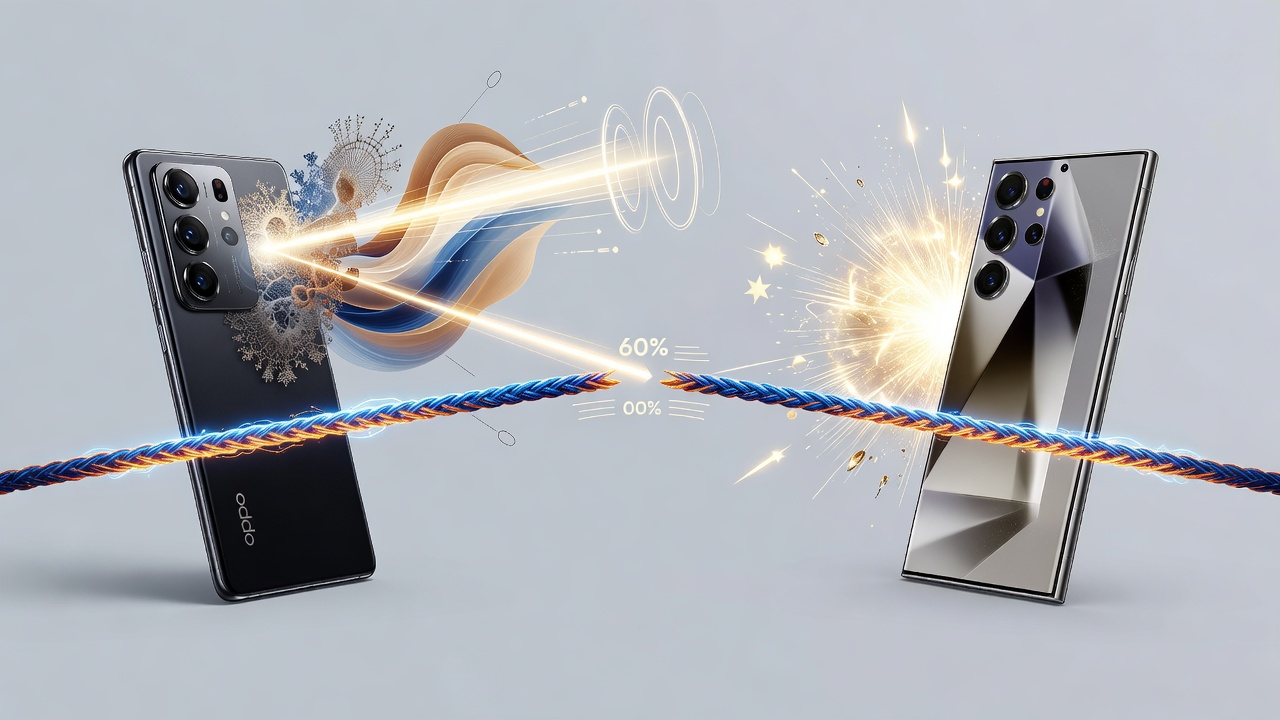
Samsung built its Galaxy S26 Ultra on years of refinement. Larger apertures on key sensors. A tuned Snapdragon 8 Elite processor. Galaxy AI tools that edit photos after the fact. Yet when pitted against the Oppo Find X9 Ultra, the Korean giant finds itself on the defensive.
Readers noticed. In a poll conducted by Android Authority, more than 2,100 voters reviewed side-by-side samples. Sixty percent picked the Find X9 Ultra as the superior camera phone. Samsung took 28 percent. Twelve percent called it even. Comments pulled no punches. One reader pointed to a portrait against an orange background. “I don’t see any reason why Samsung can’t handle that, other than poor post-processing,” wrote LJ. Another dismissed expectations altogether. “Samsung phones have long been rated average if not lower,” added hush.williams, pointing to Dxomark scores.
But hardware tells a more complex story. The Oppo Find X9 Ultra packs a 200MP main sensor measuring 1/1.12-inch with f/1.5 aperture. Its ultrawide hits 50MP at 1/1.95-inch. Then come the telephotos: a 200MP 3x periscope and a 50MP 10x periscope. That 10x optical reach stands alone among 2026 flagships. TechRadar tested over 500 photos and declared Oppo the winner. Richer details. Better bokeh. Stronger macro. Natural colors tuned with Hasselblad expertise.
Samsung counters with a 200MP main at f/1.4 and 1/1.3-inch. A 50MP ultrawide. Ten-megapixel 3x and 50MP 5x telephotos. On paper the apertures look competitive. In practice the processing differs sharply. Samsung pushes brighter HDR scenes and aggressive saturation. Oppo stays closer to optical reality. “The gap is not as massive as the hardware suggests,” noted the Android Authority camera test published in May. Oppo won most categories. Portraits looked more natural with less artificial blur. Zoomed night shots retained detail thanks to the larger sensors. Food images popped with accurate vibrancy.
Yet Samsung scored wins too. In one mall interior the S26 Ultra delivered superior HDR balance and brighter exposure. Its ultrawide handled high-contrast scenes with less clipping. Evening shots sometimes favored Samsung’s low-light tuning. These surprises kept the contest closer than many predicted. Still, Hardware Arms Race Defines 2026 Flagships
Oppo refused to play it safe. The Find X9 Ultra measures thicker at 9.1mm yet houses a 7050mAh battery. It charges at 100W wired. The display hits 3600 nits and 144Hz. Samsung answered with a slimmer 7.9mm body, 2600-nit panel, and that unique Privacy Display feature. Both run the latest Snapdragon silicon with plenty of RAM. But the camera conversation dominates industry chatter.
Recent tests reinforce the trend. A July YouTube comparison from Mark’s Tech asked bluntly who owns the “REAL Ultra” tag. Moon shots circulated on X show Oppo pulling ahead at extreme zoom. One recent X post from tech reviewer TechNick teased night photos from four 2026 ultras including both devices. Community votes often place Oppo and Vivo models ahead of Samsung in pure photography rankings.
Analysts see a split market. North American buyers still favor Samsung for software support, S Pen, and ecosystem lock-in. Global audiences, especially in Asia, gravitate toward Chinese brands that ship bigger sensors and faster charging without compromise. GSMArena’s review of the S26 Ultra called its camera “capable but lagging.” The publication noted no major leap from prior generations in most conditions. The short telephoto in particular drew criticism.
Processing choices explain much of the divide. Samsung’s in-house algorithms brighten shadows and boost colors to appeal on social feeds. Oppo’s Hasselblad partnership produces images that feel closer to dedicated cameras. Master Mode on the Find X9 Ultra gives manual controls that enthusiasts crave. Samsung offers Pro mode too, yet many samples show over-sharpening or unnatural skin tones.
But don’t count Samsung out. Its video capabilities remain class-leading with wide format options and stable stabilization. Galaxy AI features like Audio Eraser and object removal deliver quick edits that Oppo cannot match yet. For users who shoot first and tweak later, the S26 Ultra holds appeal. For those who want the best out-of-camera result, Oppo pulls ahead.
Industry watchers expect the competition to intensify. Vivo’s X300 Ultra and Xiaomi’s latest also chase the crown. Each new model pushes sensor sizes higher and zoom ranges farther. The days when Samsung defined the standard have passed. Now it must respond.
Consumers win from the pressure. Better low light. Cleaner zoom. More accurate colors. The 2026 camera flagships prove that hardware still matters even as computational photography matures. And in this round, at least according to both expert tests and public vote, Oppo holds the edge.


 WebProNews is an iEntry Publication