
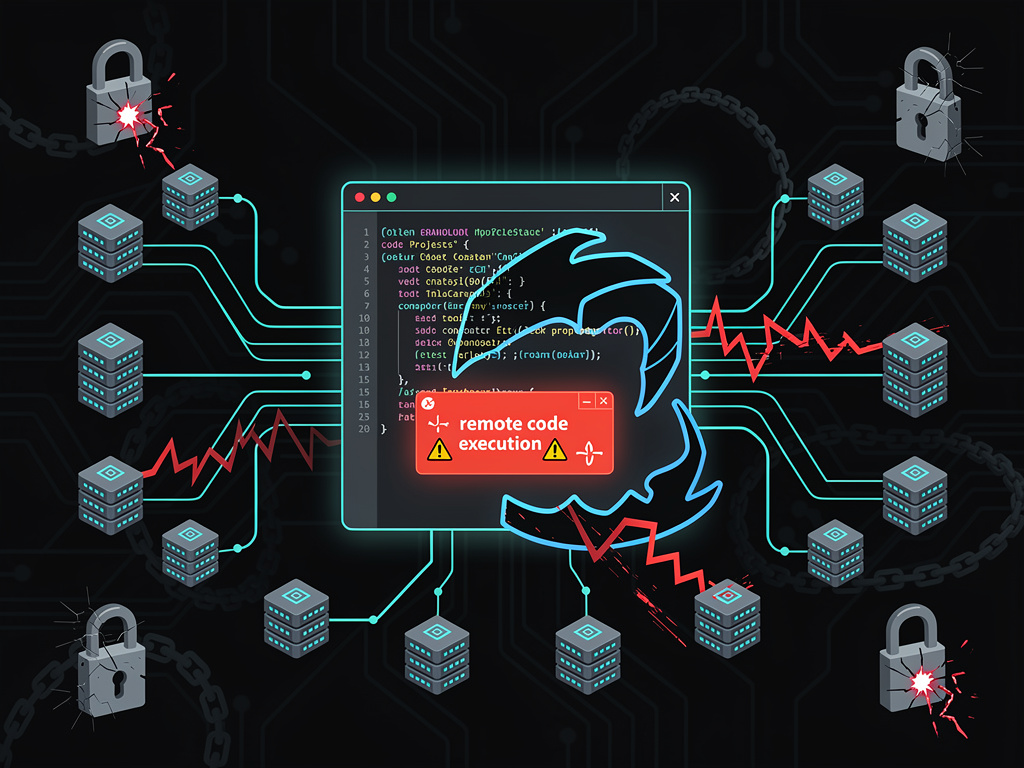
A critical security flaw in AI-powered coding assistants has sent shockwaves through the software development community, revealing how a single click can grant attackers complete control over developers’ systems. The vulnerability, dubbed OpenClaw, affects multiple popular AI coding tools and represents a fundamental breakdown in how these assistants process and execute code suggestions.
According to research published by The Hacker News, the OpenClaw bug enables attackers to achieve remote code execution through maliciously crafted code suggestions that appear legitimate to unsuspecting developers. The vulnerability exploits the trust relationship between developers and their AI assistants, turning helpful productivity tools into potential attack vectors. Security researchers who discovered the flaw have warned that the exploitation method is remarkably simple, requiring only that a developer accept a suggested code change—an action performed thousands of times daily by programmers worldwide.
The timing of this discovery is particularly significant as enterprises have rapidly adopted AI coding assistants to accelerate software development cycles. These tools have become deeply embedded in development workflows, with millions of developers relying on them to generate code snippets, complete functions, and suggest architectural improvements. The OpenClaw vulnerability undermines the security assumptions that have enabled this widespread adoption, forcing organizations to reassess their risk exposure.
The Mechanics of a One-Click Compromise
The OpenClaw vulnerability operates through a sophisticated exploitation chain that leverages the automatic execution capabilities built into modern AI coding assistants. When a developer requests code suggestions or accepts an AI-generated recommendation, these tools often execute preview operations or validation checks that run the suggested code in the background. Attackers can craft malicious payloads disguised as legitimate code suggestions that exploit these automatic execution paths, establishing persistence and exfiltrating sensitive data before the developer realizes anything is amiss.
What makes OpenClaw particularly dangerous is its ability to bypass traditional security controls. Unlike conventional malware that must overcome operating system protections and security software, code executed through AI assistants runs with the full privileges of the developer’s account. This means attackers gain immediate access to source code repositories, development databases, API keys, and other sensitive resources that developers routinely access. The attack surface is further expanded by the fact that many developers work with elevated privileges, making compromised accounts especially valuable to threat actors.
Industry-Wide Implications and Vendor Response
The vulnerability affects multiple AI coding assistant platforms, though the specific vendors impacted have been working to deploy patches and mitigations. The widespread nature of the flaw suggests a systemic issue in how AI coding tools are architected, rather than an isolated implementation error. Security experts have noted that the rush to market with AI-powered development tools may have resulted in insufficient security review of core functionality, particularly around code execution and sandboxing mechanisms.
Software development teams are now facing difficult decisions about how to continue using AI assistants while protecting their environments. Some organizations have temporarily disabled AI coding tools pending security reviews, while others have implemented additional monitoring and access controls. The challenge lies in balancing the significant productivity benefits these tools provide against the newly understood security risks. Enterprise security teams are scrambling to develop policies and technical controls that can detect and prevent OpenClaw-style attacks without completely eliminating AI assistance from developer workflows.
The Supply Chain Security Dimension
Beyond the immediate threat to individual developers, OpenClaw raises serious concerns about software supply chain security. Compromised developers with access to production code repositories could inject backdoors or malicious code that propagates to end users. This attack vector is particularly insidious because the malicious code appears to originate from trusted developers working within legitimate development processes, making detection extremely difficult through conventional code review processes.
The vulnerability also highlights the opacity of AI training data and suggestion sources. If attackers can influence the training data or suggestion mechanisms of AI coding assistants, they could potentially distribute malicious code patterns to thousands of developers simultaneously. This represents a force multiplication effect that traditional malware distribution methods cannot achieve. Security researchers are now investigating whether existing AI coding assistants may have already been compromised in this manner, though no evidence of such attacks has been publicly confirmed.
Technical Mitigations and Best Practices
In response to the OpenClaw disclosure, security experts are recommending a multi-layered approach to protecting development environments. First, organizations should implement strict sandboxing for all AI-generated code, ensuring that suggestions cannot execute with full system privileges until they have been reviewed and explicitly approved. This requires architectural changes to how AI assistants integrate with development environments, potentially reducing some of their convenience but significantly improving security posture.
Second, development teams should adopt zero-trust principles for AI-generated code, treating all suggestions as potentially malicious until proven otherwise. This includes implementing automated security scanning of AI suggestions before they are presented to developers, monitoring for suspicious execution patterns, and maintaining detailed audit logs of all AI interactions. Network segmentation can limit the damage from compromised developer accounts by restricting access to sensitive resources based on demonstrated need rather than blanket permissions.
The Regulatory and Compliance Perspective
The OpenClaw vulnerability arrives at a critical moment for AI regulation, as governments worldwide are developing frameworks for AI safety and security. The incident provides concrete evidence for regulatory concerns about the security implications of rapidly deployed AI systems. Organizations subject to compliance requirements such as SOC 2, ISO 27001, or industry-specific regulations may find that their current AI coding assistant usage violates security control requirements, necessitating immediate remediation or risk acceptance decisions.
Legal teams are also evaluating liability implications. If a security breach occurs through exploitation of OpenClaw or similar vulnerabilities, questions arise about whether organizations exercised reasonable care in their AI tool selection and deployment. Vendor contracts for AI coding assistants are being scrutinized for security guarantees, indemnification clauses, and incident response obligations. Some organizations are demanding enhanced security certifications and third-party audits before continuing to use AI development tools.
The Future of Secure AI-Assisted Development
The OpenClaw disclosure is likely to catalyze significant changes in how AI coding assistants are designed and deployed. Vendors are expected to implement more robust sandboxing, enhanced permission models, and improved transparency about code execution. The industry may move toward a model where AI suggestions are clearly marked and isolated until explicitly approved, similar to how email clients handle external content.
Research into adversarial AI attacks will intensify, as security professionals work to identify similar vulnerabilities before they can be exploited. The concept of ‘secure by design’ for AI systems will gain prominence, with security considerations integrated from the earliest stages of AI tool development rather than added as an afterthought. This may slow the pace of AI feature releases but will be necessary to maintain trust in these increasingly critical development tools.
Broader Lessons for AI Security
The OpenClaw vulnerability exemplifies broader challenges in AI security that extend beyond coding assistants. As AI systems gain more autonomy and integration with critical business processes, the potential impact of security flaws grows exponentially. The incident demonstrates that AI security cannot be treated as a subset of traditional application security; it requires new frameworks, tools, and expertise that account for the unique characteristics of AI systems.
Organizations are learning that the productivity benefits of AI tools must be weighed against security risks that may not be immediately apparent. The rush to adopt AI capabilities has often outpaced the development of security best practices and protective technologies. Moving forward, successful AI adoption will require a more measured approach that prioritizes security alongside functionality, ensuring that the tools designed to make developers more productive do not simultaneously make organizations more vulnerable to attack. The OpenClaw incident serves as a wake-up call for the entire software development industry, highlighting the urgent need for security-first thinking in the age of AI-assisted development.


 WebProNews is an iEntry Publication