
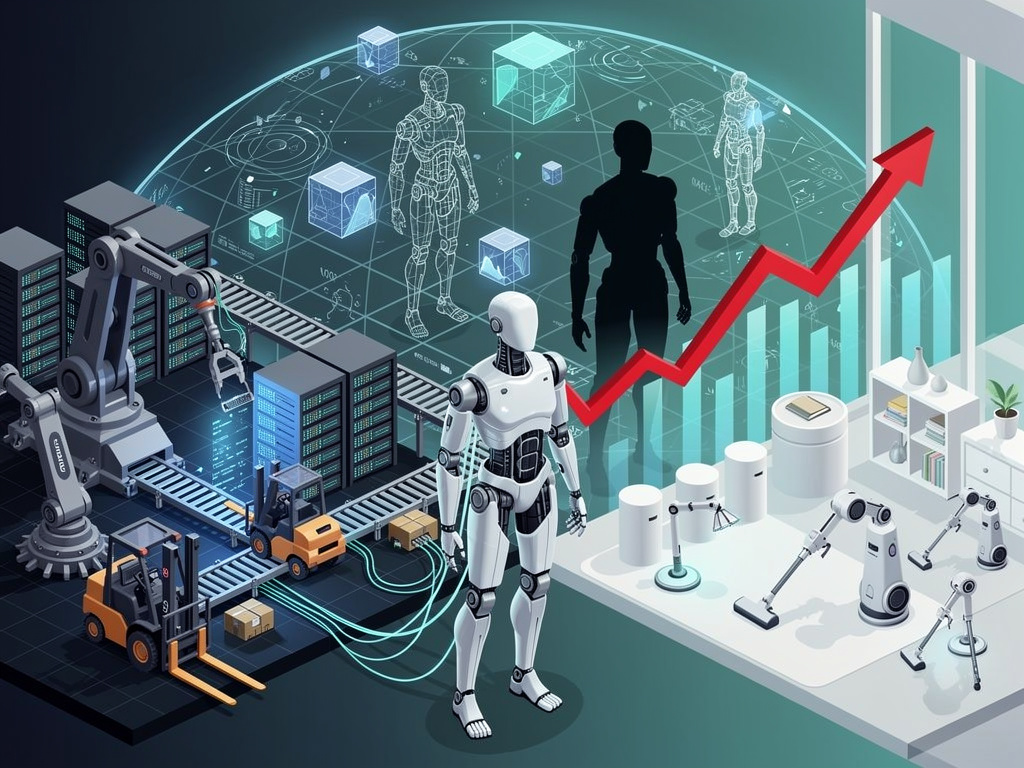
Sam Altman didn’t mince words. On May 31 he posted on X that OpenAI Robotics is hiring exceptional full-stack hardware, operations, systems, and machine-learning engineers. Their mission? To program and manufacture robots useful for society. The message landed like a challenge across Silicon Valley and Austin.
Greg Brockman followed up quickly. The OpenAI co-founder and president declared the division is already “making rapid progress towards building AI that can help people in the physical world.” No hype. Just a clear signal that the company famous for ChatGPT now eyes the factory floor, the construction site, and eventually the living room.
This marks OpenAI’s second serious run at robotics. The first effort shut down in 2021. Training systems on unpredictable physical tasks proved too hard then. Advances in neural networks and better hardware-software co-design changed the math. So the company revived the work, this time with more ambition and resources.
The new division grew out of an internal world-simulation research program. Aditya Ramesh, the researcher behind DALL-E and Sora, leads it. That background in generative models for images and video now informs how robots might understand and act in three-dimensional space. Eleven roles stood open at announcement. More have appeared since on OpenAI’s careers page, including electrical engineers focused on next-generation robotic systems.
Near-term targets look practical. Robots for skilled workers building data centers, power grids, and factories. The sort of dangerous, repetitive, or precision-heavy jobs that face labor shortages. Longer term? A personal robot for everyone. Humanoids that fold laundry, cook meals, or keep elderly company. Direct competition with the vision Elon Musk has outlined for Tesla’s Optimus.
Tesla shares dropped after the news. TheStreet reported a roughly 5% decline on June 1 as investors digested the threat. TheStreet framed it as a serious new challenge for Musk and Tesla. Yahoo Finance noted the stock reaction too, highlighting how OpenAI’s AI-first approach could pressure Optimus timelines. Yahoo Finance.
Tesla has moved fast on its own hardware. It ended Model S and X production in early May 2026 to convert the Fremont line into a dedicated Optimus assembly cell. Optimus Gen 3 units already work inside facilities on repetitive tasks. Musk has called the humanoid his path to a multitrillion-dollar valuation, claiming it could eventually outnumber cars and dwarf automotive revenue. Production scaling aims for significant output by late 2026.
Yet OpenAI enters with advantages in models. Its large language and vision systems already power interfaces that feel intuitive. ChatGPT holds nearly 80% of the AI chatbot market, according to Statcounter data cited by Motley Fool. Any robot control or natural-language instruction layer could plug straight into that installed base. Motley Fool.
The rivalry carries personal history. Musk co-founded OpenAI in 2015, left the board, later sued the company, and launched xAI as a competitor. A court battle between the two men wrapped up last month with Altman prevailing. That tension now plays out in hardware as much as software.
OpenAI has hedged its bets so far. It holds minority investments in Figure AI and 1X Technologies, both developing capable humanoids. The new in-house division suggests those stakes won’t remain the only exposure. Recent job postings talk about unlocking general-purpose robotics and advancing toward AGI-level intelligence in dynamic real-world environments. The language echoes the frontier-model ambitions that built ChatGPT.
But hardware differs from code. Physical robots demand manufacturing scale, supply chains for actuators and sensors, and relentless testing in messy environments. Tesla’s automotive experience gives it an edge there. Fremont already churns out cars. Retrofitting lines for robots builds on existing muscle. OpenAI must catch up on the factory side even as it leads on intelligence.
Still. The entry of a well-capitalized AI leader changes expectations. Barron’s reported Tesla stock declines tied directly to the robotics announcement. Other analysts point to a potential $5 trillion humanoid market by 2050 according to Morgan Stanley projections referenced across coverage. Plenty of room for multiple winners. Yet Tesla trades at rich multiples that price in dominance.
Motley Fool analysts argue the news should give Tesla shareholders at least modest pause. The stock sits near 13 times next year’s projected revenue and 160 times 2027 earnings estimates. Those figures assume Optimus delivers on schedule and faces limited competition. OpenAI’s move chips at that assumption.
And the field grows crowded. Boston Dynamics, Agility Robotics, Symbotic, and NEURA Robotics already ship systems. Google DeepMind and Nvidia explore robotics too. Yet few bring the combination of foundation models, simulation expertise, and capital that OpenAI now deploys.
Recent coverage reinforces the momentum. TechFundingNews detailed the hiring push and infrastructure focus just days after the announcement. TechFundingNews. Business Insider earlier reported OpenAI had quietly scaled a robotics lab in San Francisco, quadrupling staff and planning a second site in Richmond, California. Data collectors there train arms on household tasks using teleoperation.
So far no product demos or firm timelines from OpenAI. The company rarely shows unfinished work. When it does speak, results tend to arrive. That discipline applies here. Investors and competitors will watch hiring velocity, any partnership announcements, and early prototype videos.
One thing looks clear. The line between AI software and physical intelligence has blurred. OpenAI no longer stops at the screen. It wants machines that move through the world the way its models reason through language. Tesla built cars first and added intelligence. OpenAI starts with intelligence and now adds the body.
Short sentences cut through the noise. This contest will not wait years. Prototypes will clash in labs and on job sites sooner than most expect. Data from real deployments will separate marketing claims from actual performance. Energy demands, safety records, and cost per task will decide winners more than any single demo.
But. The announcement itself already shifts capital allocation conversations inside both companies and across the supplier base. Actuator makers, sensor firms, and chip designers suddenly see bigger orders on the horizon. The race accelerates.
OpenAI’s bet carries risk. Hardware margins run thinner than software. Regulatory questions around autonomous machines in homes and workplaces loom larger than for chatbots. Yet the upside matches the scale of its current valuation ambitions. A useful humanoid at consumer prices would open markets measured in tens or hundreds of millions of units.
Tesla investors have time. Robot revenue likely stays negligible in 2026 and 2027 financials for both sides. That breathing room lets teams iterate. It also lets markets test how seriously they price the competitive overlap.
The Motley Fool piece concluded that Tesla will probably reach the personal robot market first but is unlikely to dominate it the way it once led electric vehicles. Unknowns work against the premium valuation. OpenAI’s entry adds one more unknown.
Watch the engineers. The ones joining OpenAI Robotics will shape behaviors that feel eerily human. The ones at Tesla will push production costs down fast. Both paths matter. One builds the brain. The other scales the body. Their convergence decides who captures the biggest slice of the coming physical AI economy.


 WebProNews is an iEntry Publication