
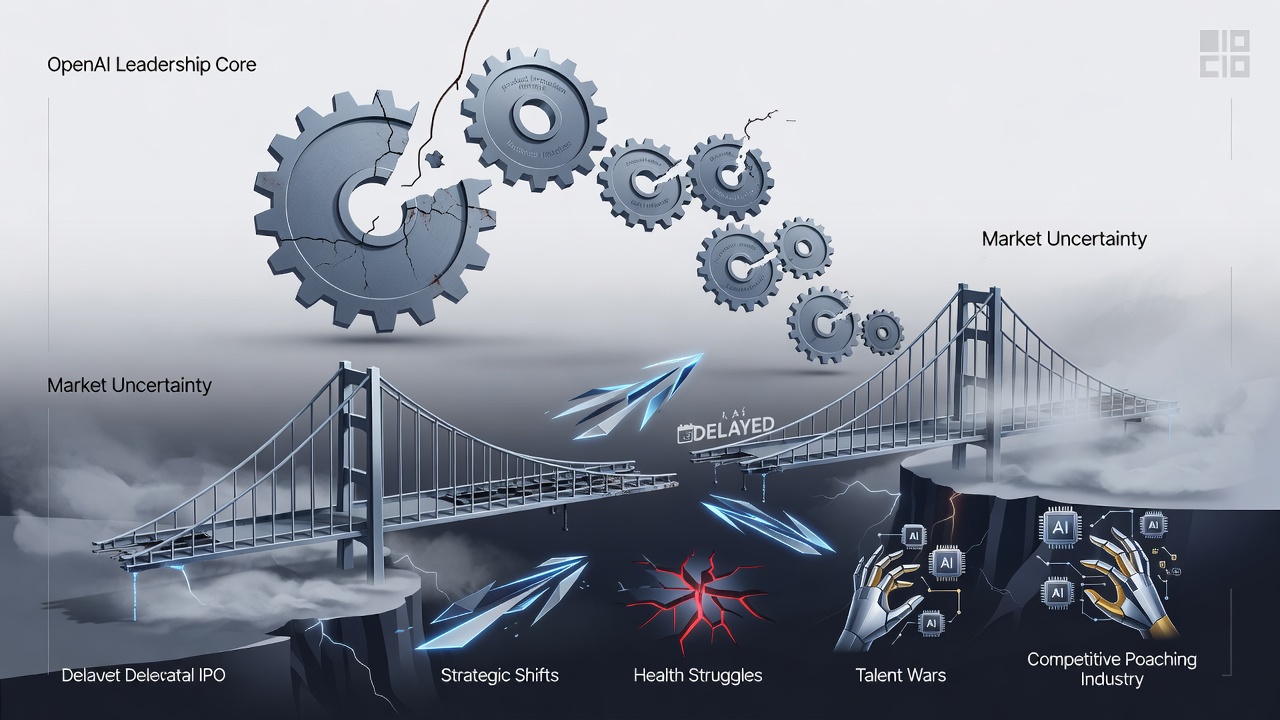
OpenAI keeps shedding top talent. The latest blow landed this week when Fidji Simo, the company’s second-in-command and chief of applications, decided not to return from medical leave. She will shift to a part-time advisory role. The move comes as the artificial-intelligence startup races toward a public offering now eyed for 2027.
Simo joined OpenAI in March 2025 after a stint at Meta. She quickly rose to oversee product and business operations. Her exit adds to a long list of high-profile departures that have thinned the ranks around CEO Sam Altman. The Wall Street Journal first reported her decision.
She told colleagues the choice was painful. “This has been one of the hardest decisions of my career, but my body left me no choice — my symptoms became as loud as I am stubborn,” Simo wrote in an internal note, according to multiple reports. Her condition, a neuroimmune disorder known as postural orthostatic tachycardia syndrome, worsened earlier this year. She first stepped away in April 2026 for treatment.
But health was not the only factor in play. OpenAI has been tightening focus. It shuttered experimental projects. It redirected resources toward polishing ChatGPT. That shift created friction with leaders who preferred broad research over rapid product tweaks. And. It accelerated an exodus that began years ago.
Back in April, three executives left on the same Friday. Kevin Weil, once chief product officer and later head of OpenAI for Science, announced his departure. Bill Peebles, who built the video-generation tool Sora before the company killed its short-form ambitions, followed suit. Srinivas Narayanan, CTO for B2B applications, also stepped away. CNBC covered the triple exit.
The pattern stretches further. In 2025 alone, OpenAI lost at least a dozen executives and researchers. Many headed to Meta’s Superintelligence Lab. Others cited burnout or disagreements over safety priorities. Business Insider tallied the 2025 departures.
Even safety-focused voices have walked. Joshua Achiam, OpenAI’s chief futurist and a longtime voice on responsible development, notified colleagues this week that he will leave later this month after nearly nine years. His exit adds to worries that the company is de-emphasizing long-term alignment work. WIRED broke the news about Achiam.
Brad Lightcap, the longtime chief operating officer, moved to special projects earlier this year. Kate Rouch, chief marketing officer, stepped down to focus on cancer recovery. The departures have left Greg Brockman, OpenAI’s president and a co-founder, stepping in to cover product duties on an interim basis.
Why does this matter now? OpenAI sits at a crossroads. Its valuation has soared past $150 billion on paper. Yet the path to an IPO remains bumpy. Investors question governance. They watch the leadership churn. They wonder whether the company can maintain its technical edge while scaling commercially. Recent reports suggest it has sold access to frontier models to entities linked to blacklisted Chinese firms, exposing gaps in export controls. And this week Apple sued OpenAI, alleging systematic theft of trade secrets through targeted recruitment of its engineers.
Sam Altman has downplayed the exits in the past. He called them unrelated to restructuring plans. Yet the sheer volume tells another story. Co-founders have left. Research chiefs have left. Product leaders have left. The original team that launched ChatGPT in late 2022 bears little resemblance to today’s roster.
Some departures reflect strategic pivots. OpenAI killed Sora’s consumer ambitions to cut costs. It folded science and enterprise side efforts back into core operations. Executives tied to those “side quests” found themselves without clear mandates. Others left over deeper philosophical rifts. Safety researchers have repeatedly cited pressure to ship faster at the expense of rigorous testing.
The timing feels particularly acute. OpenAI prepares for public markets. It must prove stable leadership and a clear plan for profitability. Simo’s role sat at the heart of that commercial push. She oversaw applications, revenue streams, and partnerships. Her absence creates a vacuum at the exact moment when execution matters most.
Analysts point to a broader talent war. Meta, Anthropic, Google, and xAI all compete fiercely for the same small pool of experts. Salaries run into the millions. Equity packages swell. Loyalty frays when competitors dangle bigger missions or better resources. OpenAI’s nonprofit origins and shifting structure have only heightened the strain.
Still, the company shows resilience. ChatGPT remains the most-used AI product on earth. New models keep arriving. Revenue climbs. But sustained success demands more than clever code. It requires steady hands at the top. Right now those hands keep changing.
Joshua Achiam’s farewell note captured a common sentiment among those who exit. He expressed gratitude for the opportunity yet signaled a desire to pursue new directions. Many leavers echo that tone. They praise the mission. They cite personal reasons or fresh opportunities. Few burn bridges. The cumulative effect, however, raises questions about whether OpenAI can retain the institutional knowledge that fueled its rise.
Recent moves suggest a sharper focus on core products. The company shut down its experimental Atlas AI browser after just nine months. Features will fold into the main ChatGPT app and browser extensions. Such pruning signals discipline. It also signals that leaders who championed those experiments no longer fit the narrower vision.
Health-related exits add another layer. Simo and Rouch both cited serious conditions. Their cases highlight the intense pressure inside elite AI labs. Long hours. High stakes. Constant scrutiny. The physical toll can prove too much.
Altman has moved quickly to fill gaps. He tapped Brockman for interim product oversight. Other executives have absorbed extra duties. The structure feels more fluid than ever. Whether that flexibility helps or hurts during IPO preparations remains to be seen.
One thing looks clear. The era of rapid expansion and scattered bets has narrowed. OpenAI now bets heavily on ChatGPT improvements and enterprise adoption. That bet will define its public debut. It will also test whether the remaining team can deliver without the colleagues who helped build the foundation.
The coming months will prove decisive. Markets will watch every announcement. Talent will weigh offers. Regulators will examine governance. And OpenAI will try to show that, despite the exits, its best days still lie ahead.


 WebProNews is an iEntry Publication