
The race to dominate artificial intelligence has shifted. No longer does it center solely on raw model size or the volume of graphics processors purchased. Expenses now command attention. That reality sits at the heart of OpenAI’s latest move with Broadcom.
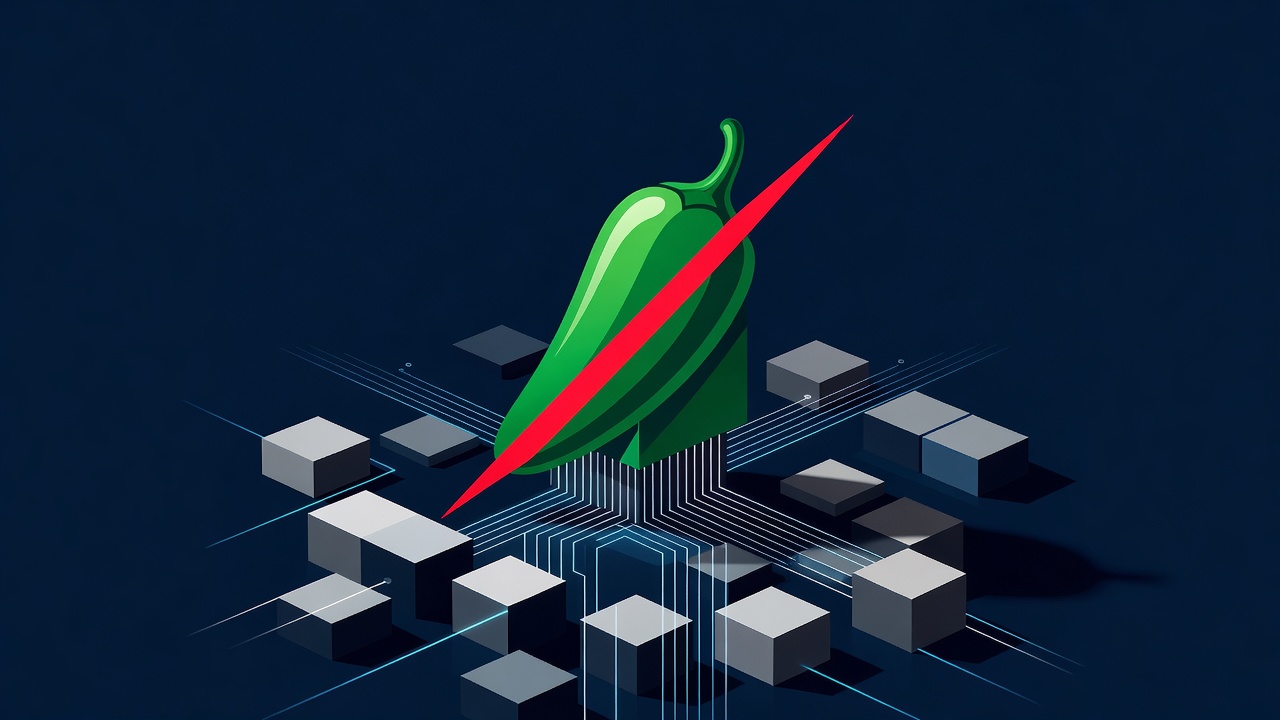
On June 24, the two companies unveiled Jalapeño. This custom silicon, designed primarily for inference, marks OpenAI’s first in-house artificial intelligence processor. Built in close coordination with Broadcom, the chip aims to handle the repetitive task of answering queries from models like ChatGPT far more efficiently than general-purpose alternatives. But its arrival also throws a harsh light on mounting financial pressures across the sector.
But here’s the catch. Inference costs accumulate. Every user interaction, every generated response, every automated task adds to the bill. Training a model happens once. Running it at global scale never stops. As adoption surges, those ongoing expenses threaten to overwhelm even the best-funded labs. OpenAI gets this. So does Broadcom.
According to a detailed report from The Street, Jalapeño forms the opening piece of a multigeneration compute platform. OpenAI shaped its architecture around its deep knowledge of large language model behavior. Broadcom then stepped in to handle manufacturing realities. That includes silicon production, system board design, rack-level integration, advanced networking, and the complex work of scaling output to thousands of units. The initial rollout targets the end of 2026.
The partnership didn’t appear overnight. OpenAI and Broadcom first announced a broader collaboration in October 2025. That agreement called for the joint development and deployment of 10 gigawatts worth of custom AI accelerators, with systems rolling out in the second half of 2026 and full completion eyed for the end of 2029. OpenAI’s official announcement framed the effort as a way to deliver specialized accelerator and network systems tailored for next-generation clusters. Deployment of the first racks would begin late in 2026.
Wall Street reacted with interest at the time. Broadcom shares jumped roughly 9% following the initial disclosure, as noted in CNBC coverage. Analysts saw validation for Broadcom’s growing custom ASIC business. The company already counts Google, Meta, and others among its design partners. This OpenAI project added another high-profile name.
Yet enthusiasm has since cooled. Broadcom’s stock has fallen more than 21% since early June after its quarterly results failed to meet the loftiest expectations on Wall Street. The firm still projects $16 billion in AI-related revenue for its current quarter, slightly above the $16.36 billion consensus tracked by Visible Alpha. Longer term, executives eye $100 billion in annual AI chip sales. Those targets matter. They also underscore how expensive the entire infrastructure push has become.
Numbers tell a sobering story. Major technology companies could spend $1 trillion on capital projects next year. AI-linked debt issuance reached $236 billion in just the first five months of 2026. Those figures come from Reuters’ Artificial Intelligencer newsletter. They reflect an industry that has bet heavily on rapid expansion. The question now centers on sustainability.
Jalapeño addresses part of that equation. Designed strictly for inference, it promises meaningful savings. Broadcom CEO Hock Tan has publicly stated the solution delivers about 50% lower cost compared with a typical GPU setup. That claim, highlighted in recent Bloomberg reporting, carries weight for operators staring down enormous power and hardware bills. Inference workloads differ from training. They reward specialization. A chip tuned exclusively to OpenAI’s patterns wastes less energy and time on unnecessary flexibility.
And the timing feels deliberate. OpenAI continues to expand its product lineup. ChatGPT, the API business, Codex coding tools, and emerging agentic systems all generate steady inference demand. Scaling those offerings to hundreds of millions of users requires infrastructure that doesn’t break the bank. Custom silicon offers one path forward. So do tighter software optimizations and smarter networking. Broadcom supplies expertise in all three areas.
The deal forms one thread in a wider pattern. Hyperscalers and AI labs have poured resources into custom silicon for years. Google developed its Tensor Processing Units. Amazon built Inferentia and Trainium chips. Meta has its own designs. Microsoft works closely with partners. Now OpenAI joins the list. This move distances the company from complete reliance on Nvidia hardware while still operating within a broader supplier network that includes the graphics leader.
Recent analysis from The Wall Street Journal notes the collaboration builds directly on last fall’s 10-gigawatt commitment. The new chip focuses explicitly on lowering the expense of serving AI systems at massive scale. Efficiency gains matter as much as peak performance. Power consumption, cooling requirements, and physical space constraints all factor into total ownership cost.
Industry observers point to networking as another critical piece. Broadcom’s Ethernet technology underpins much of the system architecture. Traditional AI clusters often rely on InfiniBand for high-speed interconnects. Shifting toward Ethernet at this scale could deliver cost advantages and easier integration with existing data center equipment. The full stack, from chip to rack to fabric, receives attention.
Production realities add complexity. TSMC manufactures the vast majority of these advanced AI chips, whether from Nvidia, Broadcom, or the hyperscalers themselves. Capacity remains tight. Lead times stretch. Any delay in Jalapeño’s 2026 target could ripple through OpenAI’s expansion plans. The company has already signaled ambitions that extend well beyond current capabilities. Its Stargate data center project, referenced across multiple reports, envisions enormous clusters measured in gigawatts.
Financial implications stretch in multiple directions. For Broadcom, success with OpenAI strengthens its position as a preferred custom-chip architect. The firm’s $73 billion AI backlog, cited in semiconductor research from Tom’s Hardware, supports optimism. Yet investors have grown wary. Sky-high expectations baked into valuations leave little room for disappointment. When quarterly guidance falls even slightly short, shares react sharply.
OpenAI faces its own pressures. The organization burns cash at a remarkable rate to fund model development, compute acquisition, and product launches. Custom hardware promises relief on the inference side. Whether those savings arrive quickly enough to offset other costs remains uncertain. Power alone represents a massive variable. Training and serving frontier models demands electricity on a scale that strains grids and draws regulatory scrutiny.
So what comes next? Deployment of Jalapeño will provide the first real-world data. If the chip meets efficiency targets and integrates smoothly into OpenAI’s clusters, expect accelerated adoption across the platform. Future generations could tackle additional workloads or push performance higher. The multigeneration roadmap suggests this represents the start, not the finish.
Broadcom, meanwhile, positions itself for sustained demand. Its work with multiple hyperscalers diversifies risk. Even as Nvidia maintains commanding market share, estimated near 70% in recent TrendForce data, custom ASICs continue to gain ground. Shipments of those specialized processors could reach nearly 28% of the AI server market in 2026. Growth rates for ASICs outpace those for merchant GPUs.
The broader industry watches closely. Every major player confronts the same tension between ambition and expense. Building bigger models requires more compute. Serving more users multiplies the bill. Finding ways to do both without financial collapse has become the central engineering and business challenge. OpenAI’s bet on Jalapeño signals confidence that tailored hardware can bend the cost curve.
Success won’t come easily. Technical hurdles remain. Supply chain constraints persist. Competition intensifies. Yet the direction feels clear. Control over the full stack, from silicon to software to systems, offers strategic advantage. Companies that master cost-effective inference at planetary scale will hold the upper hand in the years ahead.
The Jalapeño announcement, therefore, matters beyond one chip or one partnership. It crystallizes a maturing phase in artificial intelligence development. The era of unchecked spending gives way to disciplined execution. Infrastructure costs have taken center stage. And the spotlight isn’t fading anytime soon.


 WebProNews is an iEntry Publication