
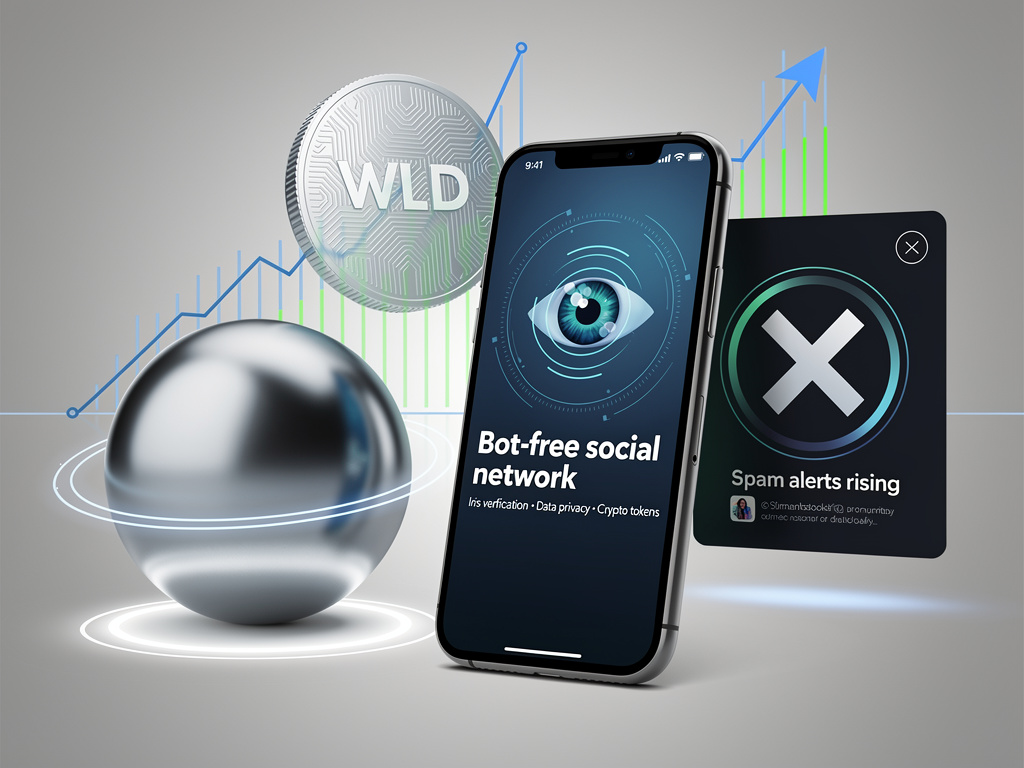
OpenAI, the AI powerhouse led by Sam Altman, is quietly assembling a social network designed to sideline bots through rigorous biometric checks, sources familiar with the project told Forbes. The effort, helmed by a team of fewer than 10 engineers, aims to craft a platform exclusively for verified humans, drawing on the viral momentum of ChatGPT and Sora. Sources said the company has weighed iris-scanning Orbs from World—Altman’s own biometric venture—or Apple’s Face ID to enforce “proof of personhood.”
This move comes amid Altman’s vocal dismay over bot proliferation on X, where he posted in September that “somehow AI twitter/AI reddit feels very fake in a way it really didn’t a year or two ago.” He has nodded to the “dead internet theory,” observing “I never took the dead internet theory that seriously but it seems like there are really a lot of LLM [AI]-run twitter accounts now.” OpenAI declined to comment on the project, which lacks a public timeline and could evolve significantly.
Platforms like X have grappled with bots mimicking human activity to inflate crypto pumps or spread vitriol. Elon Musk slashed X’s trust and safety staff by 80% post-acquisition, removing 1.7 million bot accounts in 2025 alone. Yet spam persists, fueling Altman’s vision for a cleaner digital town square powered by unalterable biometrics.
Altman’s Dual Empire Collides
Sam Altman chairs Tools for Humanity, the firm behind World (formerly Worldcoin), whose Orb—a cantaloupe-sized sphere—scans irises to mint unique World IDs. World claims over 17 million users via its app, converting scans into privacy-preserving codes without storing raw images, per its site. No formal OpenAI-World pact exists, but the overlap raises eyebrows given Altman’s roles.
The social network could let users generate AI content like videos or images, blending OpenAI’s generative tools with verified feeds. Instagram chief Adam Mosseri warned in December that “The feeds are starting to fill up with synthetic everything,” echoing industry woes as Threads rivals X with comparable daily users and Bluesky tops 40 million.
ChatGPT hit 100 million users in two months and exceeds 800 million total; Sora notched 1 million downloads in days. OpenAI eyes this traction to challenge incumbents, but biometrics introduce friction—users must scan eyes in person or via Face ID, unlike email sign-ups on Facebook or LinkedIn.
Token Surge Signals Hype
World’s WLD token leaped 27% on January 28 after the Forbes scoop, briefly outpacing majors, CoinDesk reported. Another account pegged the jump at 16%, with WLD hitting $0.62 amid speculation. World raised $135 million from a16z and Bain Capital Crypto in 2025, touting decentralized identity compliant with privacy norms.
World partners with Mythical Games for bot-proof web3 gaming and has verified millions globally. Its app offers crypto payments and chats, but iris collection drew bans in Kenya and probes in the U.K., highlighting tensions between innovation and oversight.
PitchBook first flagged OpenAI’s social ambitions in April via The Verge, but biometrics mark a bold escalation. Privacy experts caution iris data’s permanence: unlike passwords, eyes can’t change if compromised.
Bot Wars Escalate Across Platforms
X’s bot purge follows Musk’s 2020 declaration of war, yet AI agents evade behavioral detection. TikTok and Instagram battle synthetic floods, with Meta enabling in-app AI images for its 3 billion users. OpenAI’s pitch: a humans-only enclave where authenticity reigns.
World’s tech generates cryptographic proofs from irises, splitting data across servers like UC Berkeley for security. Critics decry centralization risks, but proponents see it as essential for AI-era trust. Regulatory heat persists—EU AI Act may deem such systems high-risk by 2026.
Altman’s biometrics fixation traces to fears of AI eroding human centrality. As OpenAI encroaches on e-commerce and defense, this network could anchor its consumer pivot, verifying creators amid generative deluge.
Privacy’s High Stakes
World insists Orbs delete raw scans post-hashing, storing only codes on devices or blockchains. Still, advocates like Edward Snowden likened biometrics to a “ticket-punch” on the body. Kenya suspended operations in 2023; U.K. inquiries linger.
OpenAI’s small team tests biometrics amid no firm rollout. Success hinges on user buy-in—will millions queue for Orbs when phone verification suffices? Altman’s history of virality offers hope, but competition from Threads and Bluesky looms large.
The project embodies Altman’s duality: unleashing AI while forging tools to reclaim humanity. As WLD volatility underscores, markets bet big on this fusion, but execution demands balancing security, scale, and scrutiny.


 WebProNews is an iEntry Publication