
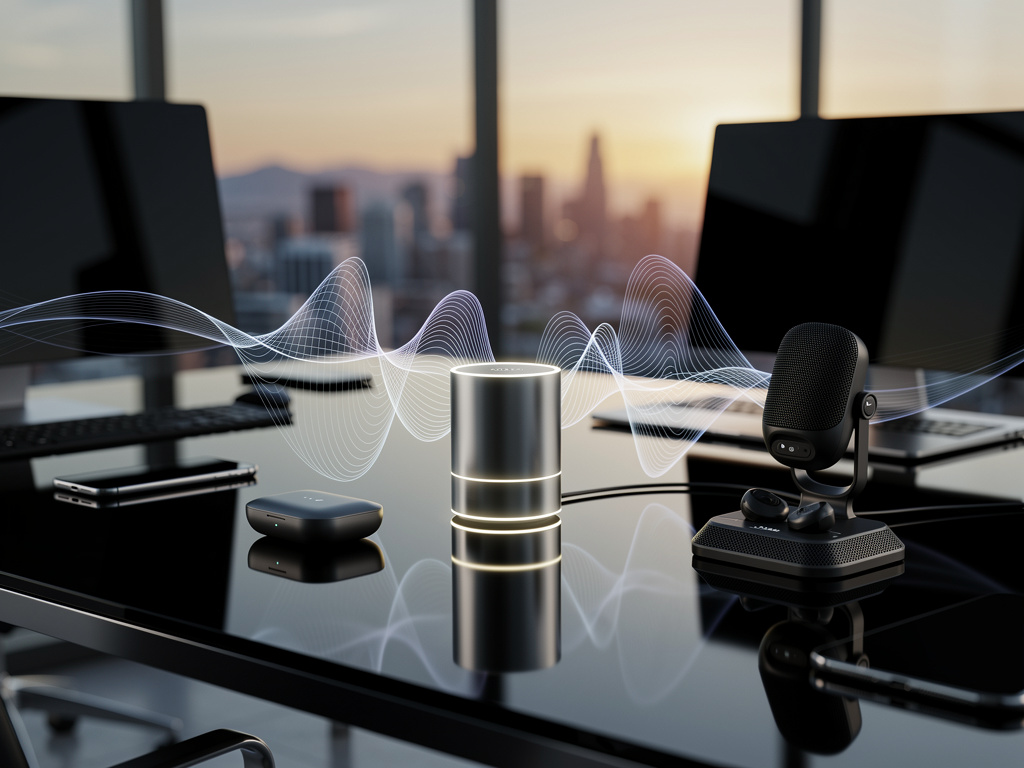
Echoes of the Future: OpenAI’s Bold Leap into Audio-First AI Hardware
OpenAI, the artificial intelligence powerhouse behind ChatGPT, is reportedly gearing up to launch its inaugural hardware device, one that prioritizes audio interactions over traditional screens. According to a recent report from 9to5Mac, this device will integrate advanced audio capabilities directly into ChatGPT’s framework, marking a significant shift in how users engage with AI. The move comes amid growing industry interest in reducing screen dependency, with Silicon Valley giants exploring voice as the next primary interface.
Details emerging from sources close to the matter suggest that OpenAI is unifying its engineering, product, and research teams to focus on audio enhancements. This reorganization aims to deliver more natural, emotive, and responsive voice interactions. The company’s efforts are not isolated; they align with broader trends where audio is seen as a way to make AI more seamless in everyday life, from homes to vehicles.
The anticipated device, still shrouded in some mystery, is expected to be largely audio-based, potentially resembling a smart speaker or wearable that listens and responds without requiring visual input. Insiders indicate that OpenAI is preparing a new voice model architecture for release in the first quarter of 2026, promising features like real-time interruption handling and faster response times.
Unifying Teams for Audio Innovation
This push into hardware represents a departure for OpenAI, which has primarily operated in the software realm. Reports from The Information highlight that the company is ramping up its audio AI models in preparation for this device. By consolidating teams, OpenAI seeks to address longstanding challenges in voice technology, such as making conversations feel more human-like and less robotic.
One key improvement involves enhancing ChatGPT’s ability to convey emotion through tone and inflection. Current models, while impressive, often fall short in nuanced interactions. The upcoming upgrades, as detailed in the 9to5Mac report, could enable the AI to detect and respond to user interruptions instantaneously, mimicking natural dialogue flow.
Furthermore, OpenAI’s strategy includes integrating these audio advancements into existing ChatGPT models. This means users might soon experience more immersive interactions, where the AI not only understands spoken commands but also adapts its delivery based on context, such as the user’s mood or environment.
Silicon Valley’s War on Screens
The broader context of this development is a mounting critique of screen-centric computing. A piece from TechCrunch describes how tech leaders are declaring “war on screens,” positioning audio as the interface of the future. OpenAI’s bet aligns with this sentiment, envisioning devices that blend into spaces like homes, cars, and even personal wearables without demanding constant visual attention.
Posts on X (formerly Twitter) reflect excitement and speculation around these updates. Users have noted OpenAI’s recent releases of audio preview models, such as gpt-4o-audio-preview, signaling ongoing refinements. These social media discussions underscore a community eager for AI that feels more integrated into daily routines, free from the distractions of glowing displays.
In parallel, competitors like Apple and Google have long invested in voice assistants, but OpenAI’s approach could differentiate itself by leveraging its advanced language models. The company’s focus on audio hardware, potentially arriving in 2027 as per Ars Technica, positions it to challenge established players in the smart device market.
From Software Dominance to Hardware Ambitions
OpenAI’s journey into hardware isn’t without precedents. Founded in 2015, the organization has evolved from a research lab to a commercial entity, with ChatGPT’s launch in 2022 catapulting it to global fame. Now, partnering with design luminaries like Jony Ive, formerly of Apple, OpenAI aims to create a palm-sized, screenless assistant, as reported in various outlets including posts on X referencing Financial Times insights.
The device’s design philosophy emphasizes always-on listening via microphones, cameras, and speakers, raising intriguing questions about privacy and data handling. While core software and compute infrastructure are still in development, the emphasis on audio suggests a product that prioritizes conversational AI over visual interfaces.
Enhancements to ChatGPT’s audio models are central to this vision. According to PYMNTS.com, OpenAI is tailoring these models based on expected usage patterns for personal AI devices, ensuring they handle complex, multi-turn conversations with ease.
Challenges in Voice Technology Adoption
Despite the optimism, voice interfaces have historically lagged behind screens in widespread adoption. Ars Technica notes that factors like accuracy in noisy environments and user trust have hindered progress. OpenAI’s reorganization seeks to overcome these by introducing a new model in early 2026 that promises more natural speech synthesis and better handling of accents and dialects.
Industry insiders point out that audio AI must navigate ethical minefields, including bias in voice recognition and the potential for misuse in surveillance. OpenAI’s track record with responsible AI deployment will be under scrutiny as it ventures into hardware.
Moreover, the timeline—software upgrades in 2026 followed by hardware in 2027—allows for iterative improvements. X posts from developers highlight recent audio model previews, suggesting OpenAI is testing waters with incremental releases to gather feedback.
Integration with Existing Ecosystems
How this audio-based device will fit into users’ lives remains a point of fascination. Imagine a compact gadget that serves as a personal AI companion, handling tasks from scheduling to real-time translation without ever needing a screen. The 9to5Mac report, drawing from The Information, indicates that when users speak to ChatGPT via this device, responses will be more fluid and context-aware.
Collaboration with figures like Jony Ive adds a layer of design credibility. A post on X from last year mentioned a screenless assistant in development, aligning with reports from MacDailyNews, which emphasizes OpenAI’s intensified focus on audio technologies.
This integration extends to ChatGPT’s ecosystem, where new models could enhance applications in education, healthcare, and entertainment. For instance, more emotive audio could revolutionize virtual tutoring or therapy sessions, making AI feel like a genuine interlocutor.
Market Implications and Competitor Responses
The entry of OpenAI into hardware could disrupt markets dominated by Amazon’s Echo and Google’s Nest devices. By betting on audio primacy, as TechCrunch articulates, OpenAI is part of a wave challenging the screen hegemony. This shift might encourage other firms to accelerate their own audio innovations.
Financially, the move signals OpenAI’s ambition to diversify revenue beyond API subscriptions. With valuations soaring, hardware could provide a tangible product line, appealing to consumers weary of app overload.
Speculation on X suggests the device might launch sooner than expected, with rumors of prototypes already in testing. Such buzz builds anticipation, potentially positioning OpenAI as a leader in the next era of human-computer interaction.
Pioneering Natural Conversations
At the heart of these developments is a quest for more human-like AI dialogue. The upcoming voice model, slated for Q1 2026, aims to deliver speech that’s not just accurate but emotionally resonant. Ars Technica details how this involves architectural changes for faster processing and better interruption management.
For industry insiders, this represents a technical milestone. OpenAI’s unification of teams, as reported by The Information, fosters cross-disciplinary innovation, blending machine learning expertise with hardware engineering.
Early previews, like those mentioned in X posts about gpt-4o-realtime-preview, indicate progress in real-time audio processing, crucial for seamless interactions.
Privacy and Ethical Considerations
No discussion of audio devices is complete without addressing privacy. Always-on listening raises concerns about data security, especially with cameras involved. OpenAI must assure users of robust protections, building on its existing policies.
Ethically, ensuring equitable access across languages and accents is vital. Reports from PYMNTS.com suggest OpenAI is prioritizing these aspects in model improvements.
As the company prepares for this launch, stakeholder engagement will be key to mitigating risks and maximizing societal benefits.
Looking Ahead to 2027 Hardware Debut
While the audio model upgrades are imminent, the full hardware reveal is projected for 2027. This staggered approach allows OpenAI to refine software based on user input, ensuring the device launches with polished capabilities.
Industry observers, including those on X, predict this could redefine personal computing, making AI ubiquitous yet unobtrusive.
Ultimately, OpenAI’s audio-first strategy underscores a pivotal evolution in technology, where voice becomes the bridge to more intuitive intelligence.


 WebProNews is an iEntry Publication