
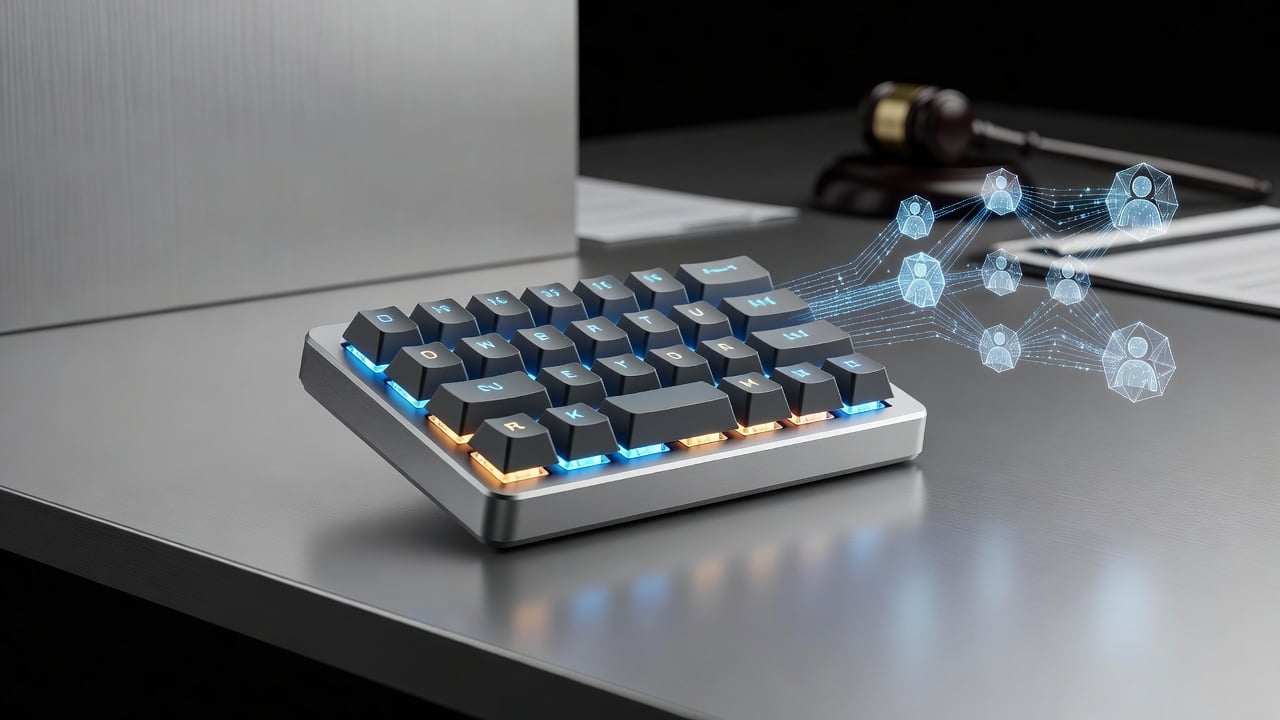
OpenAI just shipped its first piece of hardware. It is not a sleek smart speaker or an ambitious wearable. It is a compact, square macro pad called Codex Micro. Priced at $230 and built in partnership with boutique keyboard maker Work Louder, the device gives power users physical controls over the company’s Codex coding agents.
The launch comes at a moment when AI agents have moved from experimental tools to daily companions for many developers. Yet managing multiple agents, tracking their progress, and intervening at the right moments still feels clunky on screen alone. OpenAI hopes the Codex Micro changes that equation.
At first glance the hardware looks unassuming. It features 13 mechanical switches, a small joystick, a rotary dial, and a touch sensor. Six frosted keys light up in different colors to signal agent status. One hue might mean a task is running. Another indicates completion. A third flags an error or request for human feedback. The remaining keys handle frequent actions. Users can map them to push-to-talk commands, approving or rejecting code suggestions, starting new threads, or branching existing ones.
The joystick launches common workflows with a flick. The dial adjusts reasoning effort. Turn it one way for faster but lighter output. Turn it the other for deeper, higher-quality results. And everything integrates directly with the ChatGPT desktop app. No extra software required. Engadget notes that the fit and finish echoes Work Louder’s earlier products such as the Creator Micro 2 and a collaboration with Framer. It feels deliberate. Premium. But limited.
OpenAI and Work Louder positioned the Codex Micro as a niche accessory. Orders opened Wednesday and stock is expected to disappear quickly. The companies have not disclosed exact production numbers. Work Louder’s site simply says supplies are limited. Axios calls the buyers “agentmaxxers” — developers who run fleets of AI coding assistants and sometimes struggle with burnout from constant monitoring.
This device aims to ease that load. Instead of switching windows or checking phone notifications, a quick glance at the glowing keys reveals everything. One developer on X described it as turning the desk into a physical dashboard for parallel agent runs. Real-time RGB indicators replace mental juggling. But some observers question whether the $230 price justifies the convenience. PCMag UK pointed out that similar base models from Work Louder sell for less than $200. The OpenAI branding and direct Codex integration carry a premium. PCMag UK.
In a demo video shared by OpenAI’s developer account, the keypad helps construct a simple browser-based game. The operator switches agents, approves changes, and tweaks compute levels without touching the main keyboard much. The workflow looks fluid. Yet the device does not replace the screen. It augments it. Pinned chats stay visible. The macro pad handles the mechanical repetition.
But here’s the bigger picture. OpenAI has talked for months about agents that act autonomously. Its Computer-Using Agent model, which powers the Operator system, already navigates screens, clicks buttons, and types commands by interpreting raw pixels. Codex agents represent an earlier, coding-focused version of that vision. They write code. They execute it. They ask for clarification when needed. The Codex Micro gives humans a tactile way to stay in the loop without constant digital distraction.
And yet this hardware arrives amid turbulence. Apple sued OpenAI last week. The complaint accuses two former Apple engineers now at OpenAI, Tang Yew Tan and Chang Liu, of stealing trade secrets related to hardware development. OpenAI denies wrongdoing. The lawsuit has already cast a shadow over the company’s more ambitious hardware plans. Those include a portable, screenless smart speaker with moving mechanical parts, reportedly slated for unveiling later this year and possible release in 2027. TechCrunch describes the Codex Micro as the less troubled project. A limited-run collaboration. More novelty than mass-market bet. A flashy bauble that heralds OpenAI’s serious entry into physical products.
OpenAI told TechCrunch the Micro is “a limited-run collaboration.” The company framed it as a command center for agentic work. That phrase captures the shift. AI no longer lives only in chat windows. It spills onto the desk. Microsoft added a Copilot key to Windows keyboards in 2024. That was one button. This is a full control surface. Status lights. Custom shortcuts. Physical dials. The evolution feels rapid.
Critics see risks. An errant press on an approval key could grant an agent unwanted access. Or accept flawed code. The convenience might breed complacency. Others view it as inevitable. As agents grow more capable, the interface between human and machine must evolve too. Voice alone falls short. Touchscreens demand attention. A dedicated peripheral offers glanceable information and instant input.
The timing also reflects broader trends. OpenAI recently turned Codex into a super app. It now combines standard ChatGPT, the coding agent, and a new productivity-focused tool called ChatGPT Work. Users no longer need the standalone Codex app for non-coding tasks. The keypad, however, remains tied closely to agent management. It speaks to a specific audience. Heavy users who spin up multiple threads and want to monitor them without breaking flow.
Reactions on X poured in quickly after the announcement. Some called the device overpriced. Others praised the RGB status indicators as solving a genuine pain point. One post highlighted the contrast: while OpenAI’s Jony Ive-designed AI companion remains in the lab and entangled in legal fights, this simple keypad ships immediately. The future, it seems, sometimes arrives as a desk accessory first.
Whether Codex Micro becomes a cult object for AI developers or a forgotten experiment depends on several factors. Adoption among the agent-obsessed crowd. Quality and durability of the hardware. How quickly OpenAI expands agent capabilities. And whether competitors respond with their own physical controls. For now it stands as tangible proof that OpenAI is thinking beyond software.
The company has invested heavily in agents that reason, plan, and act. Giving them a dedicated control panel signals confidence in that future. It also acknowledges a practical truth. Even the most advanced AI still benefits from human oversight. Sometimes that oversight feels better with something you can touch. A dial you can turn. A key you can press. A light that tells you, without opening another tab, exactly where your digital minions stand.


 WebProNews is an iEntry Publication