
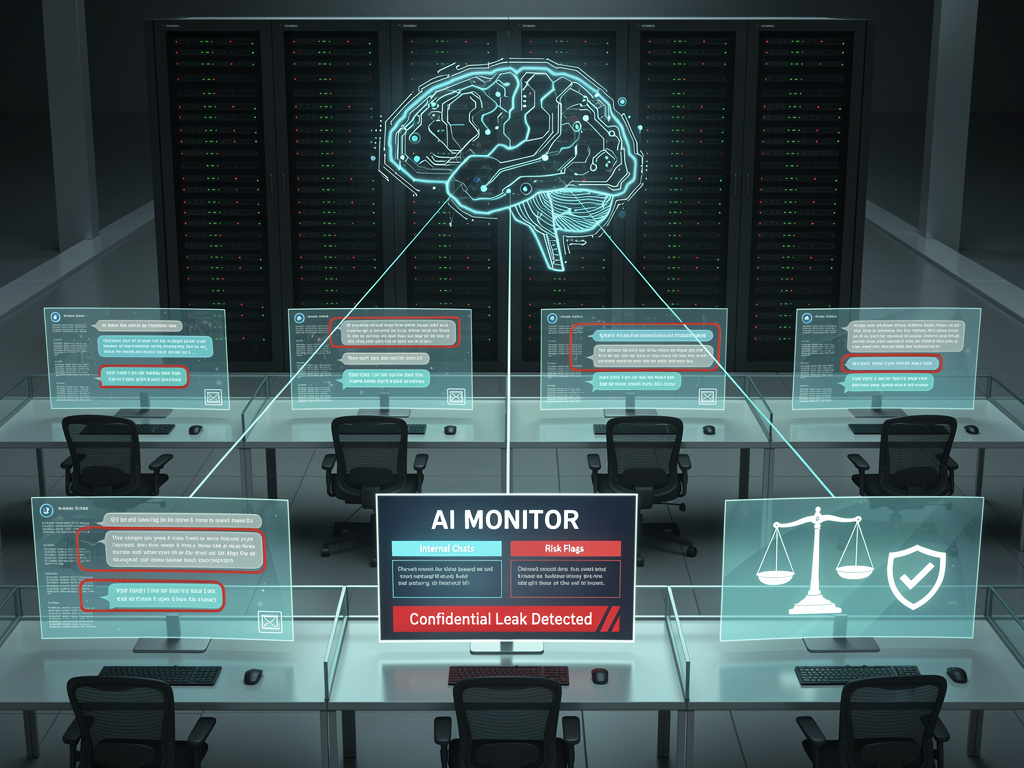
In a striking irony that underscores the tensions between Silicon Valley’s culture of openness and the intensifying secrecy demands of the artificial intelligence arms race, OpenAI has deployed its own flagship product — ChatGPT — as an internal surveillance instrument to identify employees suspected of leaking confidential information to journalists and competitors. The revelation, first reported by The Information, has sent ripples through the technology industry, raising urgent questions about workplace privacy, corporate governance, and the broader implications of AI-powered monitoring in the modern enterprise.
The practice reportedly involves OpenAI using ChatGPT to analyze internal communications and cross-reference them with publicly reported leaks, effectively turning the world’s most prominent generative AI tool into a digital detective aimed at rooting out disloyal insiders. For a company that began its life as a nonprofit dedicated to ensuring artificial intelligence benefits all of humanity, the move represents a jarring pivot toward the kind of aggressive corporate information control more commonly associated with defense contractors or intelligence agencies.
Inside OpenAI’s Leak-Hunting Operation
According to The Information’s reporting, OpenAI has used ChatGPT to scrutinize internal Slack messages and other communications to identify patterns that might reveal which employees have been sharing sensitive company information with outside parties. The approach leverages the large language model’s ability to analyze vast quantities of text, compare linguistic patterns, and draw inferences about authorship and intent — capabilities that, until recently, were the province of specialized forensic linguistics experts and law enforcement tools.
The leak-hunting initiative comes at a time when OpenAI has been beset by a steady stream of unauthorized disclosures. Over the past 18 months, details about the company’s product roadmap, internal debates over safety protocols, financial arrangements, and executive departures have regularly surfaced in the press. These leaks have proven particularly damaging as OpenAI navigates a critical period of fundraising, corporate restructuring, and fierce competition with rivals including Google DeepMind, Anthropic, Meta, and xAI.
A Culture of Secrecy Collides With Silicon Valley Norms
The deployment of ChatGPT as a leak-detection mechanism reflects a broader cultural shift at OpenAI under CEO Sam Altman. What was once a relatively open research lab — one that published its findings and invited external scrutiny — has progressively transformed into a tightly controlled commercial enterprise where information security is paramount. Former employees have described an atmosphere of increasing paranoia, where candid internal discussion has given way to guarded communication and a pervasive awareness that messages may be monitored.
This cultural evolution has not gone unnoticed by current and former staff. Several high-profile departures over the past year — including co-founder Ilya Sutskever, former chief scientist, and key safety researchers Jan Leike and others — have been accompanied by public and private expressions of concern about the direction of the company. Some departing employees have suggested that OpenAI’s commitment to safety and transparency has eroded as commercial pressures have mounted, a narrative that the company’s leadership has vigorously disputed.
Legal and Ethical Dimensions of AI-Powered Employee Surveillance
The use of AI to monitor employee communications raises significant legal and ethical questions that extend well beyond OpenAI’s walls. Employment law experts note that while companies generally have broad latitude to monitor communications on corporate-owned systems, the deployment of sophisticated AI analysis tools represents a qualitative escalation that existing legal frameworks may not adequately address.
Under California law, where OpenAI is headquartered, employers are permitted to monitor workplace communications conducted on company devices and platforms, provided employees have been given adequate notice. However, the use of AI to perform deep linguistic analysis — potentially identifying not just what was communicated but inferring intent, sentiment, and even predicting future behavior — ventures into territory that privacy advocates find deeply troubling. The Electronic Frontier Foundation and other digital rights organizations have long warned about the chilling effects of workplace surveillance on free expression and whistleblower protections, concerns that take on added urgency when the surveillance tool is a powerful large language model.
The Whistleblower Question
Perhaps the most sensitive dimension of OpenAI’s leak-hunting efforts involves the potential impact on legitimate whistleblowing activity. Federal and state whistleblower protection laws are designed to shield employees who report illegal conduct, safety violations, or other matters of public concern from employer retaliation. In the AI sector, where the potential societal consequences of unsafe or irresponsible development are enormous, the ability of employees to raise alarms — including through the press when internal channels prove inadequate — is arguably more important than in almost any other industry.
OpenAI has already faced scrutiny on this front. In mid-2024, reports emerged that the company had required departing employees to sign unusually restrictive nondisclosure and non-disparagement agreements, with some former staff alleging that they were threatened with the loss of vested equity if they spoke publicly about their concerns. OpenAI subsequently said it had revised these provisions, but the episode contributed to a narrative of a company increasingly willing to use aggressive legal and technological measures to control its information environment.
Industry Reactions and Competitive Context
The revelation that OpenAI is using its own AI product for internal surveillance has drawn pointed commentary from competitors and industry observers. Some have noted the irony of a company that regularly advocates for AI transparency and responsible deployment using the technology to police its own workforce. Others have suggested that the practice, while aggressive, is an understandable response to the extraordinary competitive pressures facing AI companies, where a single leaked detail about a model’s capabilities or a forthcoming product launch can shift billions of dollars in perceived market value.
The AI industry is currently in a period of intense rivalry, with companies racing to develop increasingly powerful models while simultaneously navigating complex regulatory environments in the United States, European Union, and elsewhere. In this context, the protection of trade secrets and proprietary research has become a top corporate priority. Google, Meta, and other major AI developers have all implemented stringent information security protocols, though none have been publicly reported to use their own AI products as leak-detection tools in the manner described at OpenAI.
The Broader Implications for AI in the Workplace
OpenAI’s use of ChatGPT to hunt leakers may be a harbinger of a much wider trend. As large language models become more capable and more deeply integrated into enterprise workflows, the temptation for employers to deploy them as monitoring and compliance tools will only grow. Already, a burgeoning market for AI-powered employee surveillance software has emerged, with startups and established vendors offering tools that can analyze email, chat, and even video communications to flag potential policy violations, insider threats, and productivity issues.
The normalization of such tools raises profound questions about the future of work and the balance of power between employers and employees. Labor advocates argue that AI-powered surveillance threatens to create a panopticon effect in the workplace, where employees self-censor and conform not because of explicit rules but because of the ever-present awareness that their communications are being analyzed by machines capable of detecting even subtle deviations from expected behavior. Proponents counter that such tools are necessary to protect intellectual property, ensure compliance, and maintain competitive advantage in industries where information is the most valuable asset.
What Comes Next for OpenAI’s Internal Culture
For OpenAI, the immediate question is whether the use of ChatGPT as a leak-detection tool will achieve its intended purpose or backfire by further eroding trust and morale among employees. History suggests that aggressive surveillance measures in knowledge-work environments often produce diminishing returns: they may deter casual indiscretions, but they also drive the most determined leakers to adopt more sophisticated countermeasures while simultaneously alienating loyal employees who resent being treated as suspects.
The episode also puts additional pressure on OpenAI’s board of directors, which has been reconstituted following the dramatic upheaval of late 2023 when Altman was briefly ousted and then reinstated as CEO. The board, which now includes prominent figures from business and technology, faces the challenge of overseeing a company that is simultaneously one of the most valuable private enterprises in the world and one of the most consequential in terms of its potential impact on society. How it navigates the tension between corporate secrecy and the public interest in transparency about AI development will be closely watched by regulators, investors, and the broader technology community.
As OpenAI continues its transformation from idealistic research lab to commercial juggernaut, the decision to turn its most powerful creation inward — using it not to benefit humanity but to police its own employees — stands as a potent symbol of the contradictions at the heart of the modern AI enterprise. The company that promised to build artificial general intelligence for the benefit of all is now using that technology to ensure its secrets stay locked inside.


 WebProNews is an iEntry Publication