
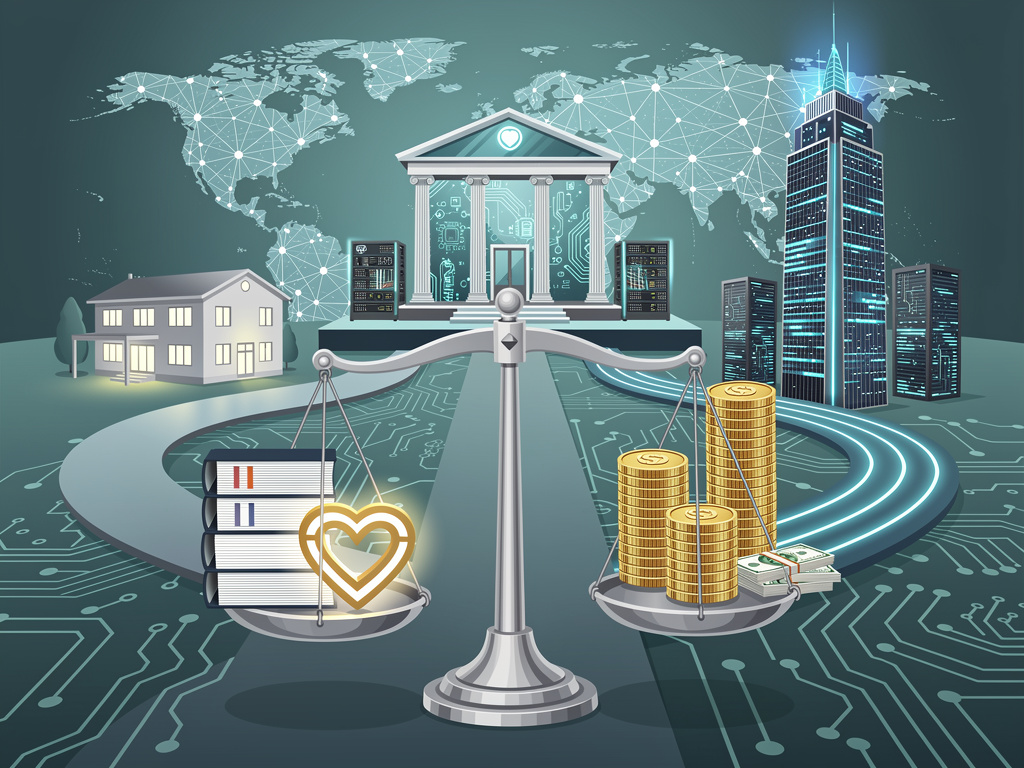
The trial unfolding in an Oakland federal courtroom carries stakes that stretch far beyond any single company. Elon Musk accuses OpenAI of breaching a charitable trust. He wants the for-profit conversion unwound. He seeks billions redirected to the original nonprofit. OpenAI counters that the shift was necessary. It argues the move lets the organization raise capital while preserving mission focus through a public benefit corporation structure.
At its core the dispute questions a basic premise. Can an entity born as a nonprofit dedicated to safe artificial intelligence for humanity’s benefit transform into a profit-seeking operation? The answer could reshape how AI developers fund their work. It might influence everything from talent recruitment to competitive dynamics across the sector.
OpenAI began in 2015 as a nonprofit. Founders including Musk positioned it as a counterweight to commercial players like Google. The charter emphasized open-source technology for public benefit. No private gain. Musk contributed roughly $38 million in early funding. He testified that he chose the nonprofit form deliberately. “I could have started it as a for profit and I chose not to.”
Yet testimony has revealed early conversations about commercial paths. Greg Brockman, OpenAI president, told the court Musk supported transforming the startup into a for-profit company back in 2017. Texts and emails entered as evidence show Musk discussing control of such an entity. He wanted initial command. “This will change quickly,” one message noted. Brockman and others resisted ceding full authority. Musk then stepped away.
OpenAI created a capped-profit subsidiary in 2019. Microsoft poured in more than $13 billion over time. The nonprofit retained oversight on paper. In practice the for-profit arm drove operations. Last year OpenAI refined the model further. It converted the for-profit LLC into a Delaware public benefit corporation. The nonprofit holds a significant equity stake and maintains control. Independent advisors set the valuation. The setup aims to balance shareholder returns with the stated public benefit of advancing safe AI.
The New York Times reported Brockman’s testimony that Musk once viewed the nonprofit model as potentially insufficient. “Nonprofit was def the right one early on, may not be the right one now.” Musk has countered that he accepted only a small for-profit arm. The tail should not wag the dog. He insists the full pivot violated the charitable trust formed by his donations.
Legal experts watching the case say Musk faces an uphill battle. Traders on prediction market Kalshi pegged his odds of prevailing around 37 percent recently, down from near 60 percent earlier in the proceedings. CNBC covered the shifting sentiment. Courts rarely unwind established corporate structures in private suits like this. Enforcement of charitable missions typically falls to state attorneys general.
Still the merits deserve scrutiny. Nonprofits enjoy tax exemptions and donor deductions because they serve public purposes without distributing profits. Converting assets to for-profit use risks claims of private inurement. OpenAI maintains the nonprofit benefits substantially. It stands to gain equity worth over $100 billion under the revised plan. That capital could fund independent AI safety research, education programs, and applications in health care and science.
But. Critics argue the structure creates inherent tension. Fiduciary duties to shareholders pull toward profit maximization. Mission considerations can take a back seat when capital demands grow. AI development requires enormous sums. Training frontier models now costs hundreds of millions. Scaling to artificial general intelligence could demand trillions. Traditional nonprofits struggle to attract that scale of investment. Debt and equity markets favor clear return profiles.
OpenAI’s approach mirrors moves by peers. Anthropic operates as a public benefit corporation. xAI began that way before shifting. These hybrids attempt to thread the needle. They promise to weigh public benefit in decisions. Delaware law requires directors to balance stockholder interests with the chartered public purpose. Yet enforcement remains untested at this magnitude.
The broader market effects could prove significant. A Musk victory might deter nonprofits from pursuing aggressive commercialization. It could chill fundraising for mission-driven AI labs. Startups might avoid nonprofit origins altogether. Or they could build stricter safeguards from day one. Either way capital allocation in artificial intelligence would shift.
Conversely an OpenAI win would greenlight further conversions. More research organizations could spin out commercial arms. They might tap public markets. OpenAI itself eyes an IPO potentially valued near $1 trillion. Success would accelerate that path. It would signal to investors that hybrid governance can work. Talent could flow more freely with equity incentives unburdened by nonprofit constraints.
Consider the competitive dynamics. Microsoft holds a large stake. Its partnership fueled OpenAI’s growth. Other tech giants watch closely. A ruling that blesses the structure might spur similar deals elsewhere. Smaller players without such backing could find themselves at a disadvantage. The AI race already concentrates power. This case might entrench that pattern. Or it could force more transparent mission accountability.
Recent coverage highlights the trial’s potential to set precedents for AI governance. Forbes noted the proceedings test whether mission-driven labs can convert without massive legal risk. A decision against OpenAI might oblige profound business model changes across the industry. Companies could face new scrutiny over early charitable commitments.
Public benefit corporations offer one compromise. They must report on mission performance. Directors gain legal cover to prioritize long-term societal goals alongside profits. OpenAI claims this fits its needs. The nonprofit parent receives resources to pursue pure public-good initiatives. Operations stay with the PBC. Simpler. More conventional for raising funds.
Skeptics see risks of mission drift. History shows profit motives can overshadow stated ideals. Early OpenAI promised open-source tools. Commercial pressures led to more closed models. Safety teams have seen turnover. Former employees have voiced concerns about rushed deployment. The trial has surfaced testimony on internal chaos and inconsistent statements. Those details underscore governance challenges in any structure.
And the capital demands keep rising. OpenAI plans to spend $50 billion on computing this year alone. Brockman mentioned the figure in court. No nonprofit could shoulder that burden alone. Traditional philanthropy falls short. Government funding brings its own political complications. Private capital fills the gap. The question becomes how to harness it without losing sight of the original charge.
Musk’s suit seeks not just damages but restoration. He wants OpenAI returned to bona fide public charity status. That outcome seems improbable. Too much has changed. Too many stakeholders involved. Yet the case spotlights a genuine policy gap. Society benefits from AI advanced with safety in mind. It suffers if development races ahead under pure commercial logic.
Regulators and lawmakers might eventually step in. California’s attorney general and Delaware’s could review nonprofit asset transfers more rigorously. Congress could clarify rules for technology nonprofits. Tax treatment of conversions deserves examination. Without clearer guardrails the tension will persist.
Prediction markets fluctuate with each witness. Brockman’s testimony appeared to bolster OpenAI’s position. Musk’s earlier days on the stand highlighted his foundational role. He recruited talent. He provided early funds. He shaped the vision. But evidence suggests he anticipated evolution toward commercial activity. The jury must weigh contradictory accounts against the legal standard of charitable trust.
Whatever the verdict the conversation will continue. AI’s societal weight demands thoughtful structures. Pure nonprofit may not scale. Unfettered for-profit invites recklessness. Hybrids like the public benefit corporation represent an experiment. This trial will test its resilience.
Markets will react. Valuations hang in the balance. Talent decisions follow. And competitors adjust strategies. The Oakland courtroom holds proceedings that could influence the next decade of artificial intelligence development. Not through drama but through the quieter work of defining fiduciary duty in an era of unprecedented technological power.


 WebProNews is an iEntry Publication