
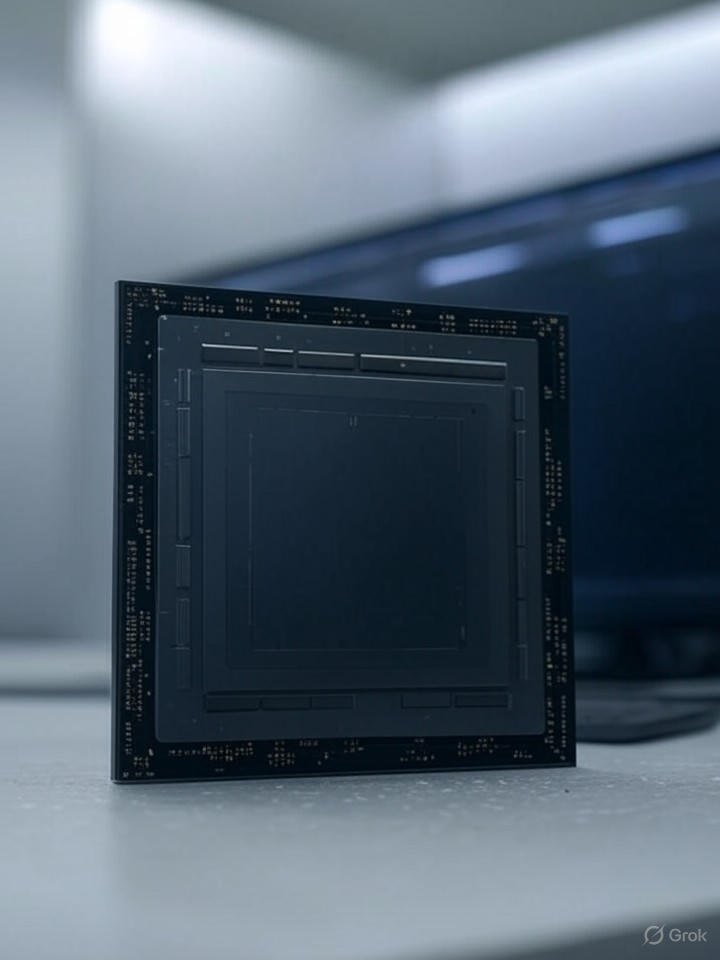
OpenAI’s push into custom silicon marks a pivotal shift for the artificial intelligence giant, as it seeks to reduce its heavy dependence on third-party chipmakers like Nvidia. According to recent reports, the company is collaborating with Broadcom to develop its inaugural AI-specific chip, with mass production slated for 2026. This move comes amid surging demand for computational power to fuel models like ChatGPT, which have strained existing supply chains and driven up costs.
The partnership with Broadcom, a heavyweight in semiconductor design, underscores OpenAI’s strategy to gain more control over its hardware ecosystem. Sources indicate that the chip will be tailored for inference tasks—running AI models efficiently after training—potentially alleviating bottlenecks in data centers. This initiative follows earlier explorations, including talks with Taiwan Semiconductor Manufacturing Co. (TSMC) for fabrication, as detailed in a Reuters report from September 5, 2025.
OpenAI’s hardware ambitions are not new, but this 2026 timeline represents a concrete milestone in its evolution from a software-centric outfit to a vertically integrated AI powerhouse, potentially reshaping how generative AI systems are deployed at scale.
Financial details remain under wraps, but industry analysts estimate the development could cost billions, reflecting the high stakes involved. OpenAI’s CEO Sam Altman has publicly lamented the scarcity of AI chips, prompting this in-house effort. By partnering with Broadcom, which has expertise in custom ASICs (application-specific integrated circuits), OpenAI aims to optimize performance for its proprietary algorithms, possibly achieving better energy efficiency than off-the-shelf GPUs.
Moreover, this chip could integrate with OpenAI’s broader infrastructure plans, including diversification to include AMD processors alongside Nvidia’s. A Yahoo Finance article highlights how this diversification is a response to the explosive growth in AI training demands, with OpenAI incorporating AMD chips to meet surging needs.
As competition intensifies in the AI hardware space, OpenAI’s chip could challenge Nvidia’s dominance, offering tailored solutions that prioritize inference speed and cost savings for large-scale deployments.
Recent updates from social media platform X reveal growing excitement and speculation among tech enthusiasts. Posts from users like Dan Nystedt discuss OpenAI’s chip design team, led by veterans such as Richard Ho, formerly of Google, preparing for a 3nm process node at TSMC. These insights, shared as early as February 2025, suggest the project has been in advanced stages for months, with tape-out expected soon.
Echoing this, a Verge report notes that the chip, potentially dubbed “Titan,” aims to power internal systems, reducing reliance on external vendors. This aligns with broader industry trends where AI firms like Google and Amazon have long pursued custom silicon to cut costs and enhance performance.
Looking ahead, the 2026 launch could catalyze shifts in AI economics, making advanced models more accessible while pressuring suppliers to innovate faster amid geopolitical tensions in chip manufacturing.
Critics, however, question the timeline’s feasibility given supply chain complexities and regulatory hurdles. A Financial Times piece from September 6, 2025, reported a spike in Broadcom’s shares following the announcement, signaling investor confidence. Yet, OpenAI must navigate talent shortages and intellectual property challenges in this crowded field.
In parallel, news from gHacks Tech News on September 10, 2025, emphasizes how this chip could enable OpenAI to scale operations independently, potentially integrating with future products like an AI-powered jobs platform rumored for 2026, as per WebProNews.
Beyond immediate benefits, OpenAI’s foray into chips signals a maturing AI industry, where hardware innovation becomes as crucial as software breakthroughs, fostering new collaborations and rivalries.
Industry insiders speculate that success here could embolden other AI startups to follow suit, diversifying the market away from Nvidia’s near-monopoly. Reports from Digitimes suggest AMD’s upcoming products in 2025 and 2026 might complement OpenAI’s efforts, creating a more balanced ecosystem.
Ultimately, this development positions OpenAI not just as an AI innovator but as a hardware contender, with implications for global tech supply chains. As per a Mint article, the focus on internal optimization could yield chips fine-tuned for ChatGPT-scale operations, promising lower latency and higher throughput.


 WebProNews is an iEntry Publication