
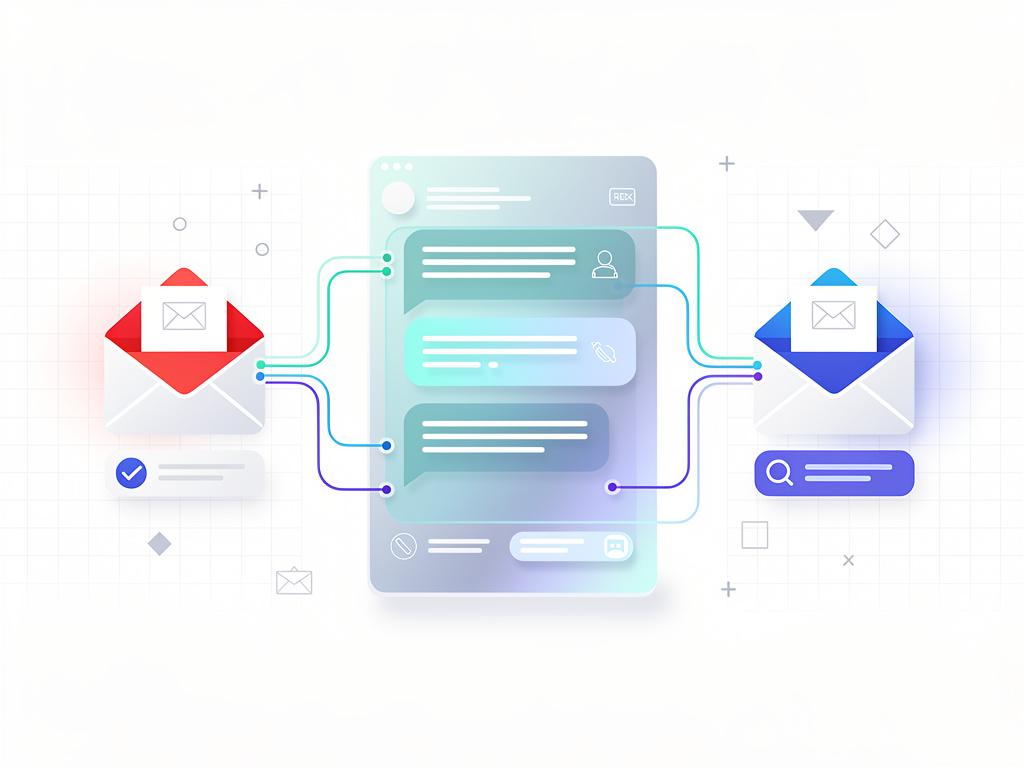
ChatGPT users on the web can now compose, refine and transmit emails from inside their ongoing conversation. The update turns what was once a copy-and-paste ritual into a contained workflow. And it arrives as OpenAI expands the model’s practical reach beyond text generation.
Digital Trends first spotted the change. Its report details how ChatGPT’s new writing blocks transform responses into editable, formatted documents. Ask the model to draft a reply to your manager. The output appears in a rich-text canvas rather than plain paragraphs. Highlight a sentence. Suggest a different tone. Accept or reject revisions on the spot. All without switching tabs.
Short. Direct. Efficient. That’s the promise.
But the real advance sits in the final step. Once satisfied, users can open the draft directly in their email client or, in newer tests reported across social platforms, send it without ever leaving ChatGPT. The feature builds on OpenAI’s earlier rollout of app connectors. Those let the model read from Gmail or Outlook inboxes. Now it can push content outward.
OpenAI’s own help documentation confirms the shift. Writing blocks serve as editable areas for emails, Slack messages, social posts and longer documents. Prompts such as “Draft a reply email to my manager” or “Write a short update for my team” trigger the formatted view. Inside the block, a mini toolbar appears for bold, italics, lists and other basics. Users edit manually or ask the AI for targeted changes. “Open in your email client once you’re ready to send,” the guide states.
The timing matters. OpenAI has spent the past year wiring ChatGPT to external services. TechCrunch reported in April 2026 on the broader app integrations that let users connect accounts for tasks inside the chat. That coverage showed how Spotify, DoorDash and others feed data back into responses. Email connectors followed. Release notes from OpenAI’s help center document Gmail, Google Calendar and Outlook integrations becoming available first to Plus users, then wider tiers. ChatGPT can now reference inbox content automatically when relevant. The new writing blocks extend that logic to outbound communication.
Professionals who live in their inboxes notice the difference immediately. No more exporting AI-generated text, reformatting in Gmail, double-checking links. The conversation context stays intact. Earlier messages inform the draft. Follow-up questions refine it. The entire thread becomes both brainstorming session and delivery mechanism.
Yet limits remain. Early user reports on X and community forums show the send function sometimes routes through the default email app rather than transmitting directly from OpenAI’s servers. Security considerations explain the caution. Full SMTP access inside a general-purpose chat carries risks. The Verge documented one experiment in which researchers used prompt injection to pull sensitive Gmail data through a ChatGPT agent. Their findings underscored how granting inbox access creates new attack surfaces. Outbound sending adds another layer.
OpenAI appears to have chosen a hybrid approach. Writing blocks generate and polish. Connectors supply context. The final dispatch often hands off to the user’s established email client. Convenient. Still one click away from complete autonomy.
This matters for knowledge workers. Consultants draft client updates. Executives outline board communications. Support teams answer tickets. Each group previously tolerated context switching. Now the friction drops. A product manager can ask ChatGPT to summarize yesterday’s standup notes, propose action items, then turn those into a stakeholder email. All in one window. The model remembers what it wrote minutes earlier. Suggestions stay consistent with prior tone.
Enterprise adoption could accelerate. Companies already pay for ChatGPT Team or Enterprise plans partly for data controls. Adding reliable email composition inside a governed interface reduces shadow AI use. Employees won’t need to paste sensitive details into the public web version. The connectors, when properly configured, keep data inside organizational boundaries.
But not every organization will embrace it quickly. Compliance teams worry about hallucinations in formal correspondence. A misplaced phrase in a legal email carries weight. Training on prompt discipline becomes essential. So does review. The ease of sending could tempt users to skip proofreading.
Recent updates suggest OpenAI recognizes these tensions. Release notes mention expanded Outlook support for shared mailboxes. Users with delegation rights can now instruct ChatGPT to send on behalf of a colleague. The model handles plain-text messages and small attachments. Calendar integration allows meeting proposals to flow directly into invites. These pieces fit together. Email composition is only the visible tip.
Competitors watch closely. Google has Gemini inside Gmail. Microsoft pushes Copilot across Outlook and Teams. Both offer deeper native integration because they control the underlying mail systems. OpenAI’s bet is different. It positions ChatGPT as the universal interface. Connect your tools once. Then converse. The writing blocks test whether users prefer that single pane of glass over specialized applications.
Early feedback tilts positive. Threads and X posts from the past day show professionals praising the reduced steps. “One less reason to leave the ChatGPT window,” one user wrote. Another shared a before-and-after: thirty seconds to generate, edit and launch a funding update that once took ten minutes of juggling apps.
Still, the feature feels iterative rather than revolutionary. It improves an existing pain point without inventing a new category. That modesty may explain its quiet rollout. No fanfare announcement from Sam Altman. No splashy blog post. Just an update that appeared for users and drew attention from technology sites.
Look ahead. Deeper sending capabilities could arrive. Full API-driven transmission through user-authorized OAuth tokens seems plausible. Integration with calendar to propose times and attach ICS files would close the loop. Voice mode already lets users dictate emails. Combine that with writing blocks and the hands-free executive assistant gets closer.
For now the change delivers tangible relief. Knowledge workers waste fewer minutes on mechanical tasks. Context survives from ideation to dispatch. And ChatGPT edges further from clever chatbot toward daily operating system.
The implications stretch beyond convenience. As AI handles more outbound communication, standards for tone, accuracy and accountability must evolve. Who owns the words when the model suggests seventy percent of the text? How do recipients feel knowing an assistant helped craft the message? These questions will intensify as the capability spreads.
OpenAI has given users a new lever. How organizations and individuals pull it will shape the next round of email etiquette. The technology is here. The habits will follow.


 WebProNews is an iEntry Publication