
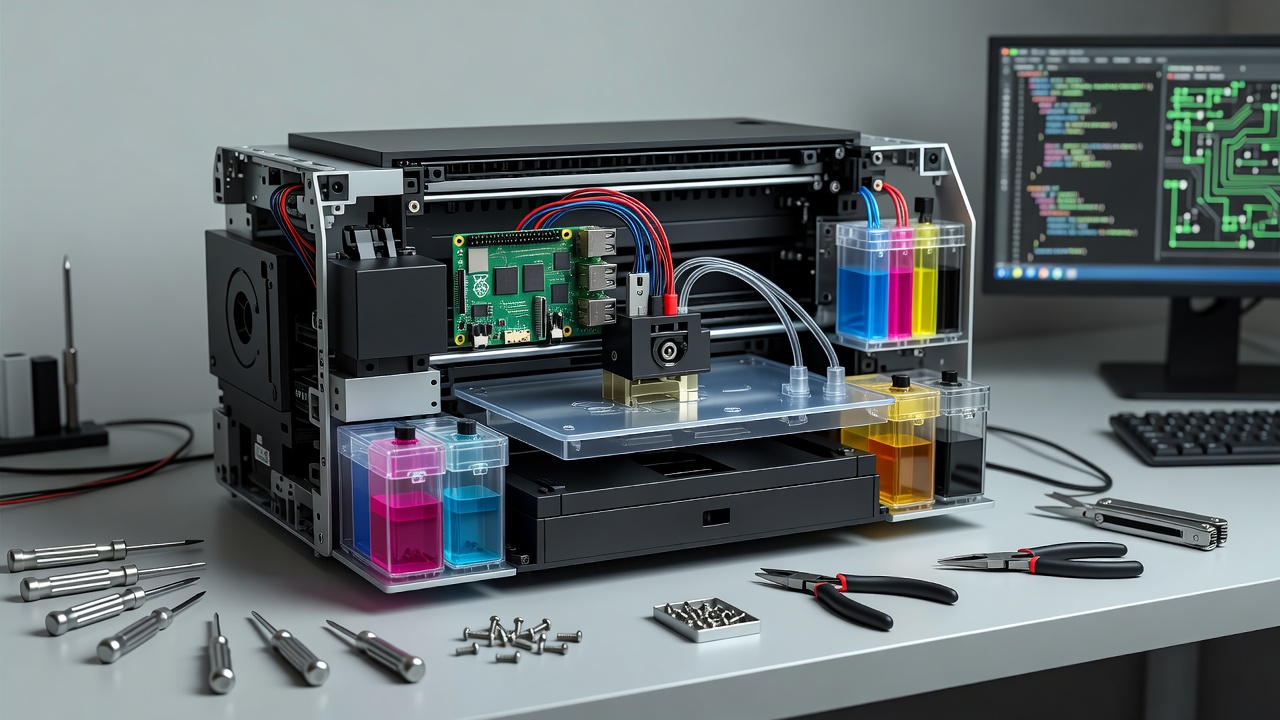
The concept of an open-source printer built around a Raspberry Pi and designed without any digital rights management restrictions has captured attention across technology communities. According to a recent report from TechRadar, this project promises an inkjet system that prioritizes user control, repairability, and freedom from manufacturer lock-in. While the device remains in early development stages, its potential to address longstanding frustrations with commercial printers makes it a topic worth examining closely.
Printers have long ranked among the most disliked pieces of consumer electronics. Users frequently encounter high ink costs, artificial restrictions on compatible cartridges, firmware updates that disable third-party supplies, and machines that refuse to print when ink levels appear low even if plenty remains. These practices stem from business models that treat the printer as a loss leader while generating ongoing revenue through consumables. The proposed open printer project directly challenges this approach by removing proprietary barriers and placing the hardware and software under open licenses.
At its core, the design centers on a Raspberry Pi single-board computer serving as the main controller. This choice brings several advantages. The Pi provides sufficient processing power for handling print jobs, managing network connections, and running a custom interface. Because the Raspberry Pi runs on widely available Linux distributions, developers can build custom software stacks without depending on closed-source drivers or manufacturer-specific protocols. The board also features GPIO pins that allow direct connection to motors, sensors, and print heads, creating opportunities for complete customization.
The project envisions a standard inkjet mechanism paired with this computing platform. Rather than relying on vendor-specific chips embedded in cartridges, the system would use generic ink tanks or easily refillable containers. Sensors would measure actual ink levels through physical means or basic optical detection instead of depending on manufacturer-programmed microchips that can be disabled remotely. This setup eliminates the possibility of a printer suddenly rejecting perfectly good ink because a firmware update decided third-party supplies were no longer acceptable.
One of the most appealing aspects involves repairability. Commercial printers often contain glued assemblies, proprietary screws, and documentation that manufacturers withhold from the public. When something breaks, users typically face expensive service calls or outright replacement. An open design changes this equation. With schematics, parts lists, and assembly instructions available, anyone with basic tools could fix common problems such as paper feed jams, clogged nozzles, or failed circuit boards. The Raspberry Pi itself can be swapped if needed, and its community provides extensive troubleshooting resources.
Software forms another critical component. The project appears to build upon existing open-source printing systems like CUPS while adding custom layers for the specific hardware. Users could potentially access a web-based interface hosted directly on the Pi, allowing print job management, calibration adjustments, and maintenance routines from any device on the local network. Advanced users might modify the code to add features such as automatic color profile generation, batch processing optimizations, or integration with home automation systems.
Community involvement represents a central strength. Open-source projects thrive when multiple contributors bring different skills to the table. Hardware engineers could refine the mechanical design, software developers could improve the driver stack, and regular users could provide feedback on real-world performance. This collaborative model contrasts sharply with traditional printer development, which occurs behind closed doors with decisions driven primarily by profit margins rather than user needs.
The absence of DRM carries significant implications. Many modern printers include mechanisms that phone home to manufacturer servers, report usage data, or enforce regional restrictions on supplies. Without these controls, the open printer would operate entirely offline if desired, preserving user privacy and preventing unexpected behavior changes through remote updates. This independence appeals particularly to organizations and individuals who require reliable operation without external dependencies.
Cost considerations deserve careful attention. Initial hardware expenses might exceed those of basic consumer printers since the Raspberry Pi adds computing capability not found in standard models. However, long-term ownership costs could prove substantially lower. Generic ink tends to cost far less per milliliter than branded cartridges, and the ability to refill tanks rather than replace entire units reduces waste. Over several years, these savings might offset the higher upfront investment while delivering superior flexibility.
Print quality remains an open question at this stage. Commercial inkjet printers benefit from years of refinement in nozzle design, ink formulation, and droplet control algorithms. The open project will need to match or approach these standards to gain widespread acceptance. Early prototypes will likely focus on basic functionality before optimization for resolution, color accuracy, and speed. Collaboration with ink manufacturers open to open-source ecosystems could accelerate progress in this area.
Environmental impact presents another area where the concept offers potential benefits. Traditional printers contribute to electronic waste when they become obsolete or when users discard them due to high replacement ink costs. A repairable, upgradable design extends the usable lifespan of the device. Additionally, supporting bulk ink systems rather than individual plastic cartridges reduces packaging waste. If the project gains traction, it could encourage more sustainable approaches to personal printing needs.
Education and research applications seem particularly promising. Schools, universities, and maker spaces could deploy these printers without worrying about licensing restrictions or ongoing subscription fees. Students might study the hardware and software as part of technology courses, gaining hands-on experience with embedded systems, mechanical engineering, and print technology. The transparent nature of the design makes it an excellent teaching tool across multiple disciplines.
Challenges facing the project should not be underestimated. Developing reliable ink delivery systems requires precision engineering to prevent leaks, ensure consistent pressure, and avoid clogs. The Raspberry Pi must handle timing-sensitive operations for coordinating print head movements with paper feed mechanisms. Software needs to support various file formats and provide drivers compatible with different operating systems. Securing funding for prototyping and manufacturing represents another significant hurdle, though community crowdfunding has successfully launched similar open hardware initiatives in the past.
Documentation quality will determine much of the project’s ultimate success. Even the most elegant design fails to attract users if assembly instructions remain unclear or if maintenance procedures seem too complex. Comprehensive guides, video tutorials, and active support forums will prove essential. The team behind the project must balance technical sophistication with accessibility for makers of varying experience levels.
Looking toward possible implementation, several technical approaches could work. A modified off-the-shelf print head mounted on a custom carriage driven by stepper motors offers one path. Alternatively, the designers might partner with manufacturers of Chinese inkjet mechanisms that already operate with more open ecosystems. The Raspberry Pi could connect through USB or direct GPIO depending on the chosen architecture. Power management, thermal considerations, and noise reduction would require attention during the physical design phase.
Integration with modern workflows adds another dimension. Support for wireless printing from phones, tablets, and laptops would broaden appeal. Cloud print alternatives that maintain local control rather than depending on external servers could provide convenient access while preserving privacy. The system might include features for scanning if a compatible mechanism is incorporated, creating an all-in-one solution under fully open control.
The broader movement toward right-to-repair gains momentum through projects like this one. Governments in various regions have begun introducing legislation that requires manufacturers to provide repair information and spare parts. An open printer takes this concept further by making such information available from the beginning rather than through legal compulsion. It demonstrates what consumer electronics could look like when designed with longevity and user agency as primary goals.
While the project has not yet produced a shipping product, its conceptual foundation addresses genuine pain points. Consumers have grown tired of devices that stop functioning as expected due to artificial limitations. The combination of Raspberry Pi accessibility, open-source principles, and DRM-free operation creates an attractive proposition for those willing to engage with the technology at a deeper level than simply unpacking a box and clicking print.
Development teams working on similar concepts have shown that patient iteration can overcome initial obstacles. Previous open hardware printers existed but often struggled with performance or community support. This new effort benefits from more powerful single-board computers, improved open-source software tools, and a larger maker community than existed during earlier attempts. These factors increase the likelihood of meaningful progress.
For enthusiasts who enjoy tinkering with technology, the open printer concept offers an engaging project. Those with experience in 3D printing, electronics, or Linux systems would find familiar elements while encountering new challenges in fluid dynamics and precision motion control. The satisfaction of producing a working printer through personal effort and community collaboration carries its own appeal beyond the practical benefits.
As discussions continue around this Raspberry Pi-based open printer, attention focuses on whether the concept can move from interesting prototype to practical daily-use device. Success depends on solving engineering problems while maintaining the accessibility and openness that define the project. If the team can deliver reliable performance at reasonable cost, the result could influence how future printing hardware develops across both hobbyist and commercial markets. The absence of forced obsolescence and proprietary restrictions might inspire other categories of consumer electronics to adopt similar approaches, gradually shifting industry expectations toward greater user empowerment.


 WebProNews is an iEntry Publication