
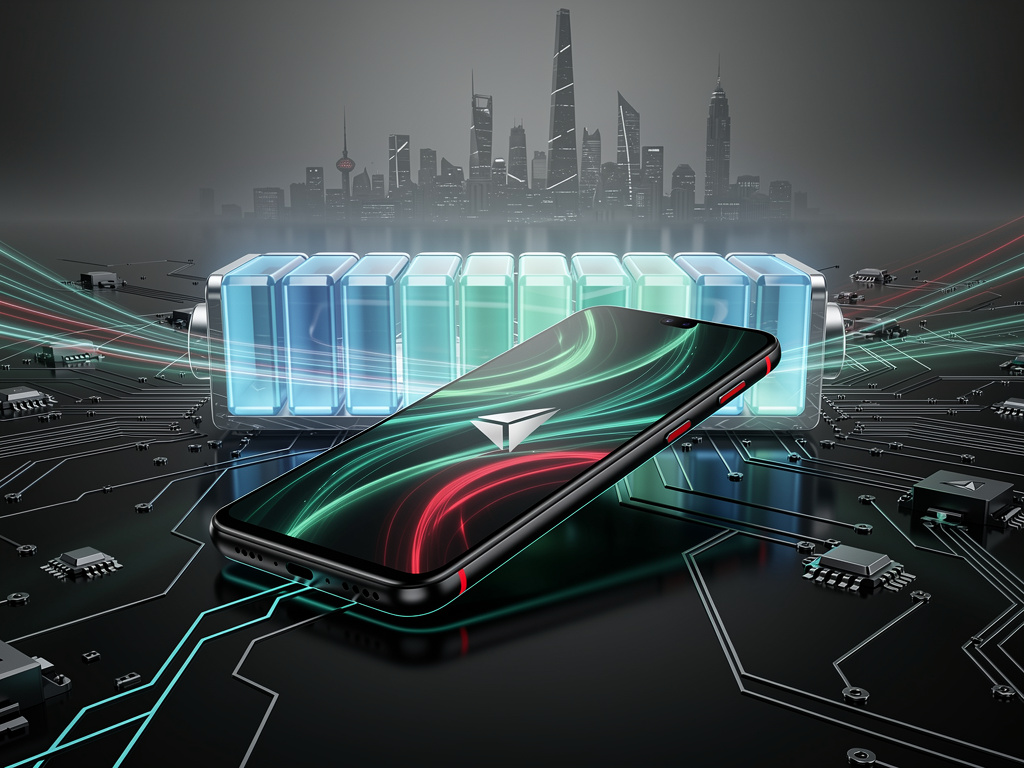
OnePlus’s Endurance Revolution: Turbo 6 Series Poised to Dominate with Unmatched Battery Power
In the fiercely competitive arena of smartphone innovation, OnePlus is gearing up to unleash a game-changer that could redefine user expectations for battery life. The company’s upcoming Turbo 6 series, slated for a January 8 launch in China, promises to deliver an astonishing 9,000mAh battery, nearly double that of many flagship devices on the market today. This move comes as consumers increasingly demand devices that can keep pace with their all-day, intensive usage without constant recharging. Drawing from early teasers and leaks, the Turbo 6 and Turbo 6V models are positioned as battery behemoths, targeting gamers and power users who prioritize endurance over slim profiles.
OnePlus has been teasing these devices through its official channels, emphasizing their “turbo” moniker which hints at high-performance capabilities married with exceptional power reserves. According to details shared on Weibo, the Chinese social media platform, both models will feature silicon-carbon battery technology, enabling higher energy density without significantly increasing the phone’s thickness. This isn’t just about raw capacity; OnePlus claims the Turbo 6 can achieve up to 10 hours and 37 minutes of continuous screen-on time during intensive tasks like gaming, based on preliminary lab tests. Such figures, if accurate, would outstrip competitors like Samsung’s Galaxy S25 Ultra, which tops out around 5,000mAh.
Industry analysts see this as OnePlus’s strategic push to carve out a niche in the mid-to-high-end segment, especially in markets where battery anxiety remains a top complaint. The company’s history of bold innovations, from fast charging to unique designs, positions it well for this endeavor. As reported in a recent article by Digital Trends, the Turbo 6 series is expected to launch exclusively in China initially, with potential rebranding for global markets, possibly as the Nord 6 lineup.
Unpacking the Battery Breakthrough
At the heart of the Turbo 6 series is the massive 9,000mAh battery, a feat made possible through advancements in silicon-carbon anode technology. This allows for greater energy storage in a compact form, addressing the trade-off between battery size and device portability that has long plagued manufacturers. OnePlus isn’t new to pushing battery boundaries; earlier models like the OnePlus 15 featured a 7,300mAh unit, but the Turbo 6 takes it to new heights. Sources from Android Central highlight how such innovations stem from collaborations with battery suppliers aiming to minimize degradation over time.
Charging capabilities are equally impressive, with 80W fast charging support that can reportedly juice up the device from zero to full in under an hour. Additionally, 27W reverse charging turns the phone into a power bank for other gadgets, a feature that’s becoming essential for on-the-go professionals. Leaks from Android Headlines reveal live images of the device, showcasing a robust build that accommodates this powerhouse without compromising on aesthetics.
For industry insiders, this battery focus signals a shift toward sustainability and efficiency. With global regulations tightening on electronic waste, longer-lasting batteries could reduce the frequency of replacements. Posts on X (formerly Twitter) from tech enthusiasts echo this sentiment, with users expressing excitement over the potential for multi-day usage, though some caution about real-world performance versus lab claims.
Beyond the battery, the Turbo 6 series boasts formidable specs tailored for performance-driven users. Powered by the Snapdragon 8s Gen 4 chipset, these phones promise seamless multitasking and gaming. The display is a 1.5K OLED panel with a 165Hz refresh rate, ideal for smooth visuals in fast-paced games. As detailed in a report from Business Standard, the lineup includes two variants: the standard Turbo 6 and the Turbo 6V, each with up to 16GB of RAM and ample storage options.
Durability is another key selling point, with IP68, IP69, and even IP69K ratings for dust and water resistance, making these devices suitable for rugged environments. This is particularly appealing in emerging markets where users often face harsh conditions. The design incorporates a flat OLED screen, moving away from curved edges for better usability, and includes gaming-centric features like advanced cooling systems to prevent throttling during extended sessions.
From a market perspective, OnePlus’s timing is impeccable. With competitors like Xiaomi and Vivo also ramping up battery capacities in their mid-range offerings, the Turbo 6 series aims to set a new benchmark. Insights from Tom’s Guide suggest that this could pressure rivals to accelerate their own R&D in battery tech, potentially sparking an industry-wide race for superior endurance.
Market Implications and Global Ambitions
The China-exclusive launch on January 8, 2026, is just the beginning. Reports indicate that the Turbo 6 might be rebranded as the OnePlus Nord 6 for international release, possibly hitting India by March or April. This strategy aligns with OnePlus’s history of tailoring products for different regions, as seen with the Nord series’ success in budget-conscious markets. A piece from NTV Telugu outlines expectations for an Indian debut, highlighting the 6.78-inch display and 80W charging as major draws.
Consumer sentiment on platforms like X is overwhelmingly positive, with posts praising the 9,000mAh battery as a “game-changer” for travelers and remote workers. However, some users express concerns about weight and heat management, given the larger battery. Industry experts note that OnePlus must balance these factors to avoid alienating users who prefer sleek designs.
Looking ahead, this launch could influence broader trends in smartphone development. As 5G and AI features demand more power, batteries like the Turbo 6’s could become standard. Wikipedia’s list of OnePlus products shows the company’s evolution from mid-range to premium, with the Turbo series bridging that gap effectively.
OnePlus’s software ecosystem plays a crucial role here. The devices will run on OxygenOS, known for its clean interface and timely updates. Integration with features like ProXDR and Dolby Vision enhances the multimedia experience, making the Turbo 6 not just a battery champ but a well-rounded performer. As per Gadgets 360, the teased specs include high-resolution cameras, though details remain sparse, adding to the anticipation.
Competitive pressures are mounting. Samsung and Apple continue to dominate with ecosystem lock-in, but OnePlus’s value proposition—high specs at competitive prices—could erode their share in Asia. A report from 91mobiles confirms the color options and design, suggesting a premium feel that belies the mid-range positioning.
For insiders, the real story lies in supply chain dynamics. Sourcing silicon-carbon batteries at scale could give OnePlus a cost advantage, but geopolitical tensions in tech manufacturing might pose risks. Recent X posts from supply chain analysts speculate on partnerships with Chinese battery giants, potentially streamlining production.
Technological Horizons and User Impact
Delving deeper into the tech, the Snapdragon 8s Gen 4 offers efficiency gains that complement the large battery, ensuring that power isn’t wasted on inefficient processing. This chipset, combined with up to 1TB of storage, positions the Turbo 6 as a content creation powerhouse. Leaks from The Shortcut reveal a focus on gaming optimizations, including haptic feedback and customizable controls.
User impact extends to everyday scenarios. Imagine a device that lasts through a full workday of calls, emails, and navigation without dipping below 50% battery. This could transform productivity for professionals in fields like journalism or field sales. Feedback from X users highlights enthusiasm for such reliability, with some comparing it to the longevity of older feature phones.
Moreover, environmental considerations are gaining traction. Larger, more efficient batteries mean fewer charging cycles, reducing energy consumption over the device’s lifespan. OnePlus’s commitment to software support for multiple years further extends usability, aligning with global sustainability goals.
As the launch approaches, speculation abounds about pricing. Expected to be positioned affordably, around the mid-range bracket, the Turbo 6 could disrupt premium segments. Insights from The Times of India suggest competitive pricing in China, with global adjustments to follow.
The broader ecosystem integration, including compatibility with OnePlus’s wearables and earbuds, enhances the appeal. This holistic approach could foster brand loyalty, much like Apple’s walled garden but at a fraction of the cost.
In wrapping up this exploration, the Turbo 6 series represents OnePlus’s bold bet on battery supremacy. If executed well, it could not only boost the company’s market share but also push the entire industry toward more enduring devices. As January 8 draws near, all eyes will be on China to see if this turbo-charged entrant lives up to the hype.


 WebProNews is an iEntry Publication