
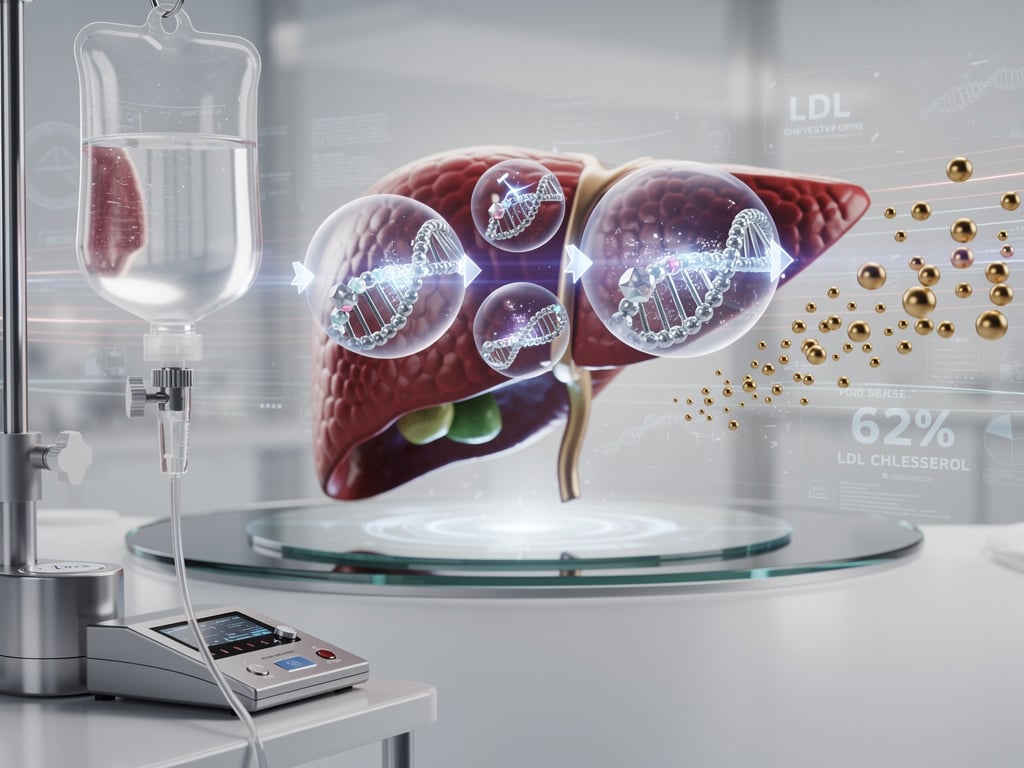
A single infusion of a gene-editing treatment lowered LDL cholesterol by an average of 62 percent in people with an inherited form of high cholesterol, with the reduction holding steady for at least six months, according to results from a small early-stage clinical trial. The findings, reported in the Ars Technica article, highlight the potential of one-time therapies that target the root genetic causes of cardiovascular disease rather than relying on daily pills.
The experimental drug, developed by Verve Therapeutics, uses a base-editing approach to permanently switch off a gene called PCSK9 in the liver. PCSK9 normally prevents the body from clearing LDL cholesterol from the bloodstream. By disabling it, the treatment allows the liver to remove far more LDL, often called bad cholesterol, dramatically lowering the risk of heart attacks and strokes. In the phase 1b trial involving ten patients with heterozygous familial hypercholesterolemia, a genetic condition that causes dangerously high LDL levels from birth, the highest dose produced the most striking results. Patients receiving that dose saw their LDL drop from an average of 191 milligrams per deciliter to just 71 milligrams per deciliter within a month, and the effect remained stable through the six-month follow-up period.
This level of reduction matches or exceeds what patients typically achieve with the most powerful statin drugs combined with injectable PCSK9 inhibitors, yet it comes from a single 30-minute intravenous treatment. Current therapies for familial hypercholesterolemia often require lifelong adherence to multiple medications, many of which cause side effects or lose effectiveness over time. The prospect of a one-and-done treatment could transform care for the roughly one in 250 people worldwide who carry genetic mutations that drive severe hypercholesterolemia.
The base editor used in the therapy represents a more precise form of CRISPR technology. Rather than cutting both strands of DNA, which can lead to unwanted insertions or deletions, base editors chemically convert one DNA letter to another without breaking the double helix. In this case, the editor changes a single cytosine to thymine in the PCSK9 gene, introducing a premature stop signal that halts production of the PCSK9 protein. The editing machinery is delivered inside lipid nanoparticles that naturally accumulate in the liver after infusion. Once inside liver cells, the nanoparticles release messenger RNA encoding the base editor and a guide RNA that directs it to the precise spot in the PCSK9 gene.
Safety data from the trial showed that most side effects were mild to moderate and temporary. The most common reactions included infusion-related symptoms such as headache, fatigue, and muscle pain. A few patients experienced a temporary elevation in liver enzymes, but these normalized without intervention. Importantly, the trial found no evidence of off-target editing in other genes, a major concern with earlier gene-editing approaches. Researchers used sensitive sequencing methods to scan for unintended changes across the genome and reported that any such events occurred at frequencies below one percent.
Despite these encouraging signals, the trial also revealed challenges that will need to be addressed before the treatment reaches wider use. Two patients developed flu-like symptoms and elevated liver enzymes shortly after infusion, prompting investigators to pause and evaluate whether the immune system was reacting to the lipid nanoparticles or the bacterial-derived editing proteins. Both patients recovered fully, and subsequent participants received pre-treatment with steroids and antihistamines to blunt potential immune responses. The company also noted that one participant experienced a serious cardiovascular event several weeks after treatment, though investigators determined it was unrelated to the drug and more likely stemmed from the patient’s advanced underlying heart disease.
These findings arrive at a time when cardiovascular disease remains the leading cause of death globally. Even with widespread use of statins, millions of people continue to suffer heart attacks because their LDL levels stay too high. Familial hypercholesterolemia patients face particularly grim odds; many experience their first heart attack before age 50. Traditional gene therapy approaches have struggled in this area because they typically add new copies of genes rather than turning harmful ones off. The Verve approach, by contrast, aims to mimic the natural protective effect seen in people who are born with loss-of-function mutations in PCSK9. Those individuals enjoy lifelong low LDL levels and dramatically reduced rates of heart disease without apparent negative health consequences.
The durability of the cholesterol reduction observed in the trial carries special significance. Previous attempts at RNA interference therapies targeting PCSK9 required repeated injections every few months. By permanently altering the DNA of liver cells, the base editor creates a lasting change that is passed on to daughter cells as the liver regenerates. Liver cells turn over slowly, so the edited population should persist for years if not decades. Longer follow-up will be needed to confirm how long the effect truly lasts and whether any compensatory mechanisms eventually blunt the benefit.
Verve is not the only company pursuing gene editing for cardiovascular disease. Several competitors are developing their own CRISPR-based or base-editing therapies against PCSK9 or other targets like ANGPTL3. The competitive landscape reflects growing confidence that precise genetic medicines can succeed where small-molecule drugs have fallen short. Insurance companies and health systems will face difficult decisions about how to pay for therapies that carry high upfront costs but potentially eliminate decades of ongoing medication expenses. Early economic models suggest that a one-time treatment priced around $200,000 could prove cost-effective compared with lifelong drug regimens for high-risk patients.
The trial also offers broader lessons about the maturation of gene-editing technology. When CRISPR first burst onto the scientific scene, many observers worried that off-target effects and delivery problems would limit medical applications to rare diseases. The Verve data suggest that with careful design of guide RNAs and improved delivery vehicles, the technology can be applied to common conditions that affect millions. The lipid nanoparticle platform used here builds on decades of research originally developed for other nucleic acid therapies. Its ability to reach the liver with high efficiency while avoiding excessive immune activation marks a notable step forward.
Patients in the study had already tried multiple existing therapies without achieving adequate cholesterol control. Many were on maximum-dose statins, ezetimibe, and injectable PCSK9 inhibitors yet still maintained LDL levels above 150 milligrams per deciliter. The gene-editing treatment brought them into ranges considered optimal for people with established cardiovascular disease. Several participants were able to reduce or stop some of their daily medications after their LDL levels fell, although physicians emphasized that long-term data are needed before making such changes standard practice.
Looking ahead, Verve plans to expand testing into larger phase 2 trials that will include more diverse patient populations and longer follow-up periods. The company is also exploring whether lower doses might provide meaningful benefit with even fewer side effects. Future versions of the therapy may incorporate additional modifications to further reduce immune responses or allow redosing if necessary. Researchers are particularly interested in whether the same platform could target other genes involved in metabolic and cardiovascular disorders.
The success of this small trial adds momentum to a growing wave of genetic medicines moving through clinical development. From sickle cell disease to transthyretin amyloidosis, one-time treatments are beginning to demonstrate that they can produce profound and lasting clinical benefits. For hypercholesterolemia, the possibility of protecting people from heart disease before they suffer their first event represents a shift from reactive to truly preventive care. Cardiologists have long known that lowering LDL earlier in life yields greater reductions in lifetime cardiovascular risk. A single infusion given in early adulthood could theoretically reset a person’s cholesterol trajectory for the rest of their life.
Of course, many questions remain. Will the edited liver cells maintain their advantage over decades, or will unedited cells eventually outcompete them? Could there be subtle long-term effects from reducing PCSK9 that current monitoring has not yet detected? How will the therapy perform in patients with different genetic backgrounds or additional health conditions? These uncertainties explain why regulatory agencies will require extensive additional safety and efficacy data before approving the treatment for general use.
Still, the consistency of the LDL reduction across patients, the apparent durability of the effect, and the manageable safety profile have generated considerable excitement among lipid specialists. Many have begun discussing how such therapies might fit into future treatment algorithms, potentially as an option for patients who cannot tolerate statins or who fail to reach targets despite maximal medical therapy. Some even envision a future in which genetic screening at young ages identifies those at highest risk, allowing intervention before atherosclerosis takes hold.
The trial results also underscore the value of continued investment in delivery science. Lipid nanoparticles have improved dramatically since their first medical applications, now achieving better targeting, lower toxicity, and more efficient cellular uptake. Further refinements could expand the range of tissues that can be reached, opening the door to gene editing in the heart, brain, or other organs currently considered difficult targets.
As data from this and similar studies accumulate, the medical community will need to grapple with the ethical dimensions of permanent genetic changes for non-life-threatening conditions. While familial hypercholesterolemia clearly qualifies as a serious disease, the same technology could theoretically be used to lower cholesterol in people with milder forms of hyperlipidemia or even as a preventive measure in the general population. Society will need clear guidelines about when the benefits justify the risks and costs of genetic intervention.
For now, the ten patients who received the infusion provide the first human proof that base editing can safely and effectively modulate a gene that millions of people might one day want to turn off. Their lowered cholesterol levels stand as tangible evidence that a new chapter in cardiovascular medicine has begun. If larger trials confirm these early findings, the approach could offer millions of people a radically simpler way to manage a condition that has claimed far too many lives. The path from small trial to approved therapy remains long, but the direction is clear: medicine is moving toward treatments that address disease at its genetic source rather than merely managing its symptoms.


 WebProNews is an iEntry Publication