
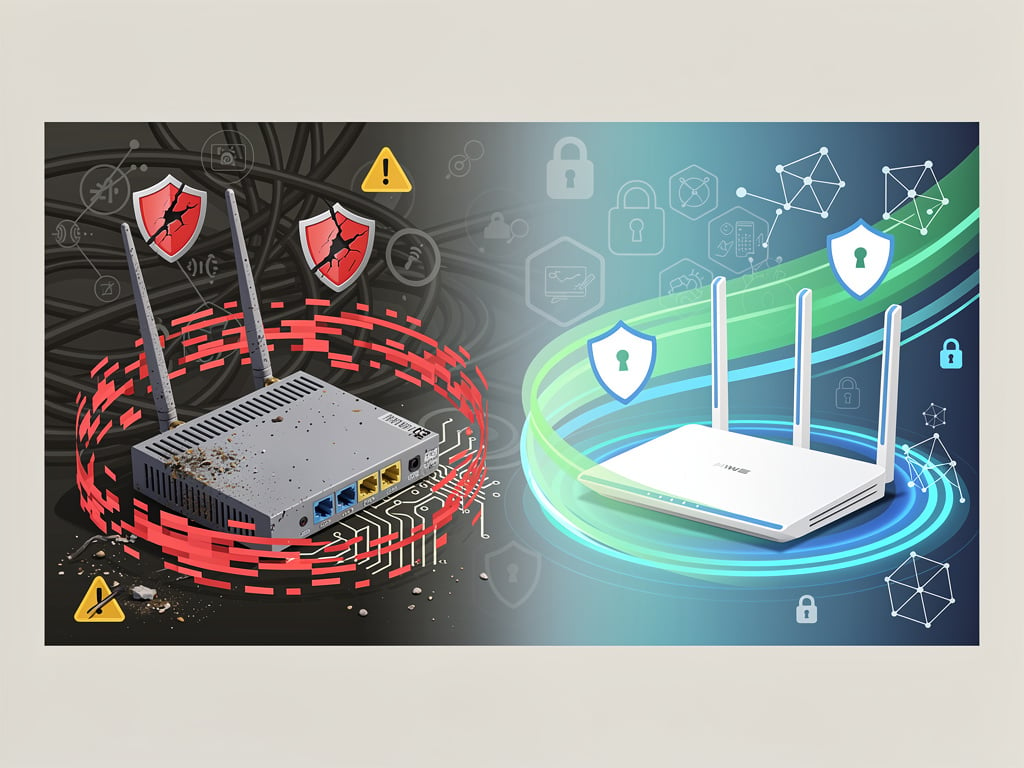
Millions of households rely on wireless routers that first appeared when flip phones ruled and broadband meant dial-up speeds. These devices, many still operating protocols from the early 2000s, quietly undermine modern internet connections. They expose users to known flaws while delivering subpar performance.
TechRadar reports that roughly one in three users remain stuck on such outdated equipment. The reasons range from simple inertia to ISP rental models that discourage upgrades. But the risks have grown sharper. Recent research highlights fresh attack methods that bypass encryption on vulnerable networks.
Old routers often default to WPA2 encryption, introduced in 2004. That standard has suffered repeated breaks. KRACK in 2017 allowed attackers within range to decrypt traffic. Later flaws enabled offline password cracking. Yet many devices never received fixes. Manufacturers dropped support years ago.
And performance suffers too. These legacy boxes struggle with today’s device loads. Smart homes pack dozens of gadgets. Streaming demands steady bandwidth. An aging router creates bottlenecks even on gigabit fiber. Users blame their internet provider. The real culprit sits in the closet.
ISPs compound the problem. Over 70 percent of U.S. households receive routers directly from their provider, according to TechRadar. These units often stay in service far longer than retail models. Customers cannot easily swap them. New FCC restrictions on foreign-made hardware add further friction. The rules, aimed at national security, may keep vulnerable legacy gear in place longer.
Security warnings keep mounting.
Ars Technica detailed a new attack called AirSnitch in February 2026. Researchers showed it breaks Wi-Fi encryption across homes, offices and enterprises. Unlike past exploits focused on handshake flaws, this one targets lower layers of the networking stack. It injects malicious frames. Every router tested proved susceptible to at least one variant.
“The range of possibilities it affords gives attackers capabilities that haven’t been possible with other Wi-Fi attacks,” the researchers told Ars Technica. They referenced KRACK and earlier WPA3 weaknesses. The new technique even threatens enterprise RADIUS authentication. An attacker could steal credentials and set up rogue access points.
Such threats land hardest on equipment long past its support window. The internetgovernance.org analysis from March 2026 notes that legacy routers frequently run WEP or early WPA without hardware protections like secure boot. State actors have exploited exactly these gaps. The Volt Typhoon campaign targeted end-of-life Cisco and Netgear devices. CISA and the FBI highlighted the danger.
But home users face everyday risks too. Botnets recruit compromised routers for DDoS attacks or data theft. A single weak link in the neighborhood network can affect others. Weak default passwords, unpatched firmware and exposed management interfaces make entry trivial.
Why do so many persist with obsolete gear? Cost plays a role. Replacing a router feels unnecessary when the lights still blink. Many lack technical knowledge to check encryption settings or install updates. ISP contracts bundle equipment with service. Switching means fees or hassle.
Router makers share blame. Support lifecycles remain short. A device sold in 2015 may stop receiving patches by 2020. Linux kernels in some units date back over a decade, carrying hundreds of known vulnerabilities. Studies from Fraunhofer and others documented this pattern years ago. Little has changed.
Recent developments add urgency. The FCC’s moves against certain foreign manufacturers, reported across outlets in early 2026, target supply-chain threats. Yet they complicate consumer choice. Most recommended routers come from overseas. Domestic alternatives stay limited. Updates to existing covered devices remain possible until 2029 under waivers. That offers some breathing room.
Broadcom chipset flaws surfaced in January 2026. They let attackers crash networks with a single unauthenticated frame. The issue hit devices regardless of WPA2 or WPA3 settings. Patches rolled out. Owners of older hardware received none.
So what should responsible users do? Check the admin interface first. Confirm WPA3 support and enable it where possible. Most modern clients handle the transition. Update firmware through the manufacturer’s site or app. Change default passwords. Disable remote management. Consider replacing any router more than five years old.
Consumer Reports and Wirecutter reviews from May 2026 emphasize models with automatic updates and strong privacy controls. They test real-world speeds and security features. Features such as WPA3 certification and regular patches separate current leaders.
Enterprises face parallel headaches. Legacy infrastructure resists upgrades. But the home front carries broader exposure. One compromised residential router can serve as an entry for lateral movement into connected services.
Regulators eye further action. Discussions around mandatory update periods or minimum support terms surface periodically. Industry pushes back, citing costs and innovation pace. Consumers sit in the middle.
The gap between available technology and deployed base continues to widen. Wi-Fi 7 devices deliver multi-gigabit speeds with improved efficiency. They mandate stronger protections. Yet one-third of users cannot tap those gains. Their networks remain anchored in the past.
Security experts warn the situation invites trouble. Attack surfaces multiply with each connected appliance. Legacy encryption cannot keep pace. And as new techniques like AirSnitch demonstrate, even updated standards face novel challenges.
Individual action still matters. A quick audit of home equipment takes minutes. The payoff includes faster speeds, fewer dropouts and reduced exposure. For those renting from ISPs, pressing for newer models or buying compatible retail gear often pays off despite initial friction.
The wireless router, once a simple gateway, now functions as critical infrastructure inside every connected home. Treating it as set-it-and-forget-it hardware no longer works. The evidence from ongoing research and real-world incidents makes that clear.


 WebProNews is an iEntry Publication