
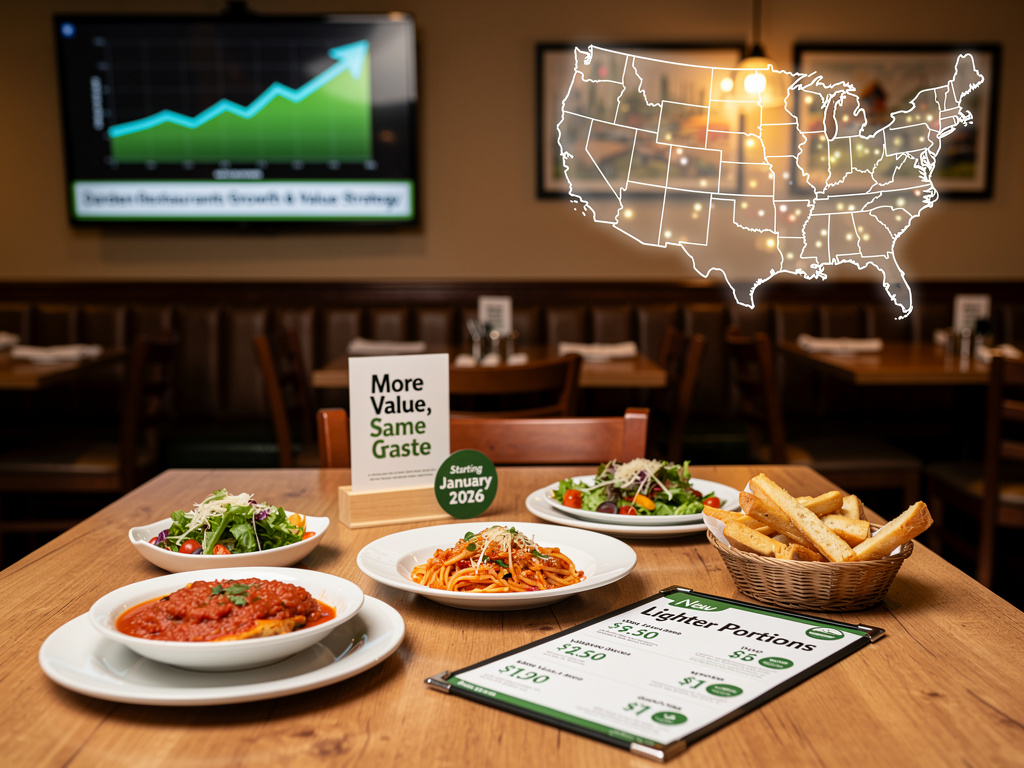
Olive Garden, the Italian dining staple under Darden Restaurants, is set to expand its experimental “lighter portions” menu across all U.S. locations in January 2026. The move follows encouraging trial results from nearly half of its restaurants, where downsized entrées like chicken parmigiana and eggplant parmigiana—priced about 20% lower than full servings—drove higher guest satisfaction and check averages. Darden CEO Rick Cardenas highlighted the test’s success during the company’s second-quarter earnings call, noting it addressed diner demands for more affordable, less filling options amid persistent inflation pressures.
The initiative, first piloted in September 2025 at around 40% of Olive Garden’s 949 outlets, reflects a broader industry pivot toward value-driven menus. Cardenas told analysts, “The lighter portions have been very well received,” per the earnings transcript on Insider Monkey. This comes as Darden raised its full-year revenue outlook, bolstered by 7% same-restaurant sales growth at Olive Garden and LongHorn Steakhouse, despite elevated beef costs squeezing margins.
Test Phase Triumphs
Initial testing, detailed in Fox Business on September 18, 2025, featured reduced-size classics such as shrimp scampi and five-cheese ziti al forno. Priced from $11.99 to $15.99, these items aimed to capture budget-conscious families and health-focused diners without cannibalizing core sales. Darden executives reported “encouraging” uptake, with the menu boosting traffic among price-sensitive segments. By October, Simply Wall St noted positive customer feedback translating to rising affordability scores in Darden’s metrics.
Olive Garden’s parent company tracked key performance indicators closely: average check rose modestly as lighter eaters paired entrées with appetizers or desserts, while satisfaction surveys spiked. Cardenas emphasized during the December 18 call, covered by Fox Business, that the program would roll out systemwide post-holidays, signaling confidence in its scalability.
Strategic Value Play
This isn’t Olive Garden’s first foray into portion flexibility; past menus included “Lighter Italian Favorites,” but the current iteration ties directly to economic headwinds. Inflation-weary consumers, facing average entrée prices near $20, have gravitated toward promotions like Never-Ending Pasta Bowl. Yet Darden data showed demand for mid-tier options—neither bottom-dollar specials nor premium upsells. The lighter menu fills this gap, with items like lasagna classico lite at reduced heft and cost, per Good Morning America.
Competitive pressures amplify the stakes. Rivals like Cheesecake Factory and Bravo! Italiano have tweaked offerings similarly, but Olive Garden’s scale—serving over 300,000 meals daily—positions it to lead. Darden’s Q2 results, reported by CNBC, showed Olive Garden guest counts up 2.1%, outpacing the casual-dining sector’s flat trends. Analysts credit value innovations, including lunch duos and the lighter test, for shielding against traffic erosion seen at peers like Red Lobster.
Earnings Momentum Fuels Expansion
Darden’s fiscal second-quarter earnings, released December 18, 2025, underscored the momentum: total sales hit $3.16 billion, up 7% year-over-year, with Olive Garden contributing $1.2 billion. Same-restaurant sales at the chain rose 3.4%, driven by menu pricing and traffic gains from value bundles. CEO Cardenas, in the call recapped by Yahoo Finance Canada, flagged lighter portions as a key driver, projecting further uplift from the full rollout.
Margin pressures persist, however, with food costs up due to beef inflation. Darden mitigated this via operational tweaks and supplier negotiations, maintaining adjusted EPS at $1.70—beating estimates. The lighter menu indirectly aids here: smaller portions cut protein usage by 20-30%, easing supply-chain strains without alerting diners to shrinkage.
Consumer Dynamics Shift
Diners’ preferences have evolved post-pandemic. Nielsen data cited in industry reports shows 62% of casual-dining patrons now prioritize value, up from 45% in 2020, while 38% seek lighter options for health reasons. Olive Garden’s trials tapped this vein, with women and younger adults (25-44) showing outsized adoption rates. Social media buzz on X reflected enthusiasm, though posts from @OliveGarden focused more on staples like breadsticks, hinting at promotional tie-ins ahead.
Challenges loom: full rollout risks overexposure if uptake plateaus, potentially pressuring checks. Darden plans digital marketing pushes and server training to cross-sell, ensuring lighter picks complement unlimited soup-salad-breadsticks combos. Early metrics from test markets like Florida and Texas—high-density Olive Garden zones—suggested 15% trial rates among menus presented.
Industry Ripples and Investor View
The expansion reverberates across casual dining. Brinker International (Chili’s) and Texas Roadhouse have eyed similar mods, per sector chatter. For Darden (NYSE: DRI), shares dipped 1% post-earnings on margin worries but trade at 18x forward earnings, a premium justified by growth prospects. Nation’s Restaurant News linked the news to broader sales surges, positioning Olive Garden as a value bellwether.
Regulatory and supply factors add layers: USDA protein forecasts predict easing beef prices by mid-2026, aiding sustainability. Olive Garden’s move also nods to ESG trends, with smaller plates reducing waste—aligning with Darden’s 25% food-waste cut goal by 2025. As rollout nears, all eyes turn to January comps for proof of concept.
Operational Rollout Blueprint
Implementation details emerge from earnings disclosures: every location gets 4-6 lighter SKUs, integrated into digital menus and kiosks for seamless upselling. Training emphasizes pairings, like lighter scampi with gorgonzola-crusted steak minis. Inventory systems auto-adjust for portion variances, minimizing errors. Darden’s tech stack, including Toast POS integrations, will track real-time performance by DMA.


 WebProNews is an iEntry Publication