
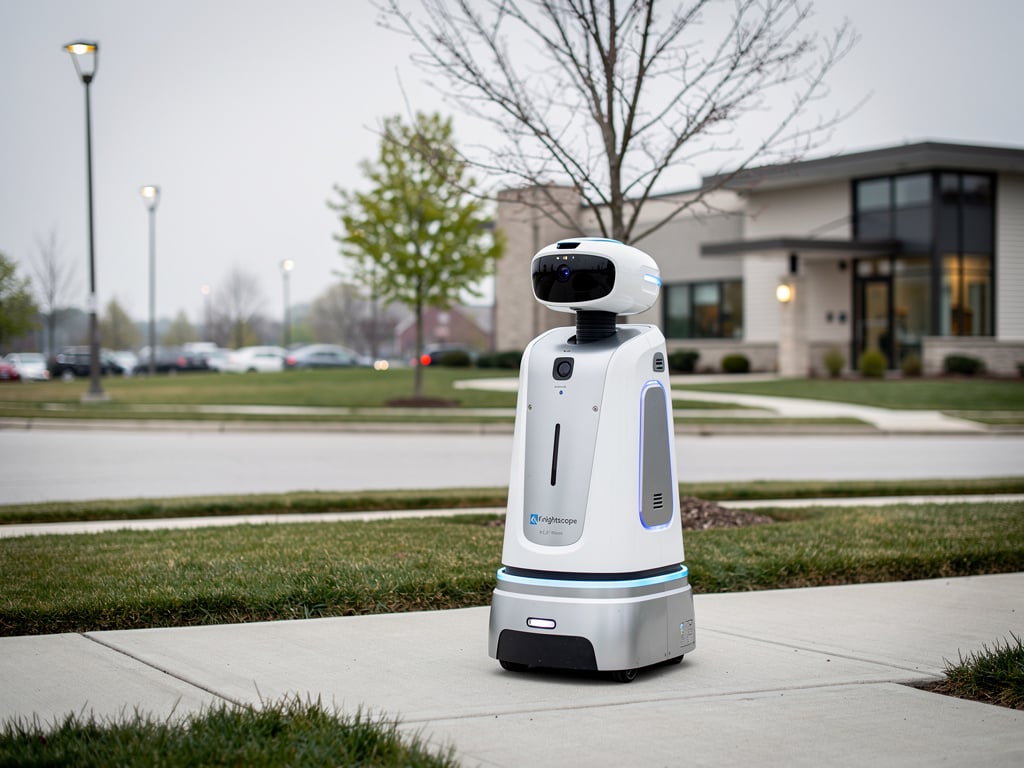
Dublin, Ohio, gave a Knightscope K5 robot a shot at bolstering public safety. The machine, nicknamed DubBot, rolled into the Rock Cress Parking Garage last July. Less than a year later, on May 12, officers sent it back.
The Columbus Dispatch reported the details first. DubBot made zero arrests. It issued no tickets. Police never responded to a single incident the robot flagged. Costs reached $67,548 for the city after expected reimbursements. The outcome landed with a thud.
But the story runs deeper than one suburban garage. Knightscope’s autonomous units have faced similar fates before. New York police pulled their K5 from subway patrols after it required constant human escorts. San Antonio airport dropped plans over persistent technical glitches. Even earlier cases, like a 2017 San Francisco shelter deployment, ended after vandalism and community backlash, as Mashable documented years ago.
DubBot stood five feet tall and weighed around 400 pounds. It carried 360-degree video cameras, offered two-way emergency communication, and featured a button that connected directly to dispatchers. The plan seemed straightforward. Place the machine in high-traffic areas. Deter crime through visible presence. Gather footage. Alert officers when needed. Yet reality proved more complicated.
Robyn Gray, a Dublin police spokesperson, offered measured words. “The city is always looking for ways to be on the forefront of technology, especially when it can help support residents, enhance safety and improve the way services are delivered.” The department had eyed a second robot for Riverside Crossing Park. Development delays and infrastructure shortfalls kept it on the sidelines. The original two-year contract totaled $238,440. Only one unit operated. First-year spending hit $128,080 before credits.
So why did it fail to generate results? The robot patrolled a parking structure where problems like break-ins or loitering sometimes occur. Its sensors scanned continuously. No anomalies triggered human intervention. No criminal cases emerged from its footage. Officials described the pilot as an evaluation in real-world conditions rather than a strict metrics-driven test. Still, the absence of measurable impact raised eyebrows.
The Futurism article covering the decision pulled no punches. It labeled the episode a “Robo Flop” and questioned taxpayer value. The piece arrived on June 17, the day after the Dispatch story, and tied Dublin’s experience to Knightscope’s broader track record. Readers reacted with familiar skepticism. Some joked about Robocop without the enforcement power. Others wondered if machines could ever match human judgment in unpredictable environments.
And they have a point. Autonomous systems excel at repetition. They record without fatigue. They maintain constant vigilance. Yet they struggle with context. A person lingering near vehicles might be a thief. Or a lost tourist. Or an employee on break. The K5 flags deviations. Humans decide what matters. That handoff never happened in Dublin.
Knightscope itself presents a different picture elsewhere. Huntington Park, California, renewed its contract after positive feedback. Chief Cosme Lozano once compared the robots to patrol vehicles. They extend departmental reach without replacing officers. The company, publicly traded as KSCP, continues developing the next-generation K7 platform with pilots eyed for late 2026. It markets a full managed service combining robots, remote monitoring, and response teams.
Dublin did not walk away empty-handed. City officials installed entrance and exit gate arms plus improved mirrors at the garage, according to the Dublin police public safety technology page. The pilot formed one piece of a larger technology portfolio that includes drones, license plate readers, and advanced cameras. The robot experiment, however brief, fed into ongoing assessments of what actually delivers safety gains.
Critics see a pattern. Police departments test flashy solutions under pressure to appear innovative. Vendors secure pilot contracts that generate publicity and data. When results disappoint, units return quietly. Costs stay modest in the grand scheme of municipal budgets yet invite scrutiny when outcomes prove negligible. Privacy advocates raise separate flags about constant surveillance in public spaces, though Dublin’s program triggered no major outcry.
Supporters counter that one failed pilot does not condemn the category. Early automobiles broke down frequently. Initial drones crashed often. Security robots may follow the same learning curve. Consistent presence in parking facilities could deter opportunistic crime even without frequent interventions. Recorded video might prove valuable in investigations that develop later. The technology simply needs refinement and clearer expectations.
Expect more experiments. Cincinnati police demonstrated Knightscope units years ago but moved cautiously, citing the need for proven performance. Other cities continue small-scale tests. Knightscope reports recurring service growth across deployments. Public safety budgets remain stretched. Labor shortages in policing persist. The appeal of tireless mechanical sentries endures.
Dublin’s experience offers a cautionary data point, not a final verdict. DubBot did not transform the garage into a crime-free zone. It did not spark a wave of arrests. It rolled in, observed, and rolled out. The department returned to human officers, physical barriers, and traditional tools. That decision, born from practical assessment rather than ideology, reflects how many agencies ultimately judge new technology. Does it make the job easier? Does it deliver measurable value? In this case, the answer came swiftly.
Future deployments will likely carry tighter success criteria from the start. Departments may demand specific metrics on deterrence or evidence generation. Vendors could adjust pricing or capabilities to match modest outcomes. The conversation about robots in policing has shifted from science fiction to procurement spreadsheets. And those spreadsheets, in Dublin at least, showed limited return.
Still, the machines keep improving. Cameras grow sharper. Software interprets scenes with greater nuance. Integration with other systems becomes smoother. One Ohio suburb’s short experiment won’t halt that progress. It does, however, remind everyone involved that visible presence alone rarely suffices. Results matter. DubBot had presence. It simply never produced the results police needed.


 WebProNews is an iEntry Publication