
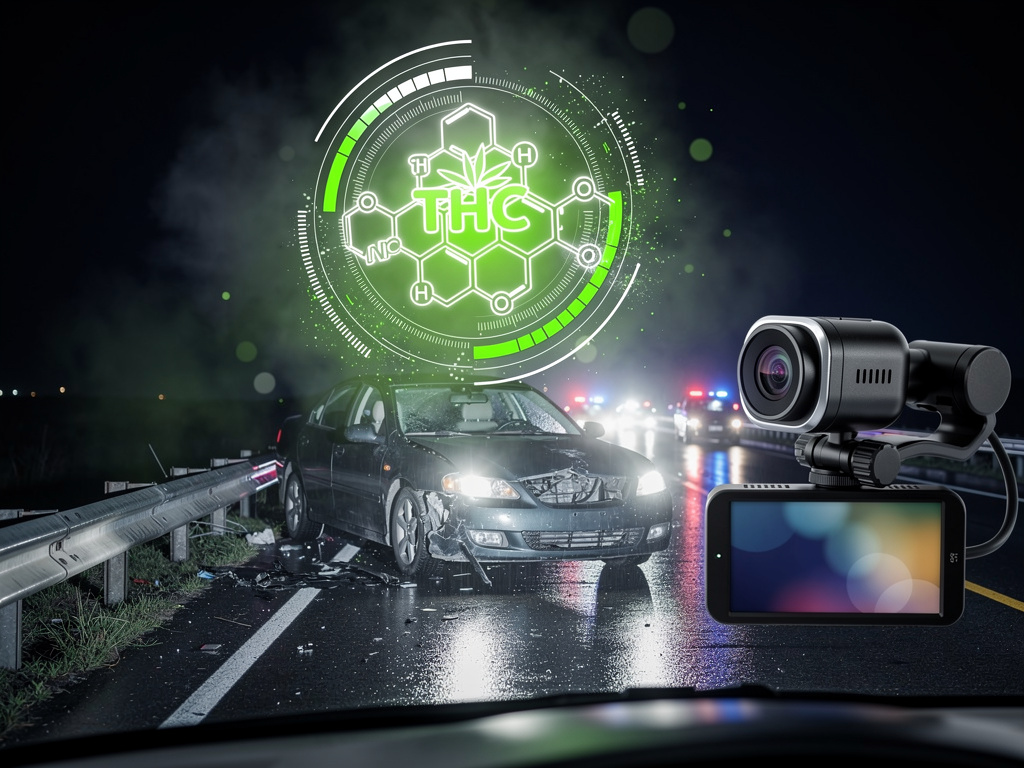
High and Deadly: The Rising Toll of THC in Fatal Car Crashes
In the quiet corridors of Montgomery County, Ohio, a six-year study has unveiled a stark reality about the intersection of cannabis use and road safety. Researchers from Wright State University, examining coroner records from 2017 to 2022, found that nearly 42% of drivers who died in motor vehicle collisions tested positive for active delta-9-tetrahydrocannabinol (THC), the psychoactive component in marijuana. This figure, drawn from 246 deceased drivers, reveals average blood THC levels of 30.7 nanograms per milliliter—far surpassing the impairment thresholds set by many states, which typically range from 2 to 5 ng/mL. The findings, presented at the American College of Surgeons Clinical Congress, underscore a persistent public health challenge that legalization efforts have not mitigated.
The study, led by Dr. Akpofure Peter Ekeh, a professor of surgery at Wright State University Boonshoft School of Medicine, highlights how these elevated THC levels suggest recent cannabis consumption shortly before driving. “An average level of 30.7 ng/mL generally means those people must have consumed marijuana at some time close to driving,” Ekeh noted in the press release from the American College of Surgeons. This proximity raises alarms about impaired judgment, slowed reaction times, and distorted perceptions that THC induces, all critical factors in vehicular accidents. Unlike alcohol, where blood levels correlate more predictably with impairment, THC’s effects can linger variably, complicating enforcement and education efforts.
Comparisons with alcohol paint an even grimmer picture. In the same dataset, 37.4% of deceased drivers tested positive for alcohol, with an average blood alcohol concentration of 0.165%, double the legal limit of 0.08%. Yet, the overlap is telling: about 20% had both substances in their system, amplifying risks exponentially. Ekeh emphasized that while alcohol’s dangers are well-publicized, cannabis impairment receives far less attention, potentially contributing to its prevalence in fatal crashes.
Unchanged Patterns Post-Legalization
The persistence of these statistics post-legalization is particularly noteworthy. Ohio legalized medical marijuana in 2016, yet the study period from 2017 onward showed no decline in THC-positive fatalities, suggesting that policy shifts alone aren’t curbing risky behaviors. This echoes broader national trends, where states with recreational cannabis laws have seen mixed outcomes in road safety metrics. Experts argue that without robust public awareness campaigns akin to those for drunk driving, cannabis users may underestimate its impact on driving ability.
Drawing from additional research, a report in ScienceDaily notes that over 40% of fatal crash victims nationwide exhibit THC levels above legal limits, with rates unchanged by legalization. This stagnation points to gaps in education and enforcement. For instance, unlike breathalyzers for alcohol, reliable roadside tests for THC impairment remain elusive, leaving law enforcement reliant on blood tests that detect presence but not always acute intoxication.
Industry insiders in transportation safety and public health are calling for innovation here. Proposals include developing standardized impairment tests and integrating cannabis education into driver training programs. The Psychology Today blog highlights how cannabis-related crashes are escalating, with many drivers injured or killed under the influence, urging a reevaluation of how society views marijuana’s risks.
Broader Implications for Public Health
Beyond Ohio, similar patterns emerge in other regions. A EMS1 article details the same Montgomery County study, emphasizing that the 41.9% THC positivity rate indicates widespread recent use before crashes. This isn’t isolated; national data from the National Highway Traffic Safety Administration suggests a rise in drug-impaired driving fatalities, with cannabis often the culprit.
Public sentiment, as reflected in recent posts on X (formerly Twitter), shows growing concern. Users have shared anecdotes and statistics, with one prominent post estimating THC-positive driving contributes to about 5,000 U.S. traffic deaths annually, based on a study in the International Journal of Drug Policy. Another highlighted a tragic case where a driver under the influence of cannabis caused a crash killing six people, underscoring the human cost.
Experts like those from the American College of Surgeons warn that without intervention, these numbers could climb. The average THC level in the Ohio study—30.7 ng/mL—far exceeds impairment benchmarks, implying not just casual use but potentially heavy intoxication. This level can impair cognitive functions essential for safe driving, such as attention, memory, and motor coordination, according to pharmacological research.
The Science of THC Impairment
Delving deeper into the pharmacology, THC affects the brain’s endocannabinoid system, leading to altered perception and delayed responses. Studies indicate that even low doses can double the risk of a crash, with higher concentrations exacerbating this exponentially. A EurekAlert! release on the study reinforces that these findings highlight a “significant and persistent public health risk” unchanged by recreational cannabis legalization.
Comparatively, while alcohol impairment is linear, THC’s effects vary by user tolerance, consumption method, and timing. Edibles, for example, produce slower-onset but prolonged highs, potentially catching drivers off guard. Vaping or smoking yields quicker peaks, but blood levels don’t always mirror impairment, complicating legal proceedings.
Transportation analysts note that urban areas with higher cannabis accessibility see disproportionate crash rates. In states like Colorado, where legalization occurred earlier, annual deaths linked to THC-positive drivers hover around 100, as per data shared on X and corroborated by independent research.
Policy Responses and Challenges
Policymakers face hurdles in addressing this. Recent federal moves, such as a White House executive order increasing medical marijuana research, as reported in a White House announcement, aim to better understand cannabis’s effects. However, recreational use’s normalization may dilute safety messages.
Enforcement varies by jurisdiction. Some states employ drug recognition experts trained to identify cannabis impairment through behavioral cues, but scalability is limited. The Fox News coverage of a Wright State University study points out that over 40% of fatal accident victims had elevated THC, urging stricter measures.
Industry stakeholders in automotive safety are pushing for technology integrations, like advanced driver-assistance systems that could detect erratic behavior potentially linked to impairment. Yet, privacy concerns and accuracy issues persist.
Personal Stories and Societal Impact
Human stories bring these statistics to life. Posts on X recount devastating incidents, such as a father paralyzed in a crash caused by a THC-impaired driver who killed six others. Such narratives fuel calls for accountability, with sentences like 65 years in prison serving as deterrents.
Broader societal factors compound the issue. A ScienceDaily piece on declining church attendance links it to rising “deaths of despair,” including substance-related fatalities, suggesting cultural shifts influence risky behaviors.
For industry insiders, the economic toll is immense. Insurance premiums rise with crash rates, and healthcare systems bear the burden of treating survivors. The American College of Surgeons estimates that preventing just a fraction of these incidents could save billions in medical costs.
Future Directions in Research and Prevention
Looking ahead, researchers advocate for longitudinal studies tracking cannabis use patterns pre- and post-legalization across more counties. Expanding the Montgomery County model nationally could provide granular data, informing targeted interventions.
Collaborations between public health organizations and cannabis industries are emerging, with some dispensaries now including driving warnings on products. Educational campaigns, modeled after anti-drunk driving efforts, are gaining traction, emphasizing that “buzzed driving is drunk driving” applies to cannabis too.
Finally, as THC detection technologies evolve, from saliva tests to AI-driven analytics, the hope is for proactive prevention. The Pulmonology Advisor reports on the study’s findings, stressing the need for awareness to combat this escalating threat. With concerted efforts, the road to safer highways might steer clear of this high-stakes hazard, saving countless lives in the process.


 WebProNews is an iEntry Publication