
Ticking Troubles: NYC’s School Phone Ban Exposes a Generation’s Blind Spot for Analog Time
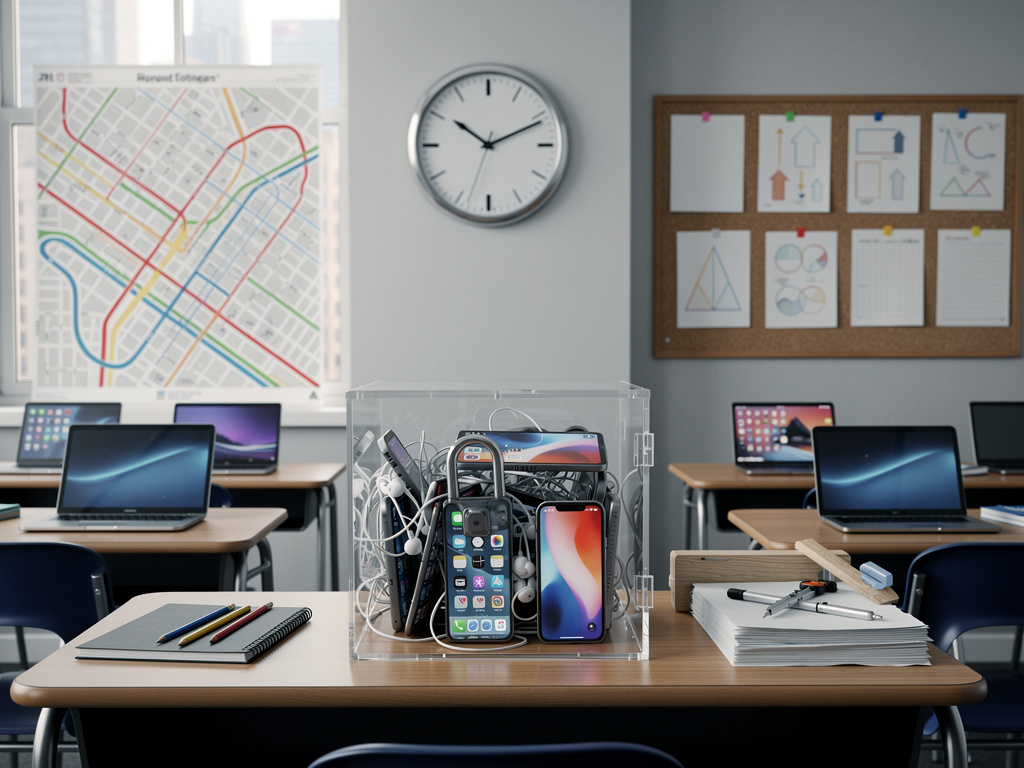
In the bustling classrooms of New York City’s public schools, a seemingly straightforward policy change has unearthed an unexpected educational shortfall. The statewide ban on cellphones, implemented at the start of the 2025-2026 school year, aimed to curb distractions and foster better focus among students. Yet, as devices were locked away from bell to bell, teachers began noticing a peculiar issue: many teenagers couldn’t decipher the analog clocks hanging on classroom walls. This revelation, first highlighted in a report by Gothamist, underscores broader challenges in how digital natives navigate basic skills in an increasingly screen-dependent world.
Tiana Millen, an assistant principal at Cardozo High School in Queens, shared anecdotes of students squinting at clock faces, unable to gauge how much time remained in class. Without their phones’ digital displays, these teens resorted to asking teachers or peers for the time, disrupting lessons. This isn’t an isolated quirk; educators across the city report similar struggles, suggesting a gap in foundational learning that predates the ban but was masked by ubiquitous technology. The policy, championed by Governor Kathy Hochul, mandates that phones be stored securely—often in pouches or lockers—leaving students to rely on traditional timepieces.
The ban’s rollout wasn’t without its hurdles. Schools received state reimbursements for storage solutions, as detailed in a Chalkbeat explainer, yet enforcement varies by district. Some institutions use magnetic pouches that lock devices until the end of the day, while others depend on teacher vigilance. Initial frustrations gave way to positive shifts, with reports of heightened student engagement and interpersonal interactions, but the clock-reading dilemma highlights unintended consequences.
Unmasking Hidden Skill Deficits in the Digital Age
Beyond time-telling, the phone prohibition has spotlighted other educational voids. Teachers observe students struggling with basic navigation without apps, or even handwriting notes sans digital aids. This aligns with broader concerns about overreliance on technology, where skills like mental math or map reading atrophy in favor of instant gratification from screens. A New York Times piece noted that while the ban proceeded “better than expected,” it surfaced frustrations alongside benefits, including improved concentration.
Parents, initially resistant as per a New York Times analysis of opposition, worried about emergency communication. Yet, many now acknowledge the policy’s role in reducing cyberbullying and social media distractions during school hours. Still, the analog clock issue prompts questions about curriculum priorities: when did teaching this skill fall by the wayside? Educators point to packed syllabi focused on standardized testing, leaving little room for what some deem “obsolete” abilities.
Recent posts on X echo these sentiments, with users sharing stories of teens getting detentions for sneaking phone checks near visible clocks, or lamenting the dire need for time-telling worksheets. One viral thread from a teacher highlighted how notifications disrupt learning, drawing parallels to experiments where students tallied interruptions in a single class period. These online discussions amplify the ban’s ripple effects, blending humor with genuine concern over generational competencies.
Policy Origins and Implementation Realities
The push for restrictions gained momentum from figures like Governor Hochul, who in a June 2025 X post celebrated the impending “bell to bell” rules as a way for kids to “learn, laugh, and experience life together.” Backed by evidence from pilot programs, the policy drew inspiration from districts nationwide that saw academic gains post-ban. In New York, the New York Times outlined enforcement mechanics, emphasizing that phones couldn’t simply hide in backpacks but required secure storage.
Implementation brought logistical challenges. Some schools invested in Yondr pouches, which seal devices magnetically, while others opted for cheaper alternatives like designated lockers. Reimbursements helped, but disparities emerged between well-funded and under-resourced institutions. Teachers, thrust into enforcer roles, report mixed experiences: fewer distractions in lessons, but initial resistance from students accustomed to constant connectivity.
The clock conundrum ties into this, as per a Hoodline report, where reliance on digital timekeeping has left analog literacy wanting. Students, bred on smartphones since infancy, view traditional clocks as relics, much like cursive writing or manual transmissions. This generational shift raises alarms for educators who argue that such basics build cognitive resilience.
Broader Educational Ramifications and Expert Insights
Diving deeper, experts in child development link this to a phenomenon dubbed “digital dependency syndrome.” Psychologists note that constant screen use alters brain pathways, prioritizing quick lookups over memorized knowledge. A study referenced in educational forums suggests that analog skills foster spatial reasoning, which digital interfaces often bypass. In NYC classrooms, this manifests as students unable to estimate time passage without precise digital cues, affecting everything from test pacing to daily routines.
Industry insiders in edtech circles debate solutions. Some advocate integrating hybrid lessons, blending digital tools with analog practice, while others push for stricter tech limits. A GovTech overview of the ban’s 2025 impacts highlights improved student focus, yet parental concerns linger over safety and accessibility, especially for students with medical needs exempt from the rules.
On X, reactions range from mockery—”God dammit, these fucking morons can’t even tell time”—to calls for curriculum reform. Posts from parents and teachers alike decry the state of education, with one user questioning, “Just what is being taught these days? They have 7 hours!” These sentiments underscore a public reckoning with how tech infiltration has reshaped learning priorities.
Student Perspectives and Adaptive Strategies
Students themselves offer mixed views. Some relish the forced disconnection, rediscovering board games and face-to-face chats, as per a New York Magazine feature on the ban’s social perks. Others circumvent rules creatively, using smartwatches or dummy phones, though stricter measures are clamping down. The clock issue, however, embarrasses many teens, prompting informal lessons where peers teach each other.
Educators like Millen are adapting by incorporating quick analog tutorials into homeroom periods. This grassroots response fills gaps left by formal curricula, which often assume such skills are acquired at home. Yet, with diverse family backgrounds—many parents working multiple jobs—schools bear increasing responsibility for holistic development.
The ban’s success in boosting interaction is evident in reports from WSHU, noting smoother school days and ongoing debates about family impacts. Still, the revelation of skill deficits like clock-reading signals a need for reevaluation: are we equipping students for a world beyond screens?
Future Directions and Comparative Analysis
Looking ahead, policymakers are monitoring data to refine the ban. Preliminary metrics show attendance upticks and fewer disciplinary incidents, but long-term academic effects remain under study. Comparisons to other regions, such as California’s similar policies, suggest that initial hiccups give way to sustained benefits, provided support systems address emerging gaps.
In NYC, initiatives to bolster analog literacy are gaining traction. Workshops on time management, sans tech, are piloted in select schools, drawing from historical precedents where skills like these were classroom staples. Experts warn that ignoring such basics risks a workforce ill-prepared for analog-dependent fields, from aviation to artisanal crafts.
Public discourse on X continues to evolve, with viral stories amplifying the issue. One post from an assistant principal called it “embarrassing,” sparking threads on educational failures. These online echoes pressure officials to act, blending anecdote with advocacy for change.
Evolving Classroom Dynamics and Lasting Lessons
As the school year progresses, the phone ban is reshaping not just routines but mindsets. Teachers report deeper discussions and fewer zoned-out stares, crediting the absence of pings and scrolls. Yet, the clock challenge serves as a metaphor for larger educational oversights in a tech-saturated era.
Integrating remedies, some districts are mandating analog clock modules in math curricula, tying them to geometry and history lessons. This holistic approach could mitigate deficits while preserving the ban’s core gains.
Ultimately, NYC’s experience offers a case study for nations grappling with tech’s role in education. By confronting these hidden weaknesses head-on, schools might foster more versatile learners, ready for whatever time throws their way.


 WebProNews is an iEntry Publication