
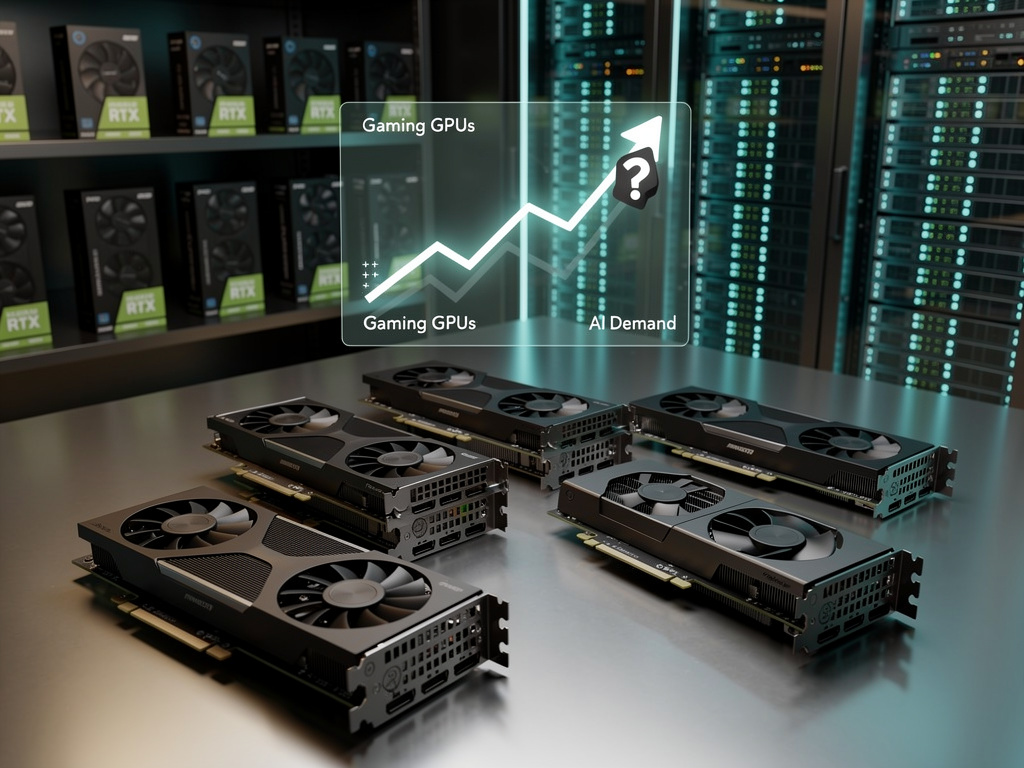
Nvidia’s typically well-orchestrated product launches have encountered an unusual disruption, with the company’s highly anticipated RTX 50-series graphics cards experiencing supply constraints and strategic missteps that have left both consumers and industry analysts questioning the chipmaker’s execution. The stumble comes at a critical juncture as Nvidia seeks to maintain its dominance in the gaming GPU market while simultaneously managing unprecedented demand from its AI business.
According to Digital Trends, the RTX 50-series launch has been marked by confusion over product availability and positioning, representing a departure from Nvidia’s historically smooth rollouts. The situation has created uncertainty in a market where enthusiasts and professionals alike have grown accustomed to Nvidia’s predictable cadence and clear product hierarchies.
The complications surrounding the RTX 50-series reveal deeper tensions within Nvidia’s business model as the company navigates competing priorities between its lucrative AI chip division and its traditional gaming GPU segment. While gaming GPUs built Nvidia’s reputation and market position over decades, the explosive growth of artificial intelligence applications has shifted the company’s strategic focus, potentially at the expense of its gaming customer base.
Manufacturing Constraints and Allocation Decisions
The root cause of the RTX 50-series difficulties appears to stem from manufacturing capacity allocation decisions made at the highest levels of Nvidia’s operations. With TSMC’s advanced manufacturing nodes in extraordinarily high demand across multiple industries, Nvidia has been forced to make difficult choices about which product lines receive priority access to limited wafer supply. The company’s AI-focused H100 and H200 chips command significantly higher margins than gaming GPUs, creating an economic incentive to prioritize data center products over consumer graphics cards.
Industry sources suggest that Nvidia may have underestimated sustained demand for high-end gaming GPUs, particularly in the wake of successful launches from competitor AMD and renewed interest in PC gaming. The miscalculation has resulted in limited availability of certain RTX 50-series models, with some variants reportedly facing delays of several months beyond their announced launch windows. This scarcity has frustrated retailers and consumers who have endured years of GPU shortages stemming from cryptocurrency mining booms and pandemic-era supply chain disruptions.
Market Positioning and Pricing Complications
Beyond supply issues, the RTX 50-series launch has been complicated by questionable pricing and market positioning decisions that have drawn criticism from typically loyal Nvidia customers. The pricing structure for the new generation appears to have compressed the value proposition between different tiers, making it difficult for consumers to identify clear upgrade paths or optimal purchase decisions. Some models offer marginal performance improvements over their predecessors while commanding premium prices, a strategy that has historically backfired in the competitive GPU market.
The situation is further complicated by lingering inventory of RTX 40-series cards in retail channels. Nvidia’s partners and retailers are caught between promoting newer RTX 50-series products with limited availability and clearing existing stock of previous-generation cards that may offer better value propositions at current pricing. This inventory overhang has created pricing confusion and has led to unusual situations where last-generation cards sometimes outperform their nominal successors in price-to-performance metrics.
Competitive Pressure and Strategic Vulnerabilities
The stumble in Nvidia’s gaming GPU execution has not gone unnoticed by competitors, with AMD and Intel both positioning themselves to capitalize on any openings in the market. AMD’s recent Radeon releases have garnered positive reviews for offering competitive performance at more accessible price points, while Intel’s Arc GPU division continues to mature and improve its driver support and performance optimization. The combination of Nvidia’s supply constraints and pricing confusion has created an opportunity for rivals to gain market share in a segment where Nvidia has long maintained dominance approaching 80% or higher.
The competitive dynamics are particularly important given the broader industry shift toward AI-capable hardware at the consumer level. Gaming GPUs are increasingly being marketed and utilized for AI workloads, content creation, and other compute-intensive applications beyond traditional gaming. Nvidia’s stumble in the gaming segment could have ripple effects across these adjacent markets, potentially allowing competitors to establish footholds that could prove difficult to dislodge in future product cycles.
Communication Breakdowns and Customer Relations
Perhaps more damaging than the supply and pricing issues themselves has been Nvidia’s communication around the RTX 50-series launch. The company has provided limited clarity on availability timelines, regional rollout plans, or explanations for the delays and constraints affecting various models. This communication vacuum has been filled by speculation, rumors, and frustration from a community that has historically been among Nvidia’s most passionate advocates.
Nvidia’s traditional strength has been its ability to build and maintain strong relationships with gaming enthusiasts, content creators, and professional users who serve as influencers and early adopters for new GPU technologies. The current situation risks eroding that goodwill, particularly as social media and online forums amplify complaints about availability, pricing, and perceived lack of transparency. The company’s reputation for premium products and reliable launches has been a key competitive advantage, and any damage to that reputation could have long-term consequences beyond the immediate RTX 50-series cycle.
Financial Implications and Investor Concerns
From a financial perspective, the gaming GPU segment represents a declining percentage of Nvidia’s overall revenue, even as absolute dollar amounts remain substantial. The company’s data center business now dwarfs gaming in both revenue and profit contribution, leading some analysts to question how much attention and resources Nvidia’s leadership is willing to devote to resolving gaming GPU issues. This shift in business composition creates a potential conflict of interest where decisions that optimize overall corporate profitability may come at the expense of gaming customers.
Investors have largely shrugged off concerns about gaming GPU execution, focusing instead on Nvidia’s dominant position in AI infrastructure and the company’s ability to command premium pricing for data center products. However, some market observers warn that neglecting the gaming segment could prove shortsighted, as gaming GPUs serve as a proving ground for technologies that eventually migrate to data center products. Additionally, the gaming community provides valuable feedback, generates brand loyalty, and creates a pipeline of future professional users who may influence enterprise purchasing decisions.
Technical Architecture and Future Roadmap Questions
The RTX 50-series difficulties have also raised questions about Nvidia’s technical roadmap and architectural decisions for future GPU generations. The company’s Blackwell architecture, which underpins the RTX 50-series, represents a significant evolution from previous designs, but the execution challenges suggest that the transition may have been more complex than anticipated. Manufacturing yields, power delivery requirements, and thermal management considerations all appear to have contributed to the supply and positioning issues affecting the launch.
Looking beyond the immediate RTX 50-series problems, industry watchers are now scrutinizing Nvidia’s plans for subsequent GPU generations and questioning whether similar issues might recur. The company’s historical pattern of regular, predictable product cycles may need to adapt to new realities of semiconductor manufacturing constraints, competing internal priorities, and evolving market demands. The success or failure of Nvidia’s response to the current situation will likely influence strategic decisions about future product development, manufacturing partnerships, and market positioning for years to come.
Industry-Wide Implications and Market Evolution
The challenges facing Nvidia’s gaming GPU business reflect broader transformations occurring across the semiconductor industry and the PC gaming market. The traditional model of regular generational upgrades with clear performance improvements and value propositions is being disrupted by manufacturing constraints, changing use cases, and the integration of AI capabilities into consumer hardware. Nvidia’s difficulties may foreshadow similar challenges for other hardware manufacturers as they navigate these transitions.
The situation also highlights the growing tension between consumer and enterprise segments within technology companies. As AI and data center applications generate increasingly large portions of revenue and profit for semiconductor firms, the resources and attention devoted to consumer products may naturally decline. This shift could fundamentally alter the relationship between hardware manufacturers and gaming communities, potentially opening opportunities for new entrants or business models that prioritize consumer needs over enterprise margins. The resolution of Nvidia’s current RTX 50-series challenges will provide important signals about how the company intends to balance these competing priorities in the years ahead.


 WebProNews is an iEntry Publication