
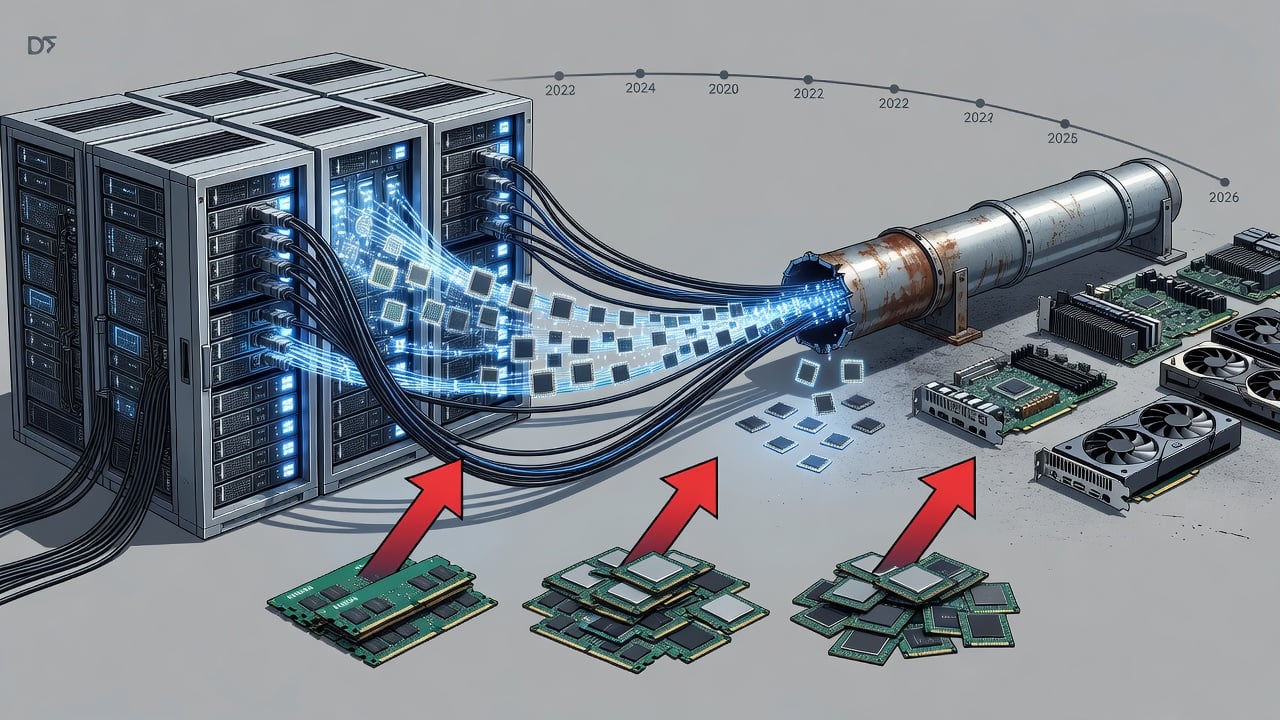
Nvidia finds itself at the center of an unprecedented memory shortage. Demand for its data center chips has soared so high that production of consumer graphics cards faces deep cuts. No new gaming GPUs will launch this year. The nearly 30-year streak of annual releases has ended.
But the pain spreads far wider. Startups scramble for compute. Researchers delay experiments. Even hyperscalers feel the pinch. The Information reported that nobody escapes this crunch. Capacity proves so scarce an Nvidia representative advised one small AI startup to rent spare GPUs from a facility tied to the company itself.
Memory lies at the heart of the problem. GDDR7 modules, essential for the latest GeForce cards, have grown scarce. Samsung, SK Hynix and Micron have redirected output toward high-bandwidth memory for AI servers. That shift leaves gaming and other segments fighting over scraps. Nvidia slashed production of its RTX 50-series cards by 30 to 40 percent in the first half of 2026. Midrange models like the RTX 5070 Ti and RTX 5060 Ti with 16GB of VRAM took the first hits.
Prices climbed in response. The RTX 5090 now sells for €3,800 to €4,500 in some markets. One premium variant reached €6,499. Availability stays spotty. Shoppers report weeks-long waits. And this squeeze shows no quick end. Industry forecasts point to normalization only by late 2027 or even mid-2028.
AMD faces similar headwinds. Its next architecture, RDNA 5, slipped to late 2027 at the earliest. No major refresh arrives in 2026 either. Intel’s plans for a gaming-focused chip remain uncertain. The result? A full calendar year without fresh silicon from any of the big three. Gamers must make do with existing hardware or pay premiums for older stock.
Nvidia’s finance chief addressed the situation directly. During a February earnings call, Colette Kress told investors the supply picture for gaming chips looked “very tight” for a couple of quarters. She expected the constraints to hurt results in the current period and beyond. Demand for GeForce products remained strong. Memory supplies simply could not keep pace. Reuters covered her remarks in detail.
The numbers tell a stark story. AI servers now consume up to 70 percent of global memory production in 2026. That figure sat at 20 to 30 percent as recently as 2022. Data centers win priority because margins there dwarf those from consumer graphics. One Nvidia GPU for AI training can command tens of thousands of dollars. A gaming card sells for a few hundred to a couple thousand.
Startups bear especially heavy costs. Many now explore creative financing. Nvidia has partnered with firms in Australia and Singapore to offer GPU access in exchange for equity stakes rather than cash upfront. The arrangement signals how acute the bottleneck has become. Cash-poor innovators once bought hardware outright. Now they trade future ownership for cycles.
Larger players adapt too. Hyperscalers hoard allocations. Some redirect internal resources from non-critical projects. Academic researchers report longer wait times for cluster access. One lab delayed a major paper because it could not secure enough GPUs for training runs. The ripple effects touch software development, autonomous vehicle testing and scientific simulations.
Recent coverage highlights the depth of the shift. Drop Reference outlined on July 15 why 2026 marks a historic drought. No new dies. No Super refreshes until at least CES 2027. Board partners raised prices on existing cards by 10 to 15 percent to offset higher component costs.
Production choices compound the issue. Nvidia prioritized lower-memory configurations for the cards it did build. High-VRAM variants prized by enthusiasts and some professionals became even rarer. Rumors swirled that certain “Super” models were canceled outright. The company stayed largely silent on specifics, fueling speculation.
Yet Nvidia itself projects continued growth. CEO Jensen Huang dismissed some delay rumors during a recent Tokyo event. He insisted next-generation systems like Vera Rubin were already in production with “giant amounts” coming. His comments aimed to calm markets after reports of manufacturing setbacks. Still, the immediate reality for consumers and smaller AI shops stays unchanged.
Analysts watch the memory market closely. Micron, Samsung and others ramp HBM output as fast as possible. New fabs take time. Yields on advanced processes remain tricky. Until those constraints ease, allocation decisions favor the highest-margin uses. Gaming, once a core business for Nvidia, now plays second fiddle.
Some see opportunity in the chaos. Decentralized networks like Render attempt to match idle GPUs with needy workloads. One project integrated 60,000 additional cards through partnerships. Coinbase listed its token recently, drawing new users. Whether such alternatives scale enough to dent the shortage remains unclear. They represent creative workarounds, not full solutions.
Longer term, the industry may diversify. Google pushes its TPUs harder. Meta collaborates with Broadcom on custom silicon. Chinese firms develop domestic alternatives despite export curbs. These efforts could lessen Nvidia’s dominance. But they won’t resolve today’s acute scarcity.
For now, the GPU crunch defines tech investment and innovation alike. Companies budget more for compute. Developers optimize models to run on less hardware. Gamers upgrade less often or accept higher prices. The situation forces hard choices across the board.
And the pressure continues. Latest reports from mid-July show no relief in sight for the balance of 2026. Memory makers forecast tight supply through next year. Nvidia’s data center boom shows few signs of slowing. Demand for Blackwell and upcoming Rubin chips outstrips even optimistic projections.
So buyers face a simple equation. Pay more. Wait longer. Or find workarounds. The AI race remade the economics of silicon. Everyone else adapts to the new order.


 WebProNews is an iEntry Publication